


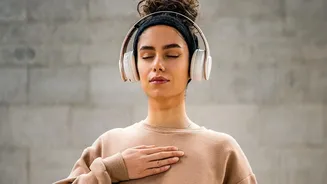


What Exactly Is Breath Awareness?
Breath awareness is the simple, foundational practice of paying attention to your natural breathing without trying to change it. It’s about observation, not intervention. Instead of forcing a deep inhale or a long exhale, you simply notice the sensations
of your breath as it flows in and out. Think of it as becoming a curious spectator to a process that your body handles automatically. You might notice the coolness of the air entering your nostrils, the gentle rise and fall of your chest or belly, or the brief pause between breaths. The goal isn't to achieve a special state, but to anchor your attention in the present moment using the rhythm you always have with you.
Awareness vs. Control: The Crucial Difference
Here lies the core distinction mentioned in the headline. Breath awareness is passive observation, while techniques involving breath holding are forms of active control. Practices like yogic pranayama often involve deliberately altering your breathing pattern—for example, by holding the breath (kumbhaka), breathing forcefully, or following a specific count for inhaling and exhaling. These are powerful techniques designed to influence your energy and nervous system. In contrast, breath awareness is about letting go of control. The intention is not to 'do' anything, but to simply 'be' with your breath. While breath control is a form of doing, breath awareness is a form of noticing.
Why Bother With Just Noticing?
The benefits of this simple practice are surprisingly profound. By focusing on the breath, you give your mind a gentle anchor, which can keep you from getting carried away by anxious thoughts or external distractions. Scientific studies and longtime practitioners report numerous benefits, including reduced stress, improved focus and concentration, and better emotional regulation. When you practice noticing your breath without judgment, you train your mind to become a non-critical observer of your thoughts and feelings. This can help deactivate the body's 'fight-or-flight' stress response and activate the 'rest-and-digest' parasympathetic nervous system, leading to a state of calm.
A Simple Guide to Get Started
Getting started with breath awareness is beautifully uncomplicated. Find a comfortable position, either sitting in a chair with your feet on the floor or lying down. You can close your eyes or keep a soft, unfocused gaze. First, simply bring your attention to the fact that you are breathing. Don't alter it. Just notice it. Feel the air moving in through your nose and out again. Notice your stomach or chest rising and falling. Your mind will inevitably wander—that’s completely normal and expected. The practice isn't about having an empty mind. When you notice your mind has drifted, gently acknowledge the thought and guide your attention back to the sensation of your breath. That's it. That's the entire practice. Start with just five minutes a day.
Common Hurdles For Beginners
Many newcomers wonder if they are 'doing it right'. The good news is, if you are attempting to pay attention to your breath, you are doing it right. There's no such thing as a 'bad' meditation session. The most common challenge is the wandering mind. The key is to treat it with kindness. Don't get frustrated; just gently return your focus each time. Some people feel sleepy, which can be a sign of deep relaxation or genuine fatigue. It might help to practice sitting upright rather than lying down. Others might find the act of observing their breath paradoxically makes it feel unnatural or forced. If that happens, simply broaden your awareness to other bodily sensations for a moment before gently returning to the breath.