



What is a Closed-Loop System?
Imagine packing for a trip that lasts for years. You can't possibly bring enough air to breathe for the entire journey. This is the fundamental challenge of long-duration spaceflight. The solution is not to pack more, but to recycle what you have. This is the core
principle of an advanced closed-loop Environmental Control and Life Support System (ECLSS). Unlike early missions that used disposable filters, a closed-loop system continually purifies and revitalizes the cabin atmosphere. It's a miniature, mechanical version of Earth's own ecosystem, designed to operate flawlessly millions of kilometres from home. These systems are not just filtering air; they are actively managing a delicate chemical balance to keep the crew safe and healthy.
Removing the Invisible Danger: Carbon Dioxide
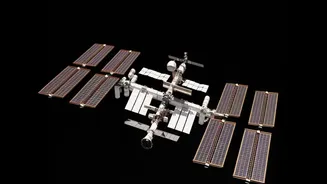
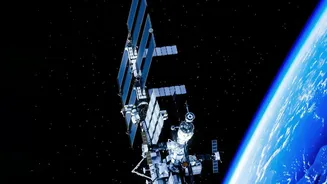
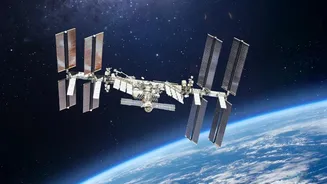
The first and most immediate threat to air quality in a sealed environment is the carbon dioxide (CO2) exhaled by the crew. On Earth, plants absorb it, but in a spacecraft, it quickly builds to toxic levels. Advanced systems, like the Carbon Dioxide Removal Assembly (CDRA) on the International Space Station (ISS), use beds of materials called zeolites. These porous minerals act like a chemical sponge, trapping CO2 molecules while letting oxygen and nitrogen pass through. Once a bed is saturated, it's heated to release the captured CO2, which is then either vented or, more efficiently, sent to another subsystem for recycling. This regenerable process allows the 'sponges' to be used over and over, a critical feature for missions where resupply is impossible.
Scrubbing More Than Just CO2
While CO2 is the primary metabolic waste product, humans and equipment release hundreds of other potentially harmful gases, known as trace contaminants. These can include ammonia from sweat, methane, and chemicals off-gassed from electronics and plastics. Over a long mission, even tiny amounts of these compounds can accumulate to dangerous concentrations. To combat this, the Trace Contaminant Control System (TCCS) uses a multi-stage process. Air is passed through beds of activated charcoal, which adsorbs larger organic molecules, and then through a high-temperature catalytic oxidizer. This oxidizer essentially burns up the remaining contaminants, converting them into harmless substances like water and CO2, which can then be managed by other parts of the system.
The Magic of Making Oxygen
Removing contaminants is only half the battle; the system must also replenish the oxygen astronauts consume. The ISS's Oxygen Generation System achieves this through electrolysis. It splits water (H2O)—much of it reclaimed from crew breath, sweat, and even urine—into hydrogen and oxygen. The oxygen is released into the cabin, while the hydrogen can be used in another clever recycling step. In what’s known as a Sabatier reaction, this waste hydrogen is combined with the CO2 captured by the CDRA. This process produces water and methane. The water can be recycled again for drinking or to make more oxygen, closing the loop even further, while the methane is typically vented overboard. This synergy between systems is what makes a long-term, self-sufficient life support system possible.
The 'Guarantee': Redundancy and Reliability
The word "guarantee" is a strong one in engineering, where failure is always a possibility. In the context of life support, it is achieved through relentless testing and, most importantly, redundancy. Key systems like the CDRA and oxygen generators have multiple units, so if one fails or needs maintenance, another can take its place without interruption. The ISS, for example, has several different methods for removing CO2 and generating oxygen, including American, Russian, and European systems. For future missions to Mars, engineers are developing even more robust and efficient technologies designed for maximum closure, meaning almost 100% of water and oxygen are recovered. This layered approach, with backups for the backups, is how these systems provide the near-certainty required to keep astronauts alive for years on end.