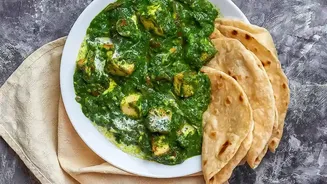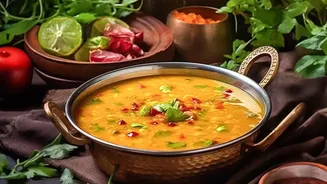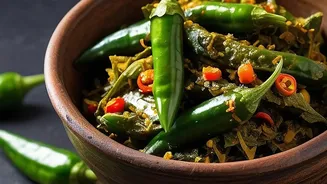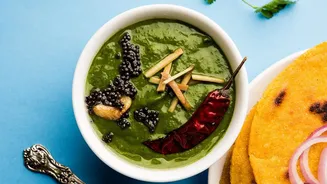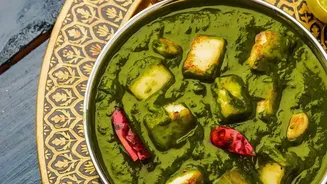

Saag is a cornerstone of Indian comfort food, an earthy and nutritious dish loved across the country. But not all saag is the same. How you cook it drastically changes everything, from its texture to its deep, rustic flavour. So what's the secret?
First, What Is Saag?
Before
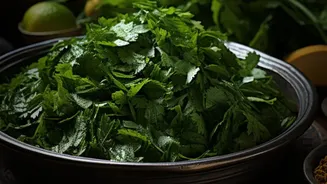
diving into methods, it's important to understand that 'saag' isn't one single dish. It's a broad term for any dish made from stewed leafy greens. While sarson ka saag, made from mustard greens, is the most famous variant from Punjab, saag can be made from a variety of greens. A mix is often preferred to balance flavours; the pungent kick of mustard greens (sarson) is commonly mellowed by the milder taste of spinach (palak) and the slightly bitter notes of chenopodium (bathua) or fenugreek (methi). This blend is the foundation, but the cooking technique is where the magic really happens.
The Traditional Method: Slow and Low
Traditionally, saag was cooked for hours over a low flame in a heavy-bottomed pot or an earthen 'handi'. This slow-cooking process is all about developing deep, complex flavours. As the greens gently simmer, their cell walls break down completely, releasing natural juices and creating an incredibly tender, almost creamy consistency without any actual cream. The long cooking time also helps to mellow the bitterness that can sometimes be present in mustard greens. This method requires patience, as it allows the flavours of the greens, ginger, garlic, and chillies to meld together into a single, harmonious profile. The result is a saag with a dark, earthy colour and a rich, profoundly savoury taste.
The Modern Shortcut: The Pressure Cooker
For those short on time, the pressure cooker is a game-changer. What traditionally took hours can be achieved in under 30 minutes. Cooking greens under high pressure and steam is incredibly efficient at softening them. However, this speed comes with a trade-off. A pressure-cooked saag often has a brighter, fresher flavour and a more vibrant green colour because the cooking time is much shorter. While convenient, it may lack the deep, melded flavour of its slow-cooked counterpart. To get the best results, many cooks still simmer the saag on low heat for 10-15 minutes after pressure cooking to help thicken it and develop more flavour.
Texture Talk: To Blend or To Mash?
How you finish the saag is just as important as how you cook it. The traditional tool for processing cooked greens is a wooden whisk or masher called a 'ghotni' or 'madhani'. This tool pounds and mashes the greens, creating a coarse, rustic texture where you can still identify small bits of leaves and stems. It's rustic and hearty. In contrast, modern kitchens often rely on immersion blenders or food processors. These tools create a much smoother, more uniform puree, similar to what you might find in restaurants. An immersion blender offers a good middle ground, allowing you to pulse the greens for a semi_coarse texture. Ultimately, the choice between chunky and smooth is a matter of personal preference, defining the final mouthfeel of the dish.
The Secret Weapon: Makki Ka Atta
Regardless of the cooking method, one common issue with saag is that the water can separate from the greens, resulting in a thin consistency. The traditional solution is to add a slurry of 'makki ka atta' (maize flour or fine cornmeal). This flour acts as a binding agent, thickening the saag and giving it a cohesive, creamy body. It's not just for texture; it also adds a subtle, nutty sweetness that complements the earthy greens. It should be mixed with a little water before being stirred into the simmering saag to prevent lumps.
The Final Flourish: A Flavorful Tadka
No saag is complete without a 'tadka' (or tempering). This is the final layer of flavour, added just before serving. Hot ghee or oil is infused with aromatics like finely chopped garlic, ginger, onions, and dried red chillies until fragrant and golden. This sizzling mixture is then poured over the cooked saag. The tadka doesn't just add flavour; it provides a rich aroma and a final dose of richness that brings the entire dish to life. Many believe that a tadka made with ghee is essential for the most authentic taste.