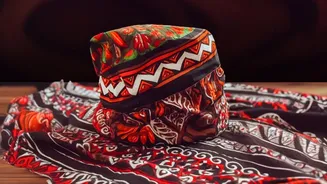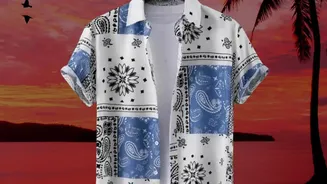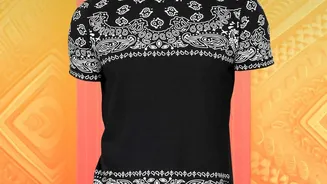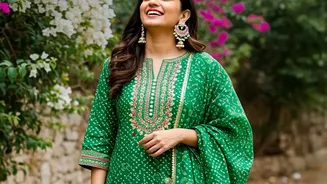






The 2026 Comeback
The bandana's resurgence in 2026 is undeniable. From street style to runway collections, the iconic paisley print is showing up on everything from silk dresses and flowing trousers to bikinis and loafers. Celebrities and fashion influencers have embraced
the accessory, styling it in classic and novel ways. Yet, this revival is different. Designers are moving beyond the simple cotton square, transforming the familiar pattern into intricate embroidery, jacquards, and lace, elevating the print to a more sophisticated level. It's being paired with clean, minimalist pieces—a bandana-print top with white trousers or paisley shorts with a crisp shirt—making the look feel modern and intentional rather than purely bohemian.
Unpacking the Paisley
The teardrop motif we call 'paisley' has a history that stretches back thousands of years. Its true origin lies not in Scotland, but in Persia (modern-day Iran), where it was known as 'boteh'. The boteh was a powerful symbol, representing a cypress tree, which in ancient Zoroastrian tradition signified life and eternity. It also took on associations with flames, floral sprays, and fertility. The design was used to decorate royal garments and sacred sites, a mark of nobility and divinity. From Persia, the motif traveled along the Silk Road to India, where it flourished in the Kashmir region during the Mughal Empire. Here, weavers intricately embroidered the design onto luxurious wool shawls that would soon captivate the world.
The Logic of the Loom and Block
The 'logic' of these traditional textiles lies in the painstaking craft. The word 'bandana' itself is believed to come from the Hindi word 'bandhani', a tie-dye technique originating in the Indus Valley Civilization used to create dotted patterns. Another essential technique is block printing, a craft perfected in regions like Rajasthan. Artisans spend days hand-carving intricate designs onto wooden blocks. These blocks are then dipped in natural dyes and methodically pressed onto fabric, a process repeated with immense precision. In villages like Sanganer and Bagru, this craft became a community tradition, with knowledge passed down through generations. This human touch, with its subtle imperfections, is the soul of the fabric.
A Journey to the West
In the 18th and 19th centuries, the British East India Company began importing Kashmiri shawls adorned with the boteh motif. They became a frenzy-inducing luxury item among European elites. To meet the immense demand, textile manufacturers in Europe started producing imitations. The Scottish town of Paisley became so prolific in recreating the design on industrial looms that its name became permanently attached to the pattern in the West. The pattern was soon printed on more accessible cotton squares, which were practical, durable, and colorfast. This new 'bandana' was adopted by American cowboys, miners, and farmers as a functional accessory to protect them from sun and dust, cementing its place in workwear.
From Counter-Culture to High Fashion
Over the 20th century, the bandana evolved into a powerful cultural symbol. It represented solidarity for striking American coal miners in the 1920s and became an emblem of female empowerment with the 'Rosie the Riveter' campaign during World War II. In the latter half of the century, it was adopted by numerous subcultures—from bikers and rock stars like Bruce Springsteen to hip-hop artists like Tupac Shakur and Snoop Dogg—as a sign of rebellion and identity. It was even used in the LGBTQ+ community's 'hanky code'. This journey from ancient motif to counter-cultural icon has given the bandana a layered meaning that few other accessories possess, a story that today's fashion is now re-engaging with, consciously or not.