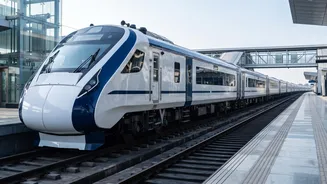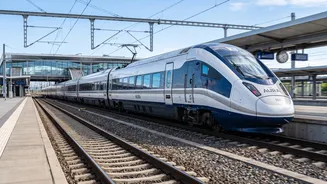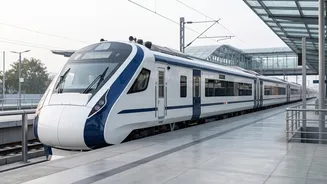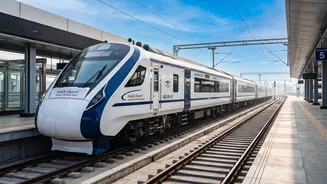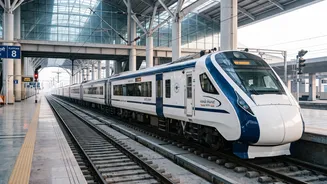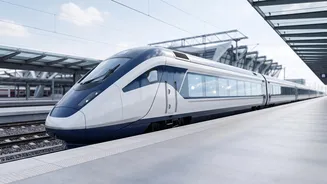







Indian Railways is embarking on a significant modernization of its overnight services. The introduction of Vande Bharat sleeper trains marks a new chapter in long-distance travel, promising a blend of speed, comfort, and advanced technology.
A New Era for Overnight Travel
The iconic
image of long-distance train travel in India is set to undergo a major transformation. Building on the success of the Vande Bharat chair-car services, Indian Railways is now rolling out its sleeper version, designed to make overnight journeys faster, more comfortable, and safer. These self-propelled trainsets are a key part of a broader strategy to modernize the nation's rail infrastructure. The first Vande Bharat sleeper service was launched in January 2026, and with new routes being added, these trains are poised to redefine the passenger experience on crucial long-haul corridors. The latest additions, expected around late October and early November 2026, include services on the high-demand Delhi-Varanasi and Mumbai-Bengaluru routes, significantly cutting travel times compared to existing trains.
Inside the New Sleeper Coaches
The new Vande Bharat sleeper trains are designed with passenger comfort as a central theme. Each 16-coach trainset can accommodate up to 823 passengers across three classes: AC First, AC 2-Tier, and AC 3-Tier. The interiors feature ergonomically designed berths with improved cushioning for better sleep. Thoughtful details include sensor-based lighting in corridors, individual reading lamps, and conveniently located charging points. Ladders for upper berths have been redesigned for easier access, and First AC cabins even come with a shower cubicle and a unique switchable privacy glass on the door. The coaches also boast automatic doors, fully sealed gangways to reduce noise and jerks, and modern bio-vacuum toilets with touch-free fittings to enhance hygiene.
Engineered for Speed and Safety
Beyond aesthetics and comfort, these trains represent a significant engineering leap. Designed to operate at speeds of 160 km/h, with a potential top speed of 180 km/h, they are set to drastically reduce journey times. The Mumbai–Bengaluru route, for instance, is expected to be covered in about 16 hours, down from the current 22–24 hours. This efficiency is achieved through a distributed power system, which allows for faster acceleration and deceleration than traditional locomotive–hauled trains like the Rajdhani Express. Safety has also been prioritized, with the inclusion of the indigenous 'Kavach' anti–collision system, CCTV cameras, and fire detection systems in all coaches. The train's structure is built with durable austenitic steel to better protect passengers in emergencies.
The 'Make in India' Manufacturing Push
The rollout of the Vande Bharat sleeper fleet is a major pillar of the 'Make in India' initiative. The initial prototypes were developed by the Integral Coach Factory (ICF) in Chennai with manufacturing by BEML in Bengaluru. To meet the ambitious goal of expanding the network, Indian Railways has awarded large contracts to several consortiums. A joint venture between BHEL and Titagarh Rail Systems is tasked with manufacturing 80 trainsets and providing maintenance for 35 years. Another 120 trains are being built by Kinet Railway Solutions, an Indo–Russian joint venture. This large–scale domestic production not only boosts the manufacturing sector but also ensures a steady supply chain for future expansion and maintenance.
What This Means for Passengers
For the millions of people who rely on Indian Railways for long–distance travel, the Vande Bharat sleeper trains promise a world–class experience that competes directly with air travel. The combination of reduced travel time, enhanced comfort, and superior safety features makes overnight train journeys a more attractive option. As these trains gradually replace older rolling stock on key routes, passengers can look forward to a quieter, smoother, and more reliable journey. The focus on improved hygiene, better amenities, and passenger–friendly design details signals a clear shift towards prioritizing the traveller's experience, setting a new benchmark for public transport in the country.