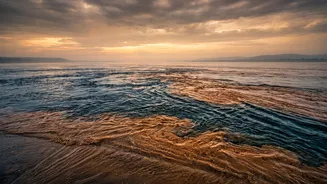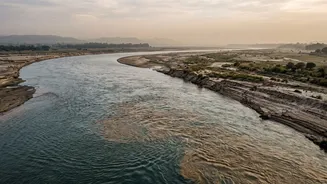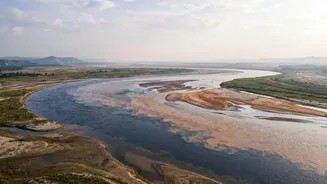




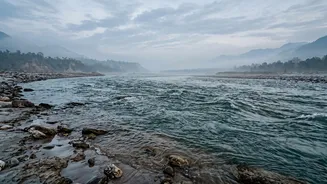
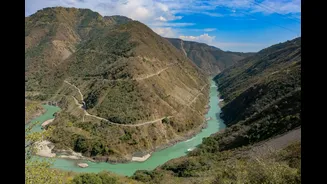
A landmark 30-year treaty on sharing the waters of the Ganges, a lifeline for millions in India and Bangladesh, is set to expire in December 2026. What happens next will not only affect lives and livelihoods but also test a critical diplomatic relationship.
The 1996 Ganges Water Treaty Explained
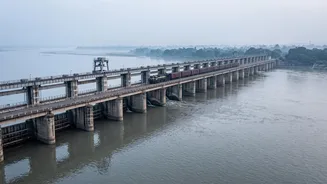
Signed in December 1996, the Ganges Water Sharing Treaty was a milestone in India-Bangladesh relations. For decades, the Farakka Barrage in West Bengal, built to divert water to the Hooghly to keep Kolkata's port from silting up, had been a point of contention. The treaty provided a formula for sharing water during the critical dry season, from January 1 to May 31 each year. The complex formula dictates how water is split based on the flow at Farakka, measured in cusecs (cubic feet per second). For instance, if the flow is 70,000 cusecs or less, both nations get an equal 50% share. The agreement brought a predictable framework to a contentious issue, stabilising hydropolitical relations for three decades.
New Pressures on an Old Agreement
Thirty years on, the context has dramatically changed. A growing population and increased industrial and agricultural needs have raised water demands in both countries. Within India, states like Bihar have voiced their own concerns, arguing that the treaty affects their water security and has led to increased siltation and flooding upstream of Farakka. Meanwhile, Bangladesh has become more vocal about what it sees as the treaty's shortcomings. The government in Dhaka is pushing for a revised deal that includes a 'guarantee clause', similar to a previous 1977 agreement, to ensure a minimum flow even in the driest periods. This clause was not included in the 1996 treaty.
The Overwhelming Climate Factor
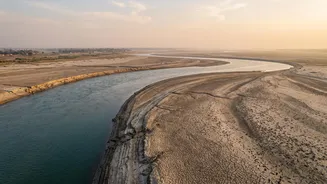
The most significant new variable is climate change, a factor not fully accounted for in the original treaty. Himalayan glaciers, the source of the Ganges, are retreating at an alarming rate. While this may temporarily increase water flow and flood risk, the long-term projection is grim: reduced ice reserves threaten to severely diminish the river's flow in the dry season. Recent droughts in the Ganges basin have already been described as the worst in centuries, far outside natural variability. This creates a paradox of more intense floods during the monsoon and more acute water scarcity in the lean months, putting immense strain on any water-sharing formula.
What’s at Stake for India and Bangladesh?
For Bangladesh, a lower riparian country, the stakes are existential. Reduced dry-season flows in the Padma (as the Ganges is known there) have increased soil salinity, devastated fisheries, and crippled agriculture and navigation for tens of millions of people. The country fears that without a new, robust deal, these water shortages could deepen. For India, the challenge is multifaceted. It involves balancing the needs of its own states like West Bengal and Bihar, maintaining the health of the Kolkata port, and upholding its role as a responsible regional leader. The stalled treaty for the Teesta river, another of the 54 shared between the two nations, serves as a cautionary tale of how unresolved water issues can strain diplomatic ties.
The Path to a New Agreement
As the December 12 deadline approaches, the chances of a simple renewal of the existing treaty appear slim. Both nations are reportedly considering significant changes, and highlevel talks are anticipated. Bangladesh has formed a committee to lead negotiations, and India has stated that all riverrelated matters are discussed through the Joint Rivers Commission (JRC). Experts suggest that a new,' forwardlooking agreement must move beyond simply allocating water volumes. A modern framework would need to incorporate a basinwide management approach,' address ecological needs and sediment management,' and,' most importantly,' build in mechanisms to adapt to the unpredictable effects of climate change.