






A Celestial Legacy in the Sky
Each year, from early October to early November, Earth passes through a stream of cosmic debris, giving us the Orionid meteor shower. Considered one of the most beautiful showers of the year, the Orionids are known for their speed and brightness. These
shooting stars are not random; they are tiny fragments left behind by none other than Comet 1P/Halley, the renowned celestial visitor that graces our skies roughly every 76 years. While the comet itself last visited in 1986 and won't return until 2061, its legacy is written in the sky twice a year. Our planet’s orbit intersects Halley's dusty path in both October, creating the Orionids, and in May, producing the Eta Aquariid meteor shower.
Cosmic Crumbs from a Famous Comet
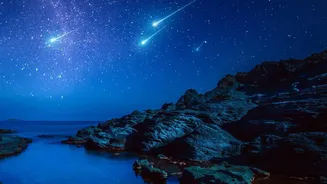
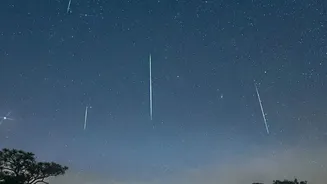
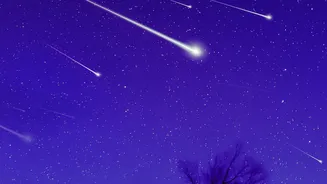
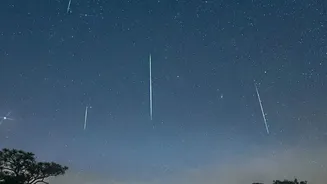
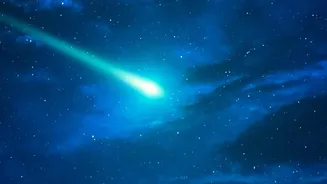
So, what exactly are you seeing when you spot an Orionid meteor? As Halley's Comet travels through the inner solar system, the Sun's heat causes its nucleus, a mountain-sized ball of ice, rock, and dust, to shed particles. This creates a 'river of rubble' along its orbital path. When Earth crosses this trail, these particles, many no bigger than a grain of sand, slam into our atmosphere at incredible speeds—about 66 kilometres per second. The intense friction causes them to vaporise, creating the brilliant streaks of light we call meteors. Because of their high speed, Orionid meteors can sometimes leave behind glowing 'trains' of incandescent debris that linger for several seconds, and the brightest ones can even become spectacular fireballs.
When and Where to Watch in 2026
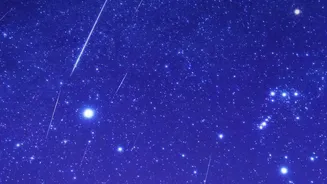
The Orionid meteor shower will be active from October 2 to November 7, 2026. The peak activity, when you can see the most meteors, will occur on the night between October 21 and 22. During the peak, you might see between 15 to 20 meteors per hour from a dark location. The meteors will appear to radiate from the constellation of Orion the Hunter, which is how they get their name. Look for Orion rising in the eastern sky after midnight. While the meteors seem to come from this point, they can appear anywhere in the sky. For viewers in India and across the Northern Hemisphere, the best viewing time is in the hours after midnight until dawn, when Orion is highest in the sky.
Your Guide to a Perfect Viewing Experience
You don't need any special equipment like a telescope or binoculars to enjoy the show. The most important factor is getting away from city and street lights, as light pollution can wash out all but the brightest meteors. Find a comfortable, open spot in a rural or suburban area. Give your eyes about 20 to 30 minutes to fully adapt to the darkness, and avoid looking at your bright phone screen, as it will ruin your night vision. Lie back on a blanket or reclining chair and look up, taking in as much of the sky as possible. Be patient; the show lasts until dawn, so you have plenty of time to spot these fleeting pieces of Halley's Comet. In 2026, a bright waxing gibbous Moon will be present during the peak's evening hours, but it sets around 3 a.m., leaving the pre-dawn hours dark and ideal for viewing.