





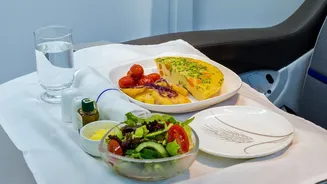

Ever found your in-flight meal a bit… bland? You're not imagining it. The reason your food tastes different at 35,000 feet is a fascinating mix of physics, biology, and clever culinary science that starts long before takeoff.
The Pressure and Humidity Problem
The two main culprits behind
flavour loss are low cabin pressure and extremely low humidity. A commercial aircraft cabin is typically pressurised to an equivalent altitude of 6,000 to 8,000 feet, not sea level. This change in pressure, combined with humidity levels that can drop below 12%—drier than many deserts—has a significant physiological effect. The dry air dehydrates your nasal passages, and since about 80% of what we perceive as 'taste' is actually smell, your ability to detect food aromas is significantly weakened. This combination of low pressure and dryness can reduce your sensitivity to sweet and salty tastes by as much as 30%.
A Symphony of Suppression
It’s not just the air that’s working against your palate; it’s the noise too. The constant drone of the aircraft engines, humming along at about 85 decibels, can interfere with how your brain processes taste. Research has shown that loud background noise can suppress the perception of sweetness and saltiness even further. It's as if your taste buds are being told to quiet down by the roar of the engines. This sensory suppression is a key reason why a dish that would taste perfectly seasoned in a restaurant can seem underwhelming when served on a tray table.
The Kitchen's Counter-Attack
Airline caterers are well aware of this sensory sabotage and have developed strategies to fight back. They don't just cook restaurant food and put it on a plane; they engineer meals specifically for the in-flight environment. To compensate for the dulled senses, chefs will intentionally increase the seasoning, often using more salt, spices, and potent herbs than they would for a meal served on the ground. However, they can't simply double the salt, as that would lead to further dehydration. Instead, they focus on flavours that are less affected by altitude, such as sour, bitter, and spicy notes.
The Umami Superpower
There is one taste that seems to defy the challenging cabin environment: umami. This is the savoury, rich, and meaty flavour found in ingredients like tomatoes, mushrooms, aged cheese, and soy sauce. Studies have shown that while sweet and salty tastes are suppressed, our perception of umami is largely unaffected and may even be enhanced by the background noise. This explains the enduring popularity of tomato juice and Bloody Marys on flights; the umami-rich tomato base simply tastes better and more satisfying at cruising altitude. Airlines lean into this, often designing dishes around umami-heavy components like tomato sauces, rich broths, and parmesan cheese to ensure the meal delivers a flavourful punch.