

The High Cost of Going Electric
For years, the dream of owning an electric vehicle in India has been just that for many—a dream. While the environmental benefits are clear and the running costs are lower, the initial purchase price of an EV has remained a significant barrier. The primary
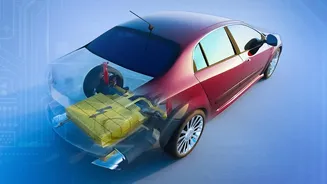
culprit behind this high cost is the battery pack, which can account for up to 40-50% of the vehicle's total price. These batteries have overwhelmingly been of the lithium-ion variety. The challenge with lithium is twofold: it is a relatively scarce resource, and its supply chain is subject to geopolitical tensions and price volatility. India, in particular, has very limited lithium reserves, making the country heavily dependent on imports for this critical component. This reliance not only drives up costs but also poses a strategic vulnerability for the nation's ambitious EV goals.
Enter the Sodium-Ion Solution
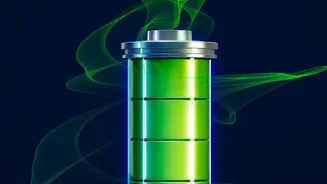
Imagine a battery built from one of the most abundant and inexpensive materials on Earth: sodium. In its most common form, we know it as table salt. Sodium-ion batteries work on a principle very similar to their lithium-ion counterparts, moving ions between a cathode and an anode to store and release energy. The key difference, however, is the raw material. Sodium is over 500 times more abundant than lithium and can be sourced easily and cheaply, including from seawater. This fundamental advantage in material cost and availability is why sodium-ion technology is being hailed as a potential game-changer for affordable energy storage and electric mobility.
Why It's a Perfect Fit for India
The advantages of sodium-ion batteries align almost perfectly with India's specific needs. Beyond the obvious cost reduction, this technology promises greater energy security and self-reliance, a core goal of the Atmanirbhar Bharat mission. By developing a domestic sodium-ion battery industry, India can drastically reduce its import dependency. Furthermore, these batteries have demonstrated excellent thermal stability, making them well-suited for India's diverse and often extreme climatic conditions. They also offer a significant safety improvement, as they are inherently less prone to the fire risks sometimes associated with lithium-ion cells. With benefits like faster charging capabilities and a long cycle life reported by developers, sodium-ion technology is particularly promising for high-use applications like electric two-wheelers, three-wheelers, and commercial vehicles.
India's Key Players Are Stepping Up
Several Indian companies are making significant strides in this space. Pune-based KPIT Technologies developed its own sodium-ion battery technology and has since partnered with Trentar Energy Solutions to commercialise it, with plans for a manufacturing facility. Reliance Industries, through its UK subsidiary Faradion and its New Energy division, is also heavily invested in the technology, with plans to begin manufacturing battery cells by 2026. Hyderabad's Sodion Energy has also launched its own range of sodium-ion batteries, initially targeting aftermarket applications. These efforts are complemented by academic breakthroughs, such as the ultra-fast-charging sodium-ion battery developed by the Jawaharlal Nehru Centre for Advanced Scientific Research (JNCASR).
What Are the Hurdles and Timelines?
Despite the immense promise, sodium-ion technology is not without its challenges. The primary drawback has been its lower energy density compared to lithium-ion batteries. In simple terms, this means a sodium-ion battery of the same weight would offer a shorter range for an EV. While this makes it ideal for stationary storage and smaller vehicles like scooters and auto-rickshaws, its application in long-range passenger cars is still a work in progress. However, researchers and companies are rapidly closing this gap, with some second-generation cells showing significant improvements. The technology is moving from the lab to commercial pilot stages. Widespread deployment in mass-market electric two and three-wheelers in India is expected between 2026 and 2028, which should have a noticeable impact on vehicle pricing.