






A Monsoon Ritual
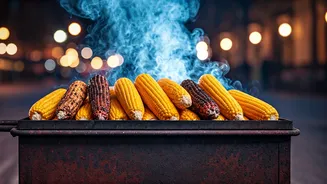
It begins almost like clockwork. The sky turns a brooding grey, the smell of petrichor hangs heavy in the air, and suddenly, they appear. At street corners, outside office parks, and near busy markets, the humble bhutta cart becomes a fixture of the urban
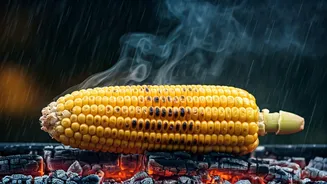
landscape. For millions of Indians, the monsoon is incomplete without the experience of huddling under a makeshift shelter, watching raindrops sizzle against hot coals while a corn cob is roasted to smoky perfection. It’s a multi-sensory ritual: the rhythmic fanning of the embers, the hiss of the corn against the heat, and the final, glorious anointment with a slice of lime dipped in a mixture of salt and spices. This isn't just about eating; it’s about participating in a seasonal rite of passage that connects us to our childhoods and to the rhythm of nature itself.
More Than Just a Snack
To dismiss bhutta as just another street food would be a gross understatement. It is a vessel for nostalgia, a tangible piece of countless personal histories. It’s the memory of a post-school treat, a long drive with family during a downpour, or a simple, shared moment with a friend. Unlike a packaged snack, bhutta is an experience crafted in the moment, tailored to your exact preference—more spice, less salt, extra lime. This customisation is part of its charm. In an age of complex café menus and global food trends, the bhutta offers a return to simplicity. It’s wholesome, elemental, and deeply satisfying, providing a warm, savoury counterpoint to the damp chill of a rainy day.
The Art of the Bhutta-Wallah
The person behind the cart is more than a vendor; they are a craftsman. Watch closely and you’ll see the skill involved. There’s a specific way to arrange the coals for even heat. There’s an instinct for knowing exactly when to turn the cob, ensuring each kernel is cooked through without being burnt. They understand the subtle differences in the corn, selecting the perfect one for each customer. The final act—rubbing the cob vigorously with a half-cut lime laden with masala—is a flourish of expertise, a practiced motion that distributes flavour perfectly. These vendors, many of whom are part of the informal economy, become seasonal anchors in our neighbourhoods, their presence a comforting sign that the best part of the year has arrived.
Desi vs. Sweet Corn: A Friendly Rivalry
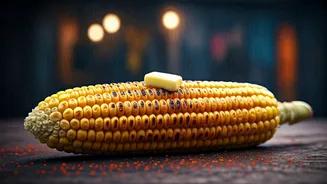
In recent years, a gentle debate has emerged on the streets: the classic desi bhutta versus the American sweet corn. The traditionalist swears by the desi variety. It’s chewier, starchier, and has a more subtle, earthy flavour that serves as a perfect canvas for the smoky char and the tangy masala. It demands a bit of a workout for your jaw, but the payoff is a uniquely rustic taste. On the other side is the American sweet corn, often boiled rather than roasted. Its kernels are plump, juicy, and burst with sweetness. It’s an easier, softer eat, preferred by those who favour sweetness over smoke. While vendors now cater to both preferences, for many purists, the only true monsoon bhutta is the one that’s been kissed by fire and smoke.
A Taste of the Moment
Ultimately, the magic of bhutta lies in its immediacy. It’s not something you can easily replicate at home. The flavour comes from the charcoal, the open air, and the specific blend of spices guarded by the vendor. It’s a food that must be eaten then and there, standing on the pavement as the world bustles by. It forces you to pause, to be present, and to savour a simple, inexpensive joy. As our cities modernise and our food choices become ever more global, the enduring appeal of the corner bhutta cart is a powerful reminder that some of the best things in life are simple, seasonal, and shared.