



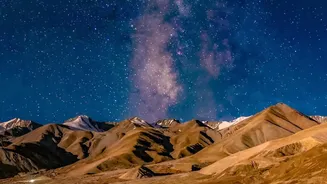
India's First Celestial Sanctuary
Deep in Ladakh’s Changthang region, the village of Hanle is home to India's first-ever Dark Sky Reserve. Officially established in 2022, this sanctuary is a designated area where light pollution is actively minimised to protect the natural darkness of the night
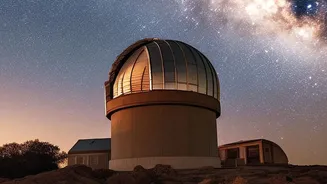
sky. The reserve spans a 1,073-square-kilometre area within the Changthang Wildlife Sanctuary, centred around the Indian Astronomical Observatory. It was created through a partnership between the Indian Institute of Astrophysics (IIA), the Ladakh administration, and the local hill council. This initiative isn't just about pretty views; it's a serious commitment to preserving one of the world's most pristine astronomical sites for science, culture, and a new wave of tourism.
Why Hanle's Skies Are So Special
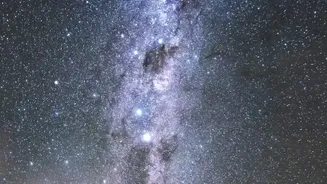
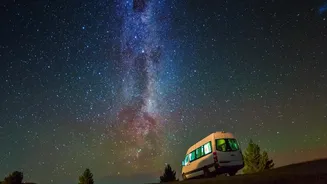
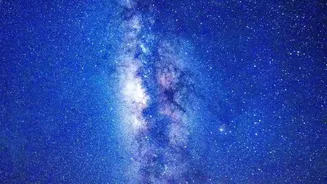
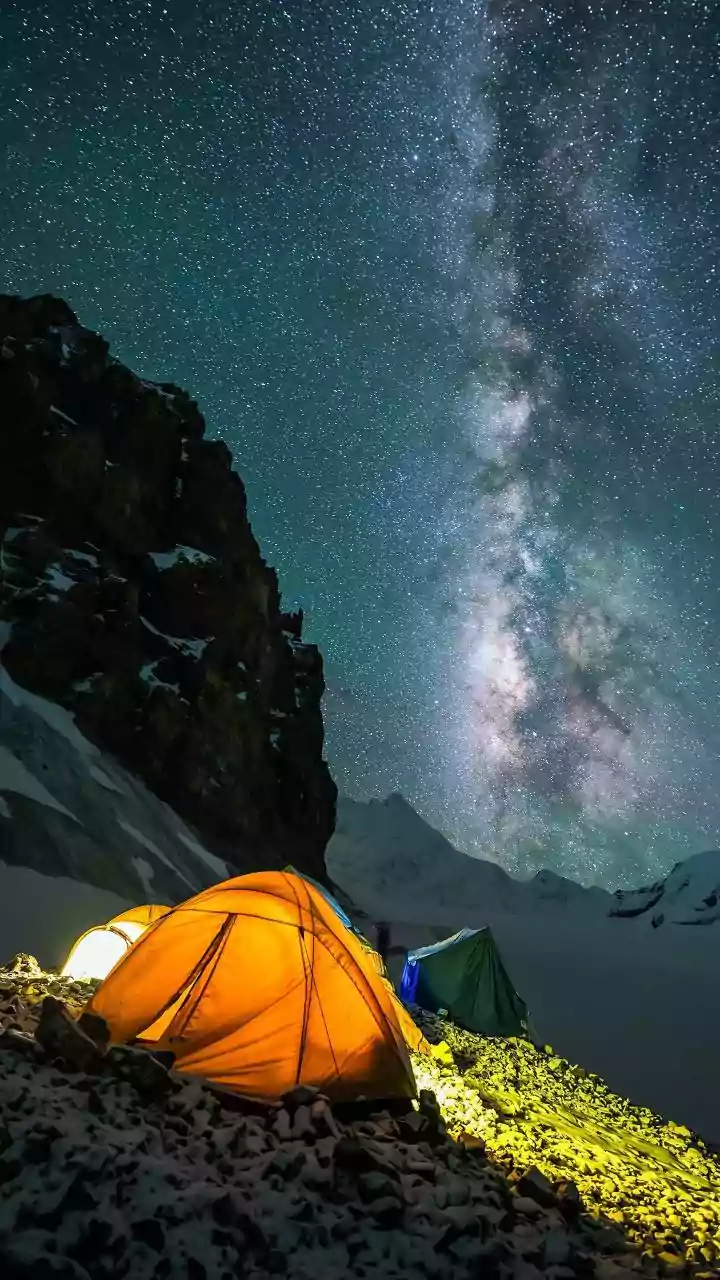
Hanle's location makes it a global hotspot for astronomy. Situated at a breathtaking altitude of 4,500 metres (nearly 15,000 feet), the air is thin, dry, and remarkably stable. This high-altitude desert landscape experiences over 300 clear, cloudless nights a year, offering near-perfect conditions for peering into deep space. Its remoteness means there is virtually no man-made light pollution, earning it a Bortle-1 classification—the highest possible rating for sky darkness. In such conditions, the Milky Way doesn't just appear as a faint band; it's a brilliant, textured river of light, and stars shine with a steady intensity, appearing like jewels instead of twinkling dots.
A Hub for Cutting-Edge Science
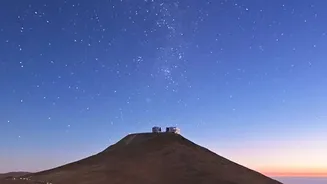
The same dark, clear skies that mesmerise visitors make Hanle a world-class site for astronomical research. The Indian Astronomical Observatory (IAO), operated by the IIA, has been here since 2001. This facility hosts several powerful instruments, including the Himalayan Chandra Telescope, one of the highest optical-infrared telescopes in the world. Scientists at Hanle study distant galaxies, cosmic rays, and other celestial phenomena that are invisible from more polluted or less stable locations. While the observatory itself is a working research facility and not open to tourists at night, its presence underscores the scientific importance of protecting this unique environment.
Community at the Heart of Conservation
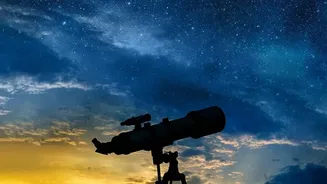
The success of the Hanle Dark Sky Reserve hinges on the local community. To maintain the pristine darkness, residents have adopted light-discipline practices, using shielded, warm-toned bulbs and even blackout curtains to prevent light spill. This isn't just a top-down mandate; it’s a community-led movement that ties conservation to economic empowerment. The IIA has trained local residents, many of them women, to become 'Astronomy Ambassadors'. These guides are equipped with telescopes and lead stargazing sessions for tourists, offering an authentic and educational experience. This astro-tourism model creates a sustainable livelihood that directly benefits local families, giving them a stake in preserving the darkness that now defines their home.
Planning Your Cosmic Journey
A trip to Hanle requires planning. Located about 270 kilometres from Leh, the journey is a full-day drive through starkly beautiful, high-altitude terrain. The best time to visit is from May to September, when the weather is clear and the roads are accessible. As Hanle lies in a sensitive border region, both Indian and foreign travellers need to secure permits before visiting. Accommodation is primarily in local homestays, offering a simple but deeply immersive experience. For the best views, plan your trip around the new moon, when the sky is at its absolute darkest. This ensures you witness the full glory of what Hanle has to offer: a truly humbling connection to the cosmos.