



The Next Giant Leap: Gaganyaan
The single most ambitious project on ISRO's immediate horizon is the Gaganyaan mission, India's inaugural foray into human spaceflight. This programme aims to send a crew of up to three Indian astronauts into a 400-kilometre orbit for several days before
bringing them safely back to Earth. The first uncrewed test flights are slated for 2026, with the historic first crewed flight planned for 2027. Successfully launching its own astronauts will make India only the fourth nation in the world to possess this capability, after the US, Russia, and China. This isn't just about planting a flag in orbit; it's a critical step that demonstrates immense technological prowess and opens the door for more complex, long-duration missions in the future. The entire nation is watching as ISRO meticulously tests every component, from crew safety systems to splashdown recovery procedures, to ensure the mission's success.
A Home in Orbit: Bharatiya Antariksha Station
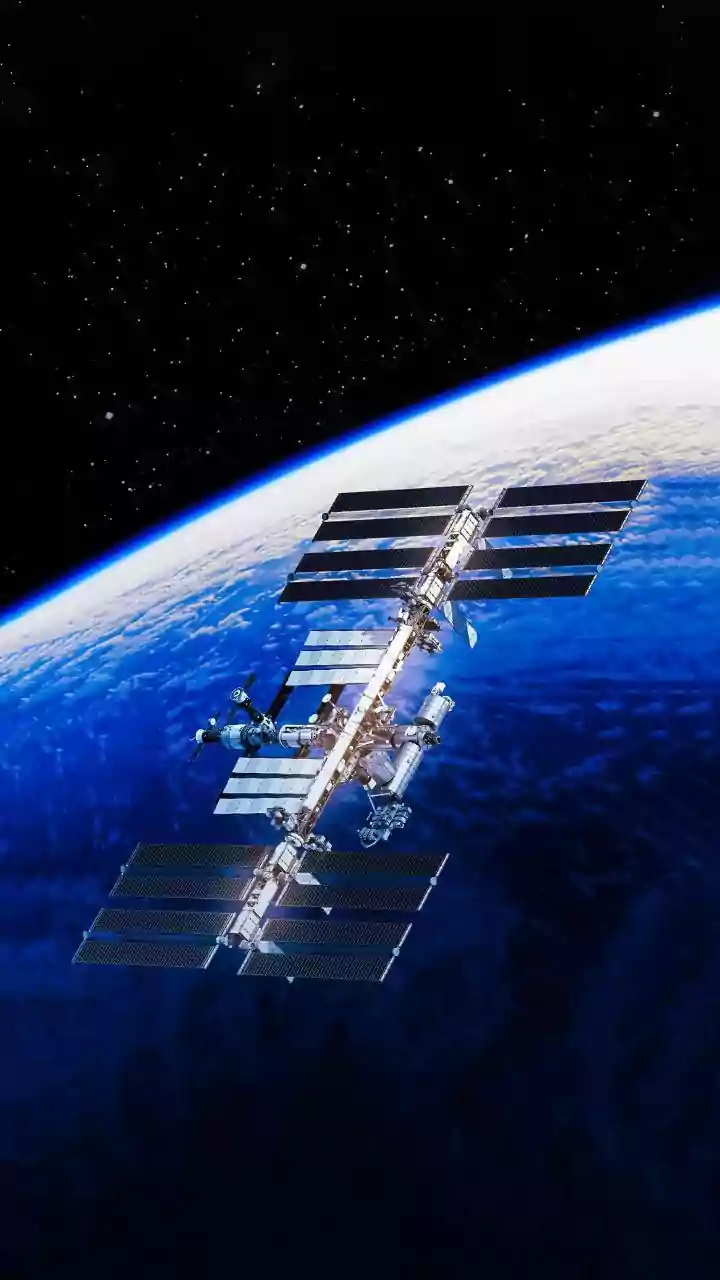
Building on the capabilities developed for Gaganyaan, ISRO is planning to establish a permanent address in space: the Bharatiya Antariksha Station (BAS). This modular space station is envisioned as India's answer to the International Space Station and a cornerstone of the nation's Space Vision 2047. The plan involves launching the first module by 2028, with the full five-module station expected to be operational by 2035. This orbital outpost will serve as a laboratory in microgravity, enabling cutting-edge research in life sciences, materials, and medicine that is impossible to conduct on Earth. It will be a hub for scientific innovation and a crucial platform for testing technologies needed for even more distant journeys, such as a crewed mission to the Moon.
Exploring New Worlds: Venus and Beyond
ISRO is also setting its sights deeper into the solar system. After the stunning success of the Mars Orbiter Mission (Mangalyaan), the next planetary target is Venus. The Shukrayaan orbiter mission, approved in September 2024, will be dispatched to study the mysterious, cloud-shrouded planet. Its objectives include mapping the surface and analysing the intensely hot and dense atmosphere to understand why Earth's 'twin' evolved so differently. Alongside Shukrayaan, ISRO is preparing for Chandrayaan-4, a technically demanding mission to collect lunar samples from the Moon's surface and return them to Earth for analysis. These science-driven missions not only expand human knowledge but also solidify India's position as a major player in global planetary exploration.
The Powerhouse: A New Generation of Rockets
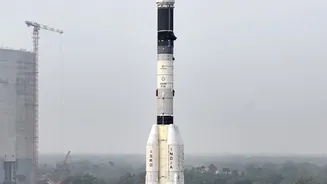
Ambitious goals like building a space station and sending humans to the Moon require powerful and cost-effective rockets. To meet this need, ISRO is developing the Next Generation Launch Vehicle (NGLV). This heavy-lift rocket is designed to carry three times the payload of the current LVM3 and will feature a reusable first stage, dramatically lowering the cost of access to space. The Union Cabinet approved the project in September 2024, recognizing its critical role in achieving India's long-term space vision. The NGLV will be the workhorse for launching space station modules and, eventually, the vehicle that could carry Indian astronauts towards the Moon by 2040. Its development involves deep collaboration with Indian industry, fostering a self-reliant and robust domestic manufacturing ecosystem.
Fostering a Space Economy
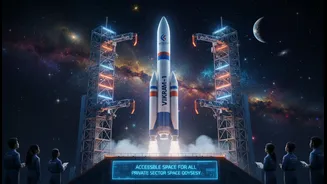
This new era is not just for ISRO alone. A key part of India's strategy is to foster a vibrant commercial space ecosystem. Through reforms and the establishment of IN-SPACe, the government has thrown open the doors for private companies to participate in everything from satellite manufacturing to launch services. This has led to a boom in space startups, growing from a single company in 2014 to over 400 by early 2026. Private firms like Skyroot Aerospace are already preparing to launch their own orbital rockets, a sign of a maturing industry. This public-private partnership is designed to accelerate innovation and turn India's space sector into a major economic engine, projected to grow from around $8.4 billion today to as much as $100 billion by 2040.