

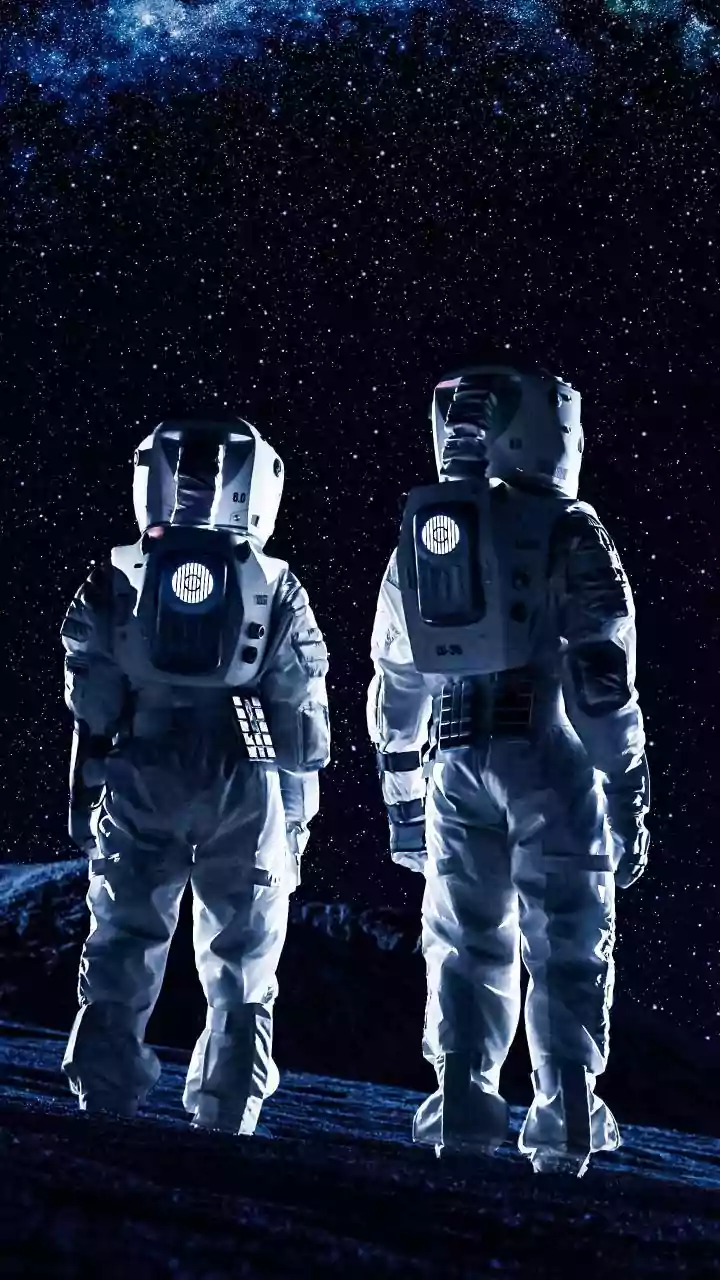





A Personal Spaceship
An extravehicular activity (EVA) suit, better known as a spacesuit, is a marvel of engineering designed to perform one critical function: keep an astronaut alive in an environment where they would otherwise perish in minutes. Space is a near-perfect vacuum,
which means there is no oxygen and no air pressure. Without protection, a human would lose consciousness in about 15 seconds. The suit creates a self-contained world, providing everything a person needs to survive and work for hours outside a spacecraft. It supplies oxygen, removes exhaled carbon dioxide, maintains a safe internal pressure, and shields against a host of invisible dangers.
Fighting the Void: Pressure and Air
The most immediate threat in space is the lack of atmospheric pressure. On Earth, our bodies are accustomed to about 14.7 pounds per square inch of pressure. In a vacuum, the gases in our body fluids would rapidly expand, a process called ebullism. To counter this, a spacesuit has an internal pressure bladder, a rubbery, balloon-like layer that is inflated with pure oxygen to about 4.3 psi. This is lower than Earth's pressure but sufficient to keep body fluids stable. A restraint layer outside the bladder gives the suit its human shape and prevents it from ballooning into an unmovable sphere. The suit's portable life support system, located in the backpack, provides this pure oxygen for breathing and scrubs the carbon dioxide astronauts exhale, preventing a toxic buildup.
Surviving Extreme Temperatures
Space has wild temperature swings. Surfaces exposed to direct sunlight can soar to 121°C (250°F), while those in shadow can plummet to -157°C (-250°F). To protect against this, spacesuits feature a Thermal Micrometeoroid Garment (TMG). This outer section is made of multiple layers. Several layers of aluminised Mylar, separated by a spacer fabric, act like a high-tech thermos to insulate the astronaut from the extreme heat and cold. The outermost layer is typically made of a white, reflective fabric blend that includes materials like Gore-Tex, Kevlar, and Nomex. This layer reflects sunlight and resists fire and tearing. To handle the heat generated by the astronaut's own body, a Liquid Cooling and Ventilation Garment is worn closest to the skin. It's a spandex suit threaded with hundreds of feet of tubing that circulates cool water, carrying away excess body heat.
An Armour Against Tiny Bullets
The same Thermal Micrometeoroid Garment that handles extreme temperatures also serves as a form of armour. Space is filled with tiny particles of rock and debris, some travelling at speeds of up to 27,000 kilometres per hour. Even a fleck of paint can have a devastating impact at such velocities. The multiple layers of the TMG, including tough, bullet-resistant fabrics like Kevlar, are designed to break up and slow these particles before they can puncture the critical pressure bladder inside. The helmet's visor is also built from strong polycarbonate to withstand impacts and is coated with a thin layer of gold to filter the sun's harmful ultraviolet and infrared radiation.
The Next Generation of Spacewear
For decades, NASA astronauts have used the Extravehicular Mobility Unit (EMU), first designed in the 1980s. While incredibly successful, new missions to the Moon and Mars require new solutions. Private companies like Axiom Space are now developing the next generation of suits, known as the Axiom Extravehicular Mobility Unit (AxEMU). These modern suits are designed to be more flexible, allowing astronauts to walk, bend, and kneel more easily on a planetary surface. They also offer a better fit for a wider range of body sizes and provide enhanced protection against the harsh, dusty environment of the lunar south pole. As humanity prepares to venture farther into the solar system, the evolution of the personal spaceship remains as critical as the rockets that will take us there.