





The Cosmic Heritage of Halley's Comet
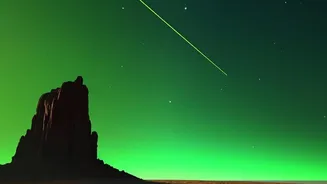
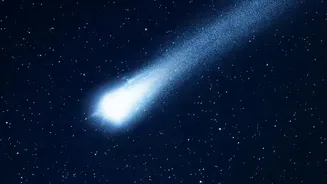
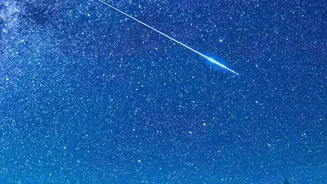
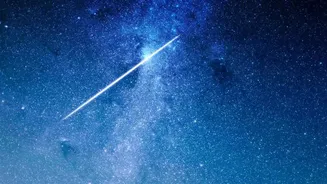
The Orionid meteor shower is one of the most beloved celestial events of the year, known for its fast, bright meteors. These shooting stars are not random; they are tiny fragments shed by one of history's most famous comets, 1P/Halley. Halley’s Comet
swings through the inner solar system every 76 years, leaving a trail of icy, dusty debris in its orbit. When our planet crosses this path each October, these particles burn up in our atmosphere at incredible speeds—about 66 kilometres per second—creating the fiery streaks we call the Orionids. This event provides a direct connection to a comet that has been observed for centuries and won't return to our skies until 2061. Earth actually passes through Halley's debris twice a year, also causing the Eta Aquariid shower in May.
The Moonlight Problem in 2026
The primary obstacle for sky-gazers during the 2026 peak is the Moon. On the nights of October 21 and 22, the Moon will be in a waxing gibbous phase, meaning it will be about 78% illuminated. A bright moon acts like natural light pollution, washing out the sky and making it difficult to spot the fainter meteors. Under ideal, dark-sky conditions, the Orionids can produce about 15 to 25 meteors per hour. However, the moonlight will significantly reduce this number, obscuring all but the brightest fireballs for much of the night. This doesn't mean the show is cancelled, but it does mean that strategy and timing are more important than ever.
Strategic Viewing: Timing is Everything
The key to seeing the Orionids this year is to wait out the Moon. On the peak mornings of October 21-22, the Moon will set around 3 a.m. local time. This opens a precious window of true darkness between moonset and the beginning of dawn. The shower's radiant—the point in the sky where the meteors appear to originate—is in the constellation Orion, which rises in the east after midnight and is highest in the sky in the pre-dawn hours. Therefore, the absolute best time to watch will be from roughly 3 a.m. until dawn, when the Moon is gone and the radiant is high. While you might catch a few bright meteors earlier in the night, your chances increase dramatically in that dark, early morning window.
Where to Point Your Gaze
The meteors are named Orionids because they appear to radiate from the constellation Orion the Hunter. You can locate Orion by looking for its famous three-star belt. The radiant itself is near the bright, reddish star Betelgeuse, which marks Orion's shoulder. However, you shouldn't stare directly at the radiant. Meteors seen right next to this point will have very short, stubby trails due to perspective. For the best views, look about 45 to 90 degrees away from the radiant. The meteors will appear longer and more spectacular as they streak across other parts of the sky. The most important tip is to take in as much of the sky as possible, so lie back and look straight up. Meteors can appear anywhere.
Tips for a Successful Viewing
To maximize your chances, get as far away from city lights as you can. A dark, rural location is crucial, especially with a bright moon to contend with. Once you've found your spot, allow your eyes at least 20 to 30 minutes to fully adapt to the darkness; this means no looking at your phone. Dress warmly and get comfortable in a reclining chair or on a blanket. You don't need a telescope or binoculars, as they limit your field of view. The naked eye is the best tool for watching a meteor shower. Finally, be patient. Meteor watching involves waiting for brief moments of action, but the sight of a bright Orionid leaving a persistent, glowing train across the sky is a worthwhile reward.