



The Power of Warrior Three
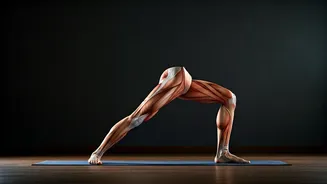
Virabhadrasana III, or Warrior III, is more than just a balancing act; it’s a full-body exercise that builds strength, stability, and mental clarity. It strengthens the muscles in your standing leg, including the quadriceps, hamstrings, and glutes, while
also engaging the small stabilizing muscles around your ankles. The core, including your abdominal and back muscles, works hard to keep your torso lifted and spine long. This powerful posture improves your overall body awareness and concentration, as maintaining the pose requires deep focus and steady breathing. The benefits extend beyond the yoga mat, enhancing your coordination for daily activities and other athletic pursuits.
A Step-by-Step Guide
Entering Warrior III with control is key. Start in a High Lunge with your right foot forward and hands on your hips to ensure they are facing forward. Engage your core by drawing your lower belly in and up. Begin to hinge forward from your hips, shifting your weight onto your right foot. As your torso moves forward, lift your left leg straight behind you. Aim to create a straight line from the crown of your head to your left heel, bringing your torso and lifted leg parallel to the floor. Your standing leg should be strong, with a micro-bend in the knee to avoid locking the joint. Flex your lifted foot and point your toes directly down toward the mat. This helps keep the hips level.
Avoiding Common Mistakes
Perfecting Warrior III often involves correcting a few common alignment issues. One of the most frequent mistakes is opening the hip of the lifted leg, causing it to be higher than the standing hip. To fix this, actively rotate your lifted hip downward until both hip points are level and facing the floor. Another common error is letting the chest drop or the back round. Instead, focus on lengthening your spine, reaching forward through the crown of your head as you press back through your lifted heel. Also, avoid locking your standing knee; a slight bend protects the joint and improves balance. Finally, keep your gaze (drishti) fixed on a single, unmoving point on the floor in front of you to maintain stability.
Modifications for Every Level
Warrior III is a challenging pose, but modifications can make it accessible to everyone. If you're a beginner, practice near a wall. You can either press your lifted foot into the wall for support or place your hands on the wall in front of you. Using yoga blocks under your hands is another excellent way to find stability as you build strength. For a less intense version, don't hinge as far forward; you can keep your torso at a 45-degree angle instead of parallel to the floor. There are also several arm variations. While extending the arms forward is the most challenging, you can bring your hands to your hips, out to the sides like airplane wings, or together at your heart in a prayer position (Anjali Mudra).
Breathing Through the Wobble
Your breath is your anchor in any balance pose. When you feel unsteady, the natural tendency is to hold your breath, which creates tension and makes balancing even harder. Instead, focus on maintaining a steady, even breath. Inhale to find length in your spine and exhale to deepen your core engagement and ground down through your standing foot. If you start to wobble, breathe through it. Every wobble is your body making micro-adjustments and learning to stabilize itself. Embracing this process without judgment is a crucial part of the practice. With each breath, you cultivate the calmness and focus needed to find stillness in the pose.