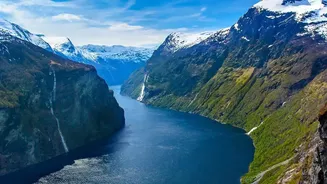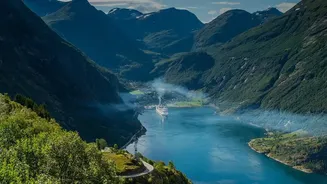



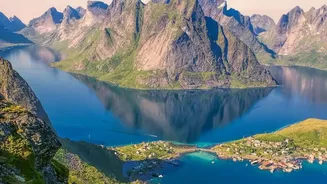
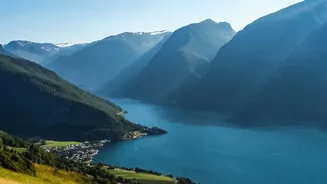
Carved by ancient glaciers, a fjord is a deep, narrow inlet of the sea surrounded by towering cliffs. These dramatic waterways offer some of the most spectacular travel experiences, bringing visitors into the heart of raw, natural beauty.
What is a Fjord?
A fjord is a
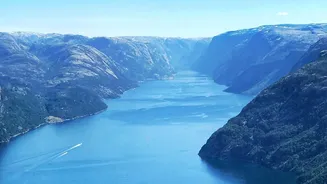
long, deep, and narrow sea inlet, created when a glacier cuts a U-shaped valley that is then flooded by the sea. This geological process results in stunning landscapes defined by steep, dramatic cliffs that plunge into calm, sheltered waters. The word 'fjord' itself is one of the few Norwegian words to become an international term, stemming from an Old Norse word meaning 'where one fares through,' related to the words 'fare' and 'ferry'. These natural harbours are typically much deeper inland than they are at their mouth, where glacial deposits often form a shallow threshold, protecting the inner waters from the turbulence of the open sea. This unique geography makes them perfect for exploration by boat, offering calm passage and unforgettable scenery.
Norway: The King of Fjords
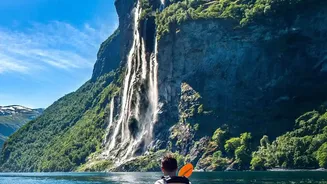
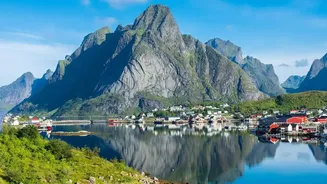
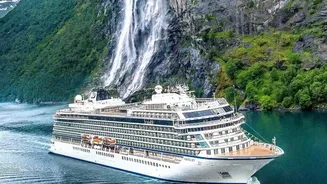
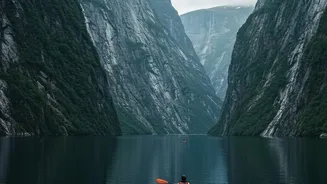
When thinking of fjords, Norway almost certainly comes to mind. The country is home to more than 1,000 fjords, including some of the world's most famous. Sognefjord, the longest and deepest in Norway, is known as the 'King of the Fjords', stretching over 200 kilometers inland. Its vastness is best explored via a combination of cruises and scenic drives, stopping in charming villages like Balestrand and Flåm. The Flåm Railway, one of the world's steepest train journeys, offers breathtaking views as it descends from the mountains to the fjord. Further north, the Geirangerfjord, a UNESCO World Heritage site, is celebrated for its exceptional beauty, featuring iconic waterfalls like the 'Seven Sisters' and 'The Suitor'. Visitors can take a ferry cruise, kayak on the turquoise water, or hike to abandoned mountain farms like Skageflå for unparalleled views. For a more active adventure, RIB boat safaris provide a thrilling way to get up close to the cascading waterfalls.
Iceland: The Wild Westfjords
For travellers seeking a more remote and rugged experience, Iceland's Westfjords region is an explorer's paradise. This vast, sparsely populated peninsula in the country's northwest corner is often called Iceland's 'best-kept secret', as only a small fraction of tourists venture here. The landscape is defined by dramatic fjords where sheer mountains meet the sea, creating a sense of powerful isolation. Unlike the more famous fjords of Norway, the Westfjords offer a wilder, less-traveled adventure. Key attractions include the stunning Dynjandi waterfall, a series of cascades tumbling 100 meters, and the Látrabjarg cliffs, one of Europe's largest bird cliffs and a summer home to thousands of puffins. The region's unique red sand beach, Rauðisandur, provides a striking contrast to Iceland's typical black volcanic coasts. Getting here can be a challenge, but the rewards are solitude and an intimate connection with nature.
Montenegro: The Adriatic Gem
While not a true fjord in the glacial sense, the Bay of Kotor in Montenegro offers a remarkably similar and equally stunning experience. Often referred to as Europe's southernmost fjord, it's a submerged river canyon surrounded by towering limestone cliffs. The bay is a beautiful expanse of calm, aquamarine water dotted with medieval towns and orange-roofed villages. The main town, Kotor, is a fortified medieval city with a maze of cobbled streets, historic churches, and lively squares. Activities include swimming in the serene bay, climbing the fortress walls for panoramic views, or taking a boat tour to nearby islets like 'Our Lady of the Rocks'. Driving or scootering around the bay's narrow, winding roads provides a fantastic way to explore the charming coastal villages of Perast and Dobrota at your own pace. The proximity to Dubrovnik makes it an accessible and rewarding side trip.