

Why Controlled Movement Matters
The secret to a great bodyweight workout isn’t speed; it’s control. Moving with intention and precision forces your muscles to work harder through every phase of an exercise, from the lowering to the lifting. This approach, often called time under tension,
builds muscular endurance and strength while significantly reducing the risk of injury. Unlike movements that rely on momentum, controlled exercises improve your stability, coordination, and overall movement quality, which translates into better performance in everyday activities, from climbing stairs to carrying groceries.
The Foundational Bodyweight Squat
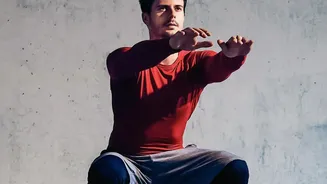
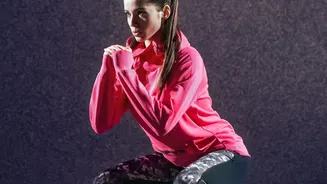
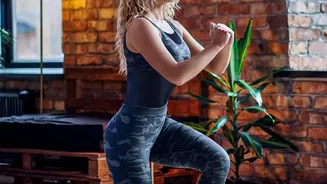
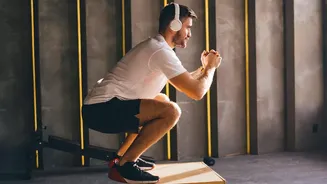
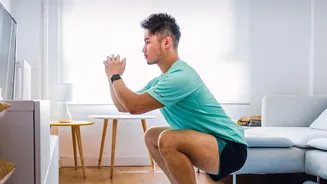
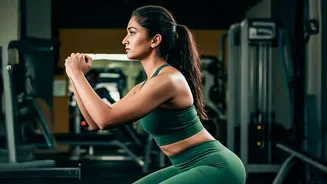
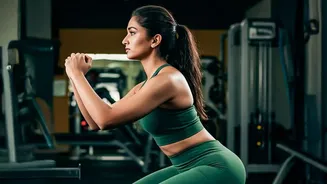
The squat is often called the king of all exercises for a reason: it targets the quadriceps, hamstrings, and glutes all at once. To perform it correctly, stand with your feet slightly wider than your hips, keeping your chest up and your core engaged. Initiate the movement by pushing your hips back as if you’re sitting in a chair, lowering yourself until your thighs are at least parallel to the floor. Ensure your knees track over your second toe and don’t extend past your feet. Push through your heels to return to the starting position. The key is a smooth, deliberate pace, not a rushed bounce.
The Lunge for Single-Leg Strength
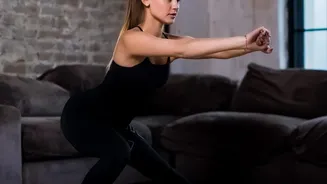
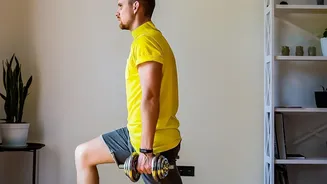
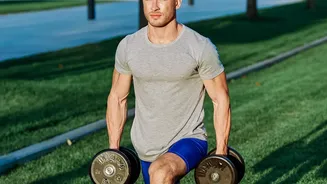
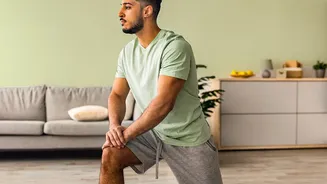
Lunges are excellent for challenging each leg individually, which helps identify and correct strength imbalances. Start by standing with your feet together. Take a large step forward with one leg, then lower your hips until both knees are bent at approximately a 90-degree angle. Your front knee should be directly above your ankle, and your back knee should hover just above the ground. Maintain an upright torso and engaged core. Push off your front foot to return to the starting position, and then repeat on the other side. For beginners, holding onto a wall or chair can help with balance.
The Glute Bridge to Activate Your Posterior Chain
While often seen as a glute exercise, the bridge is fantastic for activating your hamstrings—the muscles on the back of your thighs. Lie on your back with your knees bent, feet flat on the floor hip-width apart, and your arms by your sides. Squeeze your glutes and lift your hips off the floor until your body forms a straight line from your shoulders to your knees. Hold the position for a moment, focusing on the tension in your glutes and hamstrings, before slowly lowering your hips back down. This controlled movement strengthens the entire back of your lower body.
The Wall Sit for Building Endurance
The wall sit, or wall squat, is an isometric exercise that builds incredible endurance and stability in your quadriceps and glutes. To perform it, stand with your back against a wall and slide down until your knees are at a 90-degree angle, as if you are sitting in an invisible chair. Your feet should be flat on the floor, and your back should remain pressed firmly against the wall. Hold this position for 30 to 60 seconds, focusing on keeping your core tight and breathing steadily. You’ll feel the burn, which is a clear sign your muscles are working hard to maintain the contraction.