
The Heart of Peda: Khoya Explained
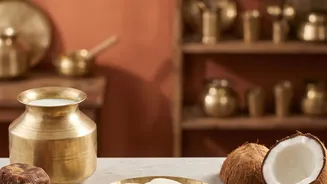
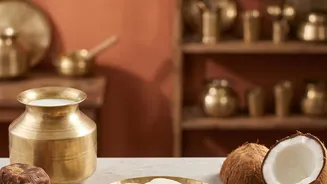
The foundation of any peda is khoya, also known as mawa. This is not simply an ingredient you can easily substitute; it is the result of a patient, careful process. Khoya is created by simmering full-fat milk in a large, heavy-bottomed pan for hours.
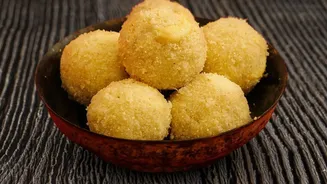
The goal is to slowly evaporate the water content, stirring continuously to prevent scorching, until only the concentrated milk solids remain. The result is a dense, slightly grainy, and rich base, which carries the pure, concentrated flavour of milk. While there are different types of khoya, the one used for peda is typically a firm, dry variety called 'batti khoya', which has a low moisture content, making it ideal for creating the sweet's signature dense structure.
What Makes Mathura's Peda Different
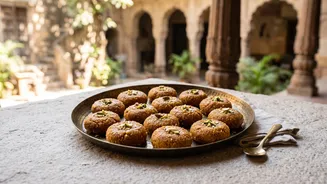
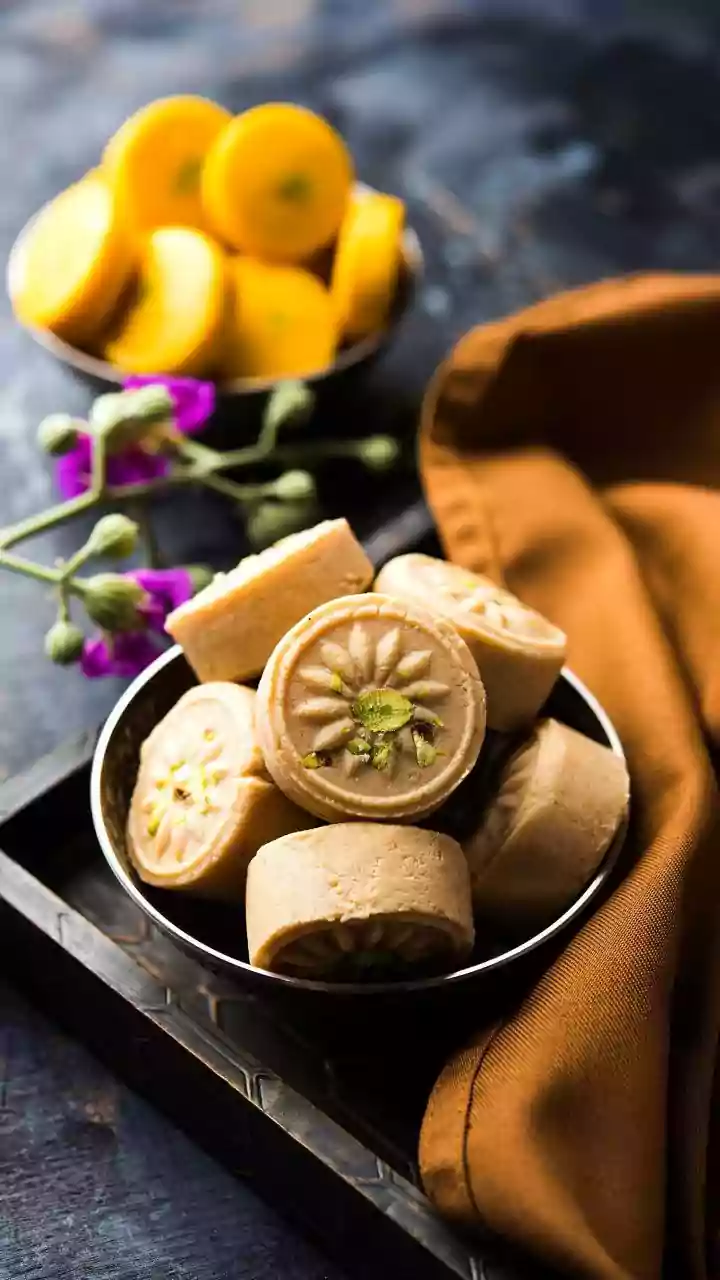
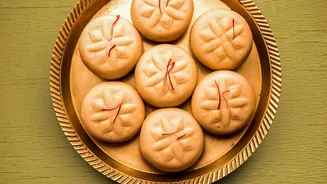
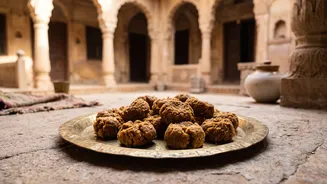
While many regions in India produce peda, the Mathura version stands apart. The secret lies in what happens after the khoya is made. The milk solids are roasted, or 'bhuna,' over a low flame. This is a meticulous step that requires constant attention. As the khoya roasts, the milk sugars begin to caramelize, which is what gives the Mathura Peda its characteristic tan or reddish-brown colour and a deep, nutty aroma. This roasting process not only transforms the flavour from creamy to caramelized but also changes the texture, creating a uniquely grainy-yet-melty quality that is its hallmark. Other pedas might be pale and soft, but Mathura's is defined by this darker, richer profile.
The Role of Local Milk and 'Tagar'
Local artisans and culinary experts often credit the quality of milk from the Braj region surrounding Mathura for the peda's superior taste. The area's long history of dairy farming and its cultural association with Lord Krishna, who is often depicted in tales involving milk and butter, means that dairy is central to the local cuisine. The unique quality of the local milk is said to produce a richer khoya. Furthermore, traditional recipes call for a specific type of sugar known as 'tagar' or 'boora'. This isn't just finely powdered sugar; tagar has a slightly crystalline, uneven texture that doesn't completely dissolve into the warm khoya. This is crucial for achieving the peda's signature grainy mouthfeel, preventing it from becoming uniformly smooth.
A Sacred Offering and Cultural Icon
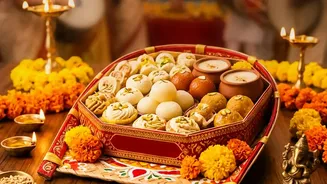
The significance of Mathura Peda goes far beyond its ingredients. It is deeply intertwined with religious practice, serving as a primary 'prasad' or blessed offering in the temples of Mathura and Vrindavan. Devotees often purchase boxes of these sweets to offer to the deity and then share with family and friends, carrying a taste of the holy city back home. This practice has elevated the peda from a local specialty to a nationally recognized symbol of devotion. Its fame is such that the phrase 'Mathura ka peda' is used in folk songs and proverbs, cementing its place in India's cultural lexicon. An application has also been filed to grant the Mathura Peda a Geographical Indication (GI) tag to protect its authentic preparation methods.