






The Great Cloud Deception
One of the biggest skincare myths is that clouds block the sun's harmful rays. The reality is that up to 80% of ultraviolet (UV) radiation can still pass through clouds and reach your skin. While clouds are good at blocking visible light and heat, they
are far less effective against UVA rays, the type responsible for deep skin damage and ageing. In fact, under certain broken-cloud conditions, UV levels can be even higher than on a clear day because the rays reflect and scatter off the edges of clouds. Furthermore, wet surfaces like roads and puddles act like mirrors, reflecting UV rays and increasing your total exposure.
Choose Your Monsoon Armour Wisely
The heavy, greasy sunscreen that saw you through summer might not be your best friend in the high humidity of the monsoon. The key is to find a formula that feels comfortable, so you're more likely to use it daily. Look for products labelled "gel-based," "lightweight," or "fluid," as these absorb quickly without leaving a sticky residue. A "non-comedogenic" formula is also crucial, as it won't clog pores, which is especially important when humidity increases oil production. Opt for a broad-spectrum sunscreen with an SPF of 30 to 50 and a high PA rating (like PA++++) for robust protection against both UVB and UVA rays.
The Right Way to Apply in High Humidity
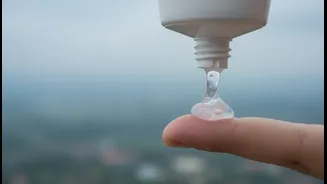
How you apply sunscreen can make a big difference in its effectiveness, especially when the air is damp. Start with clean, completely dry skin. Applying sunscreen to damp or sweaty skin prevents it from forming a stable protective layer. Allow at least 15-20 minutes for the sunscreen to set before you step outside or apply makeup. This waiting period gives the product time to bond with your skin before you start sweating. If your skin needs hydration, use a lightweight moisturiser and let it absorb fully before your SPF step. Use the "two-finger rule"—squeezing sunscreen along the length of your index and middle fingers—to ensure you're applying enough for your face and neck.
Reapplication Rules for Rainy Days
One application in the morning is not enough. Sunscreen's effectiveness degrades over time due to sun exposure, sweat, and oil. During the monsoon, this is amplified. Rain, high humidity, and even wiping your face can remove your sun protection. The standard recommendation is to reapply every two hours when outdoors. Even if your sunscreen is labelled "water-resistant," it's essential to reapply after getting caught in a downpour, heavy sweating, or towel drying. For easy top-ups over makeup, consider a sunscreen spray or stick, which can be applied with minimal disruption.
Don't Forget the Details
Sun damage isn't limited to your face. Many people neglect other exposed areas that are just as vulnerable during the monsoon. Pay special attention to your ears, the back of your neck, your hands, and your feet if you're wearing open footwear. These areas receive significant cumulative sun exposure over time. UVA rays can also penetrate glass, so if you spend your day sitting near a window at home or in the office, or commute by car, your skin is still being exposed. Consistent, all-over protection is the only way to effectively guard against the silent damage that occurs even on the greyest days.