



A Rising Star on the World Stage
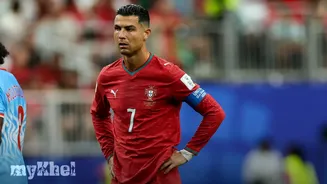
By 2006, Cristiano Ronaldo was already a star, but not the global behemoth he would become. He was Manchester United's dazzling, sometimes frustrating, No. 7. For Portugal, he was the electrifying young talent supporting a 'Golden Generation' led by legends
like Luís Figo and Deco. Arriving in Germany, the expectation was for Ronaldo to be a key player, an explosive winger who could provide moments of magic. Few could have predicted he would become the tournament’s most compelling and controversial character.
Group Stage: Promise and a First Goal
Portugal navigated their group with a perfect record, and Ronaldo was central to their efforts. He was a constant menace to defences with his pace and trickery. His crowning moment in the group stage came against Iran, where he confidently dispatched a penalty to score his first-ever World Cup goal. It was a significant milestone for the young forward, who had become Portugal’s youngest-ever goalscorer at a World Cup finals. He was named man of the match in that game, showcasing his growing influence on a team filled with experienced stars. His tournament was off to a flying start.
The Battle of Nuremberg
The Round of 16 clash against the Netherlands is infamous. Dubbed 'The Battle of Nuremberg,' it set a World Cup record with 16 yellow cards and 4 red cards. For Ronaldo, it was a brutal and short-lived affair. Early in the first half, he was the victim of a cynical, thigh-high tackle from Khalid Boulahrouz. Though he tried to play on, he eventually succumbed to the injury and was substituted in tears in the 34th minute. It was a moment of heartbreak, but his team battled through to win 1-0 in one of the most chaotic matches in World Cup history.
The Wink That Defined a Tournament
After recovering from his injury, Ronaldo faced his then-home, England, in the quarter-finals. The match would become the defining moment of his tournament and, arguably, his early career. After his Manchester United teammate Wayne Rooney stamped on Ricardo Carvalho, Ronaldo rushed to the referee, vehemently protesting. Rooney was sent off. As the distraught English striker walked off the pitch, cameras caught Ronaldo looking towards the Portuguese bench and delivering a subtle, now-infamous, wink. To English fans and media, it was the ultimate betrayal—a club teammate getting another sent off. Whether he influenced the decision or not, the wink cemented his status as a villain.
Penalty Hero, Semi-Final Heartbreak
The drama didn't end there. After a goalless draw, the match went to a penalty shootout. With the weight of English hatred on his shoulders, Ronaldo stepped up to take the decisive fifth penalty. He calmly slotted it home, sending Portugal to their first World Cup semi-final since 1966 and knocking England out. It was a display of incredible mental fortitude. However, the fairytale ended in the next round. A Zinedine Zidane penalty was enough for France to beat Portugal 1-0. A subsequent loss to hosts Germany in the third-place play-off meant Ronaldo and the Golden Generation finished fourth, an achievement tinged with the disappointment of what could have been.
The Legacy of 2006
Statistically, Ronaldo’s 2006 World Cup was modest: one goal and a fourth-place finish. But his impact was immeasurable. The tournament forged his public persona. In Portugal, he was the hero who scored the winning penalty against a historic rival. In England, he was the villain who returned to a storm of media criticism and boos in every stadium. Yet, this adversity only seemed to fuel him. He responded with the best season of his career, leading Manchester United to the Premier League title in 2006-07 and setting him on a direct path to his first Ballon d'Or in 2008. The 2006 World Cup was where Ronaldo learned to thrive on pressure and controversy, turning it into the fuel that powered his ascent to greatness.