


A Planet That Pushes Back
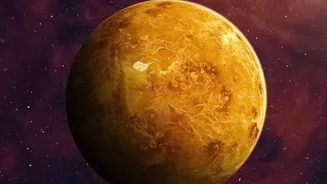
Exploring Venus is one of the greatest challenges in the solar system. The planet’s surface is a true vision of hell, with temperatures soaring to 475°C, hot enough to melt lead. The atmospheric pressure is over 90 times that of Earth at sea level, equivalent
to being 900 metres deep in the ocean. Any spacecraft attempting to land would be simultaneously crushed and cooked. To make matters worse, the planet is shrouded in thick clouds of corrosive sulphuric acid that race around the planet at speeds up to 360 kilometres per hour, making it impossible to see the surface with conventional cameras and posing a threat to any machine that enters its grasp. It is this extreme environment that ISRO's Shukrayaan-1 orbiter is designed to conquer from a distance.
Shukrayaan-1: India’s Next Giant Leap
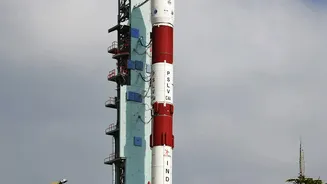
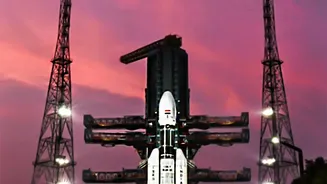
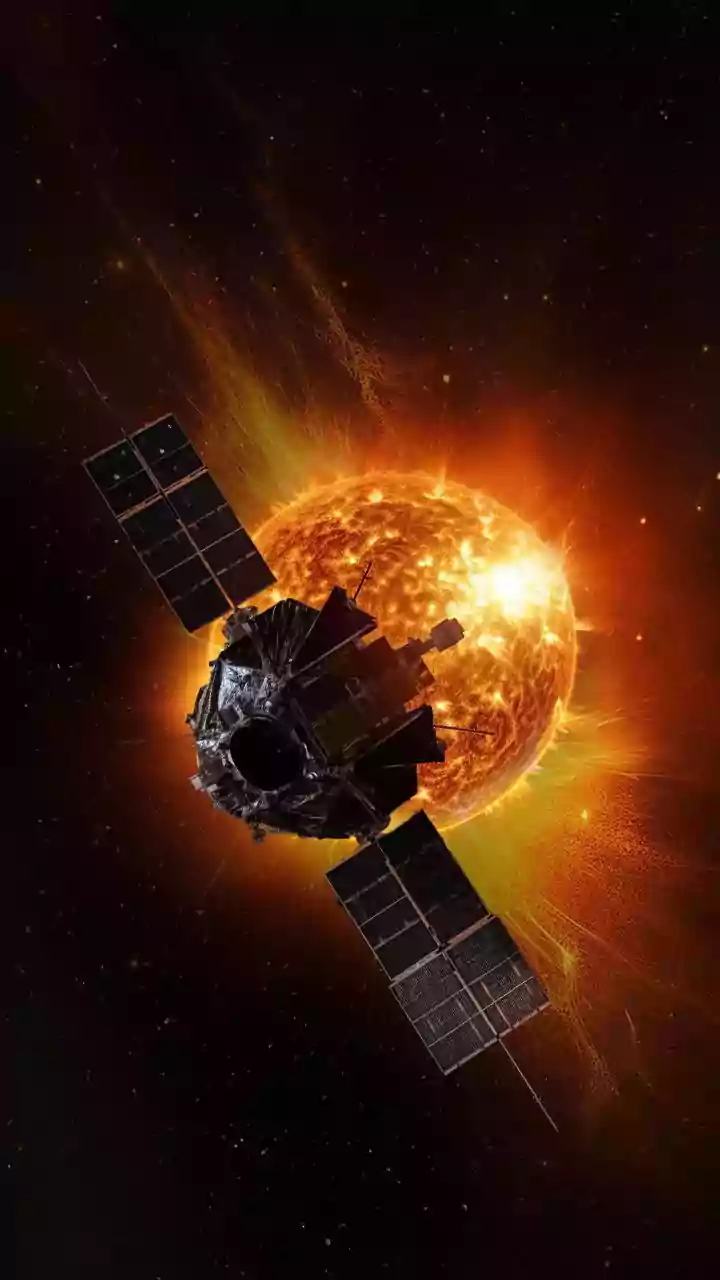
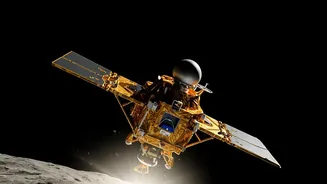
Following the historic successes of its Mars and Moon missions, the Indian Space Research Organisation (ISRO) is setting its sights on Venus. The Shukrayaan-1 mission, planned for a 2028 launch, is an ambitious orbiter project designed to conduct a comprehensive study of the planet. The spacecraft will not land but will circle Venus in a highly elliptical orbit, using a powerful suite of instruments to achieve its scientific goals from a safe altitude. The mission's primary objectives are threefold: to map the surface and subsurface, to analyse the complex atmospheric chemistry, and to study the interaction between the planet and the solar wind.
A High-Tech Toolkit for a Hostile World
The heart of the Shukrayaan-1 mission is its 100 kg scientific payload, a collection of advanced sensors contributed by India and international partners. The flagship instrument is a high-resolution Synthetic Aperture Radar (SAR). Unlike optical cameras, radar can penetrate Venus’s dense cloud cover to map the geological features below, such as volcanoes and lava flows, with unprecedented detail. The mission will also be the first to deploy a ground-penetrating radar, which will probe beneath the planet’s surface to study its geological layers. This will provide the first-ever three-dimensional picture of the Venusian crust.
Decoding the Chemical Mysteries
To study the atmosphere, Shukrayaan-1 is equipped with several specialised sensors. The Venus Infrared Atmospheric Gases Linker (VIRAL), a collaborative instrument from Russia and France, is designed to analyse the composition of the upper atmosphere. It will search for key gases like carbon dioxide and sulphur dioxide, and will also investigate the tantalising, though contested, discovery of phosphine—a potential biosignature. Other instruments, including a mass spectrometer and thermal camera, will measure the temperature, structure, and dynamics of the atmosphere. A suite of plasma analysers, developed with Swedish and German collaboration, will study how the solar wind strips away particles from Venus's atmosphere, helping explain why it evolved so differently from Earth.
Why Study Our Sister Planet?
The data gathered by these advanced sensors will help answer fundamental questions about Venus. Scientists believe the planet may have once hosted oceans and had a climate similar to Earth's. By studying its runaway greenhouse effect, Shukrayaan-1 could provide invaluable insights into climate change and how planetary environments evolve. The mission aims to understand why Earth's twin took such a divergent path, transforming from a potentially habitable world into the scorching, inhospitable planet it is today. This knowledge is not just about understanding another world; it's about better understanding our own.