







The Ultimate Work-From-Home Gig
In early July 2026, NASA announced it is seeking applicants for its next long-duration simulation: the Moon and Mars Exploration Analog (MMEA) mission. Scheduled to begin no earlier than August 2027, this year-long mission will lock a four-person crew
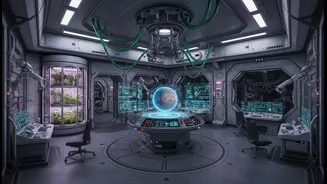
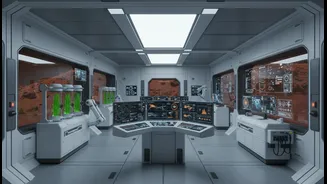
inside a specialized habitat at the Johnson Space Center in Houston. The program is the next evolution of NASA's successful CHAPEA missions, which have been studying the effects of isolation on crews in a 3D-printed Mars habitat. The new MMEA mission uniquely combines two simulations; volunteers will first use the HERA habitat to simulate the long journey through space before transitioning to the CHAPEA habitat, which serves as their base for planetary operations. The goal is to gather crucial data on human health, performance, and psychology to prepare for humanity's return to the Moon and first steps on Mars.
Life on a Simulated Mars
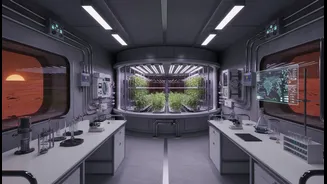
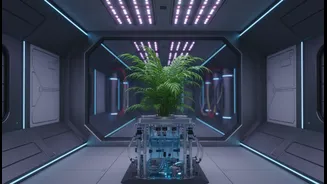
This is no ordinary assignment. For approximately 378 days, the crew will live and work in complete isolation inside Mars Dune Alpha, a 1,700-square-foot habitat created with advanced 3D-printing technology—a method NASA hopes to one day use on Mars itself. Their daily lives will be a carefully structured regimen of scientific experiments, crop cultivation for food, and simulated 'Marswalks' in an adjoining sandbox filled with red sand. To make the experience as realistic as possible, crew members will face a host of Martian challenges, including resource limitations, simulated equipment failures, and a 22-minute communication delay with the outside world, meaning every conversation with mission control or family will have a significant lag.
The Right Stuff, 2027 Edition
While you don't need to be a card-carrying astronaut to apply, the qualifications are demanding and intentionally 'astronaut-like'. NASA is looking for highly motivated U.S. citizens or permanent residents between the ages of 30 and 55 who are in excellent health and are non-smokers. Crucially, candidates need a strong STEM background. The requirements typically include a master's degree in a field like engineering, biological science, or mathematics, along with at least two years of professional experience. Alternative qualifications, such as a medical degree or extensive experience as a jet pilot, are also considered. All applicants must pass a rigorous physical, psychological, and psychiatric screening to prove they have the resilience for a year of intense, confined teamwork.
A New Frontier for Careers
While only a handful of individuals will be selected for the MMEA mission, its existence is a powerful indicator of a much larger trend: the diversification of space careers. For decades, the path to space was narrow, largely reserved for a select few pilots and scientists. Now, as we plan for sustained human presence on the Moon and Mars, the required skill set is exploding. The CHAPEA habitat itself was designed by an architecture firm, Bjarke Ingels Group, and 3D-printed by the construction technology company ICON—fields not traditionally associated with space. The emerging space economy demands not just engineers, but also doctors specializing in space medicine, lawyers versed in interplanetary policy, financial strategists, habitat designers, and mental health professionals who can support crews through extreme isolation.