






The Symphony of Lights
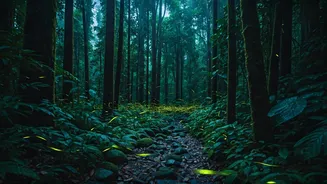
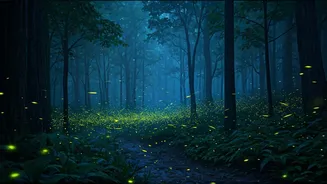
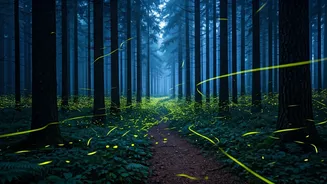
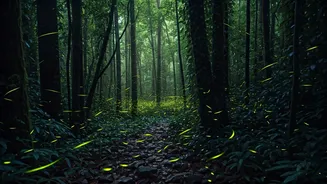
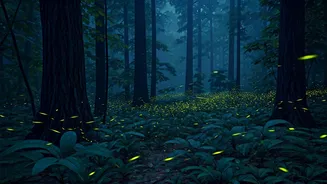
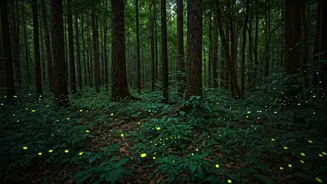
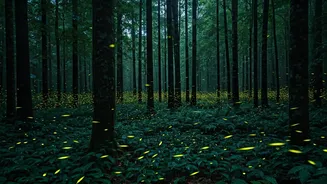
Just before the monsoon fully arrives, in the humid twilight of late May and June, something magical awakens in the forests of India. As darkness falls, the landscape transforms. Tiny, intermittent sparks begin to appear, first one or two, then dozens,
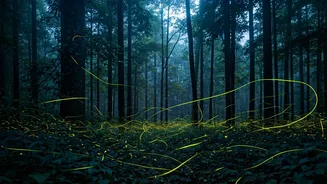
then thousands, until the entire forest canopy is pulsating with a gentle, rhythmic glow. This is the annual spectacle of fireflies, or 'jugnu,' a phenomenon that turns ordinary woods into an ethereal wonderland. For a few precious weeks, these insects conduct a silent symphony of light, creating a breathtaking display that has captivated observers for generations. It is a visual feast that signals the changing of seasons, a fleeting moment of natural artistry painted against the backdrop of the coming rains.
Nature's Cold Light
The mesmerising glow of a firefly is a marvel of biological engineering known as bioluminescence. It is not magic, but a chemical reaction that is nearly 100% efficient. Inside the firefly's abdomen, a substance called luciferin reacts with oxygen in the presence of an enzyme, luciferase. This reaction releases energy in the form of light, with almost no heat produced—a 'cold light' that is far more efficient than any light bulb man has ever created. This biological lantern is something the firefly can control, turning its light on and off in specific patterns. It’s a tiny, living powerhouse of light, creating its own beacon in the dark.
A Language of Light
But this spectacular light show is not just for our benefit. It is a complex and urgent conversation. The flashing lights are the fireflies' language of love, a crucial part of their mating ritual. Typically, the winged males fly through the night, flashing a distinct pattern unique to their species. They are advertising their availability and searching for a partner. Below, on leaves and branches, the often flightless females watch. When a female spots a pattern she likes, she flashes a response. This glowing dialogue can continue, back and forth, as the male homes in on her signal. In areas with dense populations, thousands of males can even synchronise their flashes, creating waves of light that ripple through the forest in a truly jaw-dropping display of collective behaviour.
India's Firefly Hotspots
While fireflies can be found in many rural pockets, some places in India are renowned for their staggering displays. The Western Ghats, particularly in Maharashtra, are a major hub. Villages like Purushwadi, Bhandardara, and Rajmachi have become famous destinations for firefly festivals. Here, organised treks take you deep into the heart of the glowing forests. Further south, the dense forests of Coorg in Karnataka and the tranquil hinterlands of Goa also offer spectacular sightings for those willing to venture off the beaten path. The key is finding a location with minimal light pollution, as the darker the surroundings, the more brilliant the fireflies’ glow will appear.
Be a Guardian of the Glow
This magical phenomenon is also incredibly fragile. Firefly populations are declining globally due to habitat loss, pesticide use, and, most critically, light pollution. Artificial lights from cities, homes, and even car headlights can disrupt their delicate mating signals, effectively blinding them to each other and preventing them from reproducing. As firefly tourism grows, it's vital to be a responsible observer. To protect them, always follow the golden rules: avoid using flashlights and flash photography, as this confuses them. If you must use a light, cover it with red cellophane, which is less disruptive. Stay on marked trails to avoid trampling females or their larvae on the ground. Keep your voice down and never, ever try to catch a firefly. The goal is to leave the forest exactly as you found it.