





The Chemical Breakdown
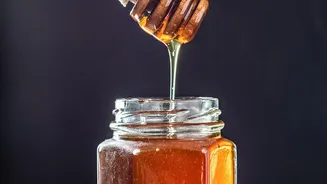
At a basic level, both honey and table sugar are carbohydrates made of glucose and fructose. Table sugar, or sucrose, is a simple 50-50 combination of these two molecules bonded together. Honey, however, is a more complex mixture. It consists of separate
glucose (about 30%) and fructose (about 40%) molecules, with the rest being water, pollen, and trace amounts of minerals and antioxidants. This difference in structure is why your body digests them slightly differently. The bond in sucrose must be broken down first, while the sugars in honey are more readily available for absorption.
The Calorie and Sweetness Question
A common misconception is that honey has fewer calories than sugar. When measured by volume, the opposite is true. A tablespoon of honey has about 64 calories, while a tablespoon of granulated sugar has about 49. This is because honey is denser. However, gram for gram, honey is slightly less caloric due to its water content. The key difference lies in sweetness. Thanks to its higher fructose content, honey is about 1.2 to 1.5 times sweeter than sugar. This means you can often use less honey to achieve the same level of sweetness, potentially saving calories overall.
Understanding the Glycemic Index
The Glycemic Index (GI) measures how quickly a food raises blood sugar levels. Table sugar has a GI of around 65. Honey’s GI is typically lower, averaging around 58, though it can vary widely (from 45 to 64) depending on the floral source. This means honey generally causes a slower, more gradual rise in blood sugar compared to the sharper spike from sugar. This is a modest advantage, particularly for those monitoring their blood sugar, but it does not make honey a 'free pass'. Both are still high-GI foods that should be consumed in moderation.
Beyond Sugar: The Benefits of Raw Honey
This is where the two sweeteners truly diverge. Refined sugar offers empty calories with no other nutritional value. Raw, unprocessed honey, on the other hand, contains trace amounts of vitamins and minerals, as well as powerful antioxidants like flavonoids and phenolic acids. These compounds have been studied for their anti-inflammatory, antibacterial, and immune-supporting properties. It’s important to note that most commercially available honey is pasteurised (heated), which can destroy some of these beneficial enzymes and antioxidants. For these added benefits, raw honey is the superior choice, though the quantities of these nutrients are still small.
Your Guide to the Food Label
This is where the 'versus' debate becomes less important than awareness. Food manufacturers use dozens of names for added sugars, making them hard to spot. On an ingredient list, look for words ending in '-ose' like dextrose, fructose, and maltose. Also be wary of syrups (corn syrup, rice syrup), nectars, and fruit juice concentrates. Honey itself is often used in 'healthy' products, but it still counts as an added sugar. In India, the Food Safety and Standards Authority of India (FSSAI) mandates that labels list ingredients by descending order of weight. Look for the 'Added Sugars' line under 'Total Carbohydrates' on the nutritional information panel to get a clear picture of how much has been put in during processing. This is your most reliable tool, as manufacturers sometimes use multiple types of sweeteners in small amounts to keep 'sugar' from appearing at the top of the ingredients list.