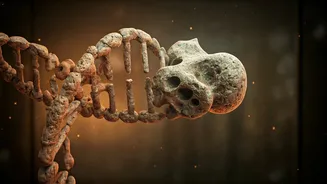









A Shadow From the Distant Past
The word 'plague' carries the weight of history. Caused by the bacterium Yersinia pestis, it is responsible for some of the most devastating pandemics ever recorded, including the Black Death, which killed a staggering portion of Europe's population in the 14th
century. For centuries, it has been a symbol of mass death and societal collapse. While antibiotics can now treat plague, its legacy makes any modern research a subject of intense interest and, for some, concern. Recent studies continue to reshape our understanding of its history, with DNA evidence from ancient burial sites pushing back the timeline of the earliest known outbreaks by centuries.
Why Study an Ancient Killer?
The primary motivation for studying Yersinia pestis today is not historical curiosity, but future-proofing public health. Scientists analyze ancient and modern strains of the bacterium to understand how pathogens evolve, jump from animals to humans, and develop resistance to drugs. This knowledge is critical for several reasons. Firstly, plague is not extinct; thousands of cases are still reported globally each year, and it remains endemic in wild rodent populations in various parts of the world, including the western United States. Secondly, there is concern about its potential use as a bioterrorism agent, making the development of better vaccines and treatments a national security priority. Research into its genetic makeup can help predict how the pathogen might change and prepare us for future outbreaks, whether natural or deliberate.
The Tools and the Risks
Modern plague research often involves sequencing the genomes of bacteria from ancient human remains, which can be ethically complex and requires the partial destruction of irreplaceable samples. In some cases, research may involve genetically modifying the bacterium to understand its functions—a practice known as "gain-of-function" research. This type of work aims to identify the specific genes that make a pathogen more transmissible or virulent, which can help in designing countermeasures. However, it is also the most controversial aspect. Critics worry about the risk of creating a more dangerous pathogen that could accidentally escape the lab. This has led to intense debate among scientists and policymakers about whether the potential benefits outweigh the inherent risks.
A Question of Containment
The risks associated with handling deadly pathogens are taken extremely seriously. Research on Yersinia pestis is conducted in high-containment laboratories with strict safety protocols known as Biosafety Levels (BSL). Depending on the specific nature of the work, plague research requires BSL-2 or BSL-3 facilities. A BSL-3 lab, for example, is designed for handling microbes that can cause serious or potentially lethal disease through inhalation. These labs have features like controlled airflow, multiple containment rooms, and extensive personnel training to prevent accidental release. While no system is perfect, these measures are designed to minimize risk and allow important research to proceed safely. Even so, the debate over so-called 'dual-use research of concern' (DURC)—research that could be used for both benevolent and malevolent purposes—continues.