






Dismissed by many as a simple playground pastime, the jump rope is one of the most efficient fitness tools available. While its cardiovascular benefits are well-known, its profound impact on coordination is a game-changer.
More Than Just a Heart-Pumper
First, let's acknowledge the
obvious: jumping rope is a phenomenal cardiovascular workout. It elevates your heart rate quickly, burns a significant number of calories in a short amount of time, and improves circulatory efficiency. Studies have shown that just ten minutes of skipping can offer similar endurance benefits to a 30-minute jog. This high-intensity nature strengthens the heart, improves lung capacity, and engages muscle groups across the entire body—from your calves and quads to your core and shoulders. It’s a full-body workout that's accessible, affordable, and incredibly effective for boosting overall fitness and aiding in weight management.
A Workout for Your Brain
The true magic of jumping rope happens in the nervous system. Unlike repetitive cardio exercises like running on a treadmill, jumping rope is a complex motor skill that demands a constant, high-speed conversation between your brain and body. Each swing and jump requires your brain to learn and perfect new motor patterns, which strengthens the neural pathways connecting your brain to your wrists and lower leg muscles. This process improves what's known as cognitive function—your ability to think, learn, and focus. Essentially, with every successful jump, you're not just training your muscles; you're actively making your brain more efficient at processing complex movements.
Mastering Rhythm and Timing
At its core, jumping rope is a rhythmic activity. To avoid tripping, your hands, feet, and eyes must work together in perfect synchrony. Your brain has to predict the rope's path, calculate its speed, and then send perfectly timed signals for your feet to leave the ground and for your wrists to initiate the next rotation. The rope provides immediate, honest feedback: if your timing is off, the exercise stops. This constant feedback loop rapidly accelerates learning and forces your body to develop a consistent cadence. Mastering this rhythm enhances your overall motor coordination, agility, and reaction time, skills that are crucial not just for athletics but for everyday movements.
Building a Foundation of Balance
Every time you jump and land, you are challenging your sense of balance. This is where proprioception—your body's awareness of its position in space—comes into play. Jumping rope stimulates the sensory receptors in your muscles and joints, particularly in your ankles and feet, forcing them to make constant, tiny adjustments to maintain stability. The vestibular system in your inner ear, which governs balance and spatial orientation, is also highly engaged. This dual stimulation strengthens the muscles that support your joints, enhances postural control, and improves your ability to reestablish balance quickly. This makes jumping rope an excellent exercise for improving athletic footwork and reducing the risk of injury in other activities.
How to Start with Coordination in Mind
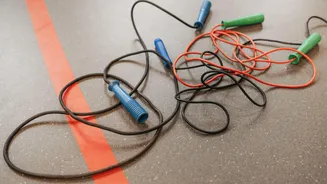
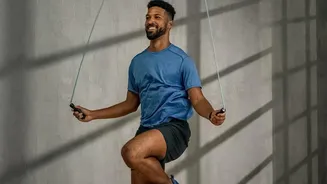
To maximise the coordination benefits, approach jumping rope as a skill to be learned, not just a workout to be endured. Start slowly and focus on form. Use a beaded rope, which provides more feedback than a light speed rope, making it easier to feel the rope's position as it rotates. Begin with basic two foot jumps, aiming for low, consistent hops from the balls of your feet. Don't look down at your feet instead look straight ahead to help your brain track the rope in your peripheral vision. As you improve you can introduce variations like alternating feet high knees or side to side jumps to continuously challenge your neuromuscular system.