





The Calcium Paradox
For decades, we’ve been told to consume enough calcium for bone health. While it's true that calcium is the primary building block of our skeleton, there's a catch. Calcium is beneficial only when it reaches the right destination. When it goes astray,
it can cause significant harm. This is the heart of the 'calcium paradox': the same mineral that strengthens our bones can become dangerous if it builds up in soft tissues like our arteries. This accumulation, known as vascular calcification, leads to arterial stiffness and is a major risk factor for cardiovascular disease. So, the question isn't just about getting enough calcium; it's about making sure it's properly managed once it's in your body. This is where Vitamin K2 plays a starring role.
Vitamin K2: The Body's Traffic Director
Think of Vitamin K2 as a highly efficient traffic director for calcium. Its main job is to activate specific proteins that control where calcium goes. Without K2, these proteins remain dormant and ineffective. Two of the most important proteins it activates are osteocalcin and Matrix Gla Protein (MGP). Osteocalcin is responsible for binding calcium and depositing it into your bone matrix, effectively 'locking' it into your skeleton to build strength and density. Meanwhile, MGP works in your blood vessels and other soft tissues, acting as a powerful inhibitor of calcification. By activating MGP, Vitamin K2 helps prevent calcium from settling in arterial walls, keeping them flexible and healthy.
Activating the Right Proteins
The process is elegantly simple. Vitamin K2 works by enabling a chemical reaction called carboxylation. This process switches on osteocalcin and MGP, giving them the ability to bind to calcium ions. An activated osteocalcin molecule attracts calcium from the bloodstream and integrates it into bone tissue. At the same time, an activated MGP molecule patrols your blood vessels, sweeping up excess calcium and preventing it from forming dangerous plaque-like deposits. When you're deficient in Vitamin K2, both proteins remain in their inactive, under-carboxylated state. This means calcium absorbed into your bloodstream may not be effectively integrated into bone, and worse, it's free to accumulate in your arteries, contributing to stiffness and cardiovascular risk.
K1 vs. K2: What’s the Difference?
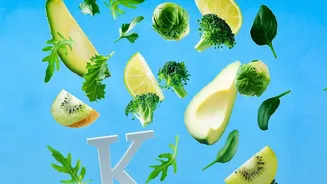
It's important to distinguish between the two main forms of Vitamin K. Vitamin K1 (phylloquinone) is found primarily in leafy green vegetables like spinach and kale. Its main function is to activate proteins in the liver that are responsible for blood clotting. Vitamin K2 (menaquinone) is found in fermented foods and animal products and is also produced by gut bacteria. While the body can convert some K1 into K2, the process is generally inefficient. Vitamin K2 has a longer half-life, meaning it circulates in the blood for longer, allowing it to work effectively outside the liver, particularly in bone and vascular tissues. Therefore, while both are essential, they perform very different jobs in the body.
Finding Vitamin K2 in Your Diet
Boosting your Vitamin K2 intake through diet is an excellent strategy for supporting both bone and heart health. The single richest source is natto, a traditional Japanese dish made from fermented soybeans. However, for those not accustomed to its strong taste and smell, there are other great sources. Fermented foods, certain cheeses, and animal products are good places to look. In an Indian context, dairy products like paneer and butter (especially from grass-fed cows) contain Vitamin K2. Egg yolks and certain meats like liver are also valuable sources. Some studies suggest indigenous Indian fermented foods like dosa and dhokla may also contribute to K2 intake. Since K2 is fat-soluble, consuming these foods with a source of healthy fat can aid its absorption.