

The Ultimate Marinade and Tenderiser
One of curd's most powerful applications is as a marinade. The lactic acid in dahi works to gently break down the proteins in meat like chicken, mutton, or even paneer. This process tenderises the main ingredient without turning it mushy, a risk with harsher
acidic agents like vinegar or lemon juice alone. This technique is the secret behind succulent tandoori chicken and melt-in-the-mouth kebabs. The thick consistency of curd also helps spices adhere to the surface, creating the flavourful, charred crust that is characteristic of many grilled Indian dishes. A typical marinade combines thick curd with ginger-garlic paste and a blend of spices like turmeric, red chilli powder, and garam masala. For best results, meats are left to marinate for several hours, allowing the curd to work its magic.
A Cooling Counterpart to Spice
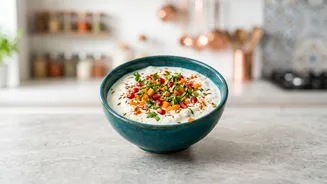
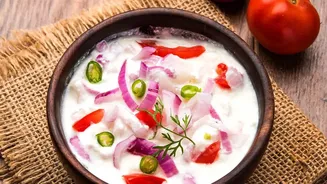
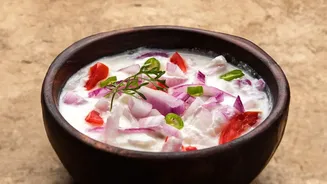
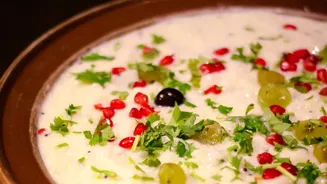
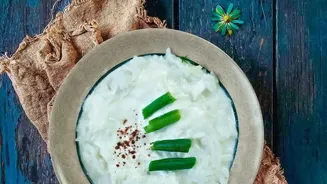
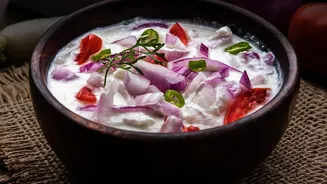
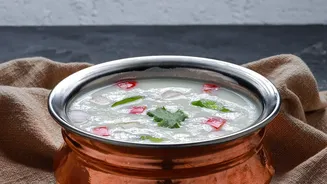
Indian meals are often a masterful balance of flavours, and curd plays a crucial role as a cooling agent. Raita, a condiment made from whisked yogurt seasoned with herbs and spices, is served alongside spicy dishes like biryanis and rich curries to soothe the palate. The dairy in curd helps to neutralise capsaicin, the compound that gives chillies their heat, in a way that water cannot. Raitas are incredibly versatile; popular versions include those with grated cucumber, chopped onion and tomato, or tiny fried gram flour balls called 'boondi'. Seasoned simply with roasted cumin powder and salt, a raita provides a refreshing contrast that makes a spicy meal more enjoyable.
The Tangy Heart of Curries
Curd is also the star ingredient in a whole category of curries, where it forms the base of the gravy. Perhaps the most famous of these is Kadhi, a popular dish across North India. Kadhi is a sublime, comforting curry made from sour curd and gram flour (besan), simmered with spices like turmeric, cumin, and mustard seeds. The result is a beautifully tangy and creamy sauce, often studded with 'pakoras' (fried fritters). Unlike tomato or coconut-based curries, curd-based gravies offer a unique sourness and a lighter, yet rich, texture. Dishes like Dahi Aloo (potatoes in yogurt gravy) and the South Indian Mor Kuzhambu showcase this distinct flavour profile. The key to cooking with curd is to add it over low heat and stir continuously to prevent it from splitting.
The Soul of Refreshing Drinks
Beyond the plate, curd is the foundation for some of India’s most beloved beverages, perfect for cooling down on a hot day. Lassi, a thick and creamy drink, is made by blending curd with water, sugar, or fruit. Mango lassi is a global favourite, but sweet and salted versions are equally popular. A lighter, more savoury drink is Chaas, also known as buttermilk. Thinner than lassi, chaas is made by whisking curd with more water and seasoning it with ingredients like roasted cumin powder, black salt, and fresh mint or coriander. It's often enjoyed after a meal to aid digestion and provides hydration along with probiotics.
More Than Just an Accompaniment
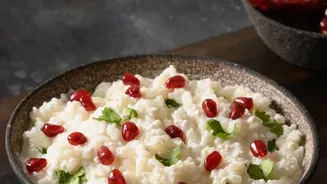
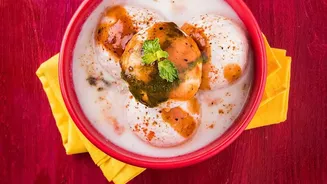
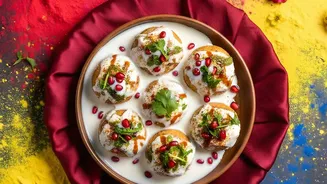
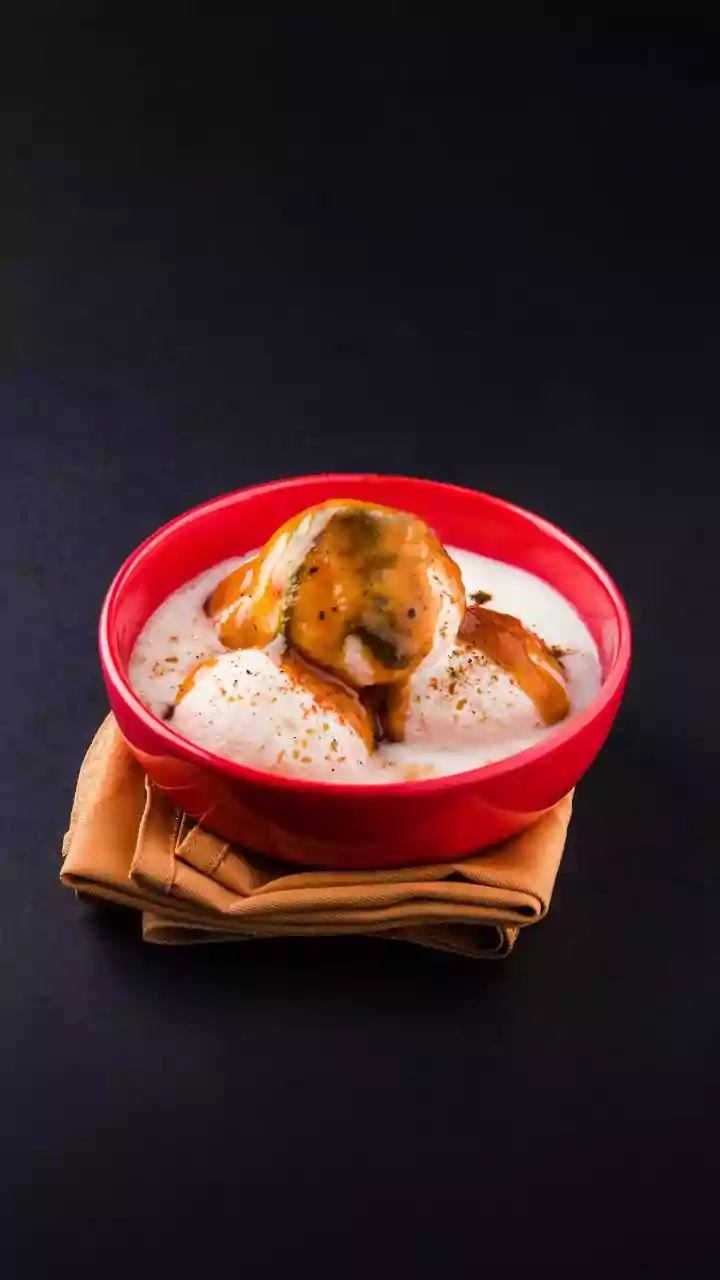
The versatility of curd extends even further. It's a vital component in the batter for fluffy, steamed snacks like Dhokla. It is used to create tangy street food delights like Dahi Puri and Dahi Vada, where it's spooned generously over crispy shells or soft lentil dumplings. And, of course, a simple bowl of dahi, perhaps with a pinch of salt or a spoonful of sugar, is a comforting and nutritious end to any meal, enjoyed on its own or with rice. Its presence in the Indian diet is a testament to its incredible adaptability and deep cultural significance.