




How Plants Fight Humidity
While they can't replace a mechanical dehumidifier in extreme cases, certain houseplants are fantastic natural allies in your battle against damp air. They work primarily through a process called transpiration. Plants absorb moisture through their roots
and also, to a lesser extent, through their leaves. This moisture then moves up the plant and is released as water vapour from pores on the underside of their leaves. Plants that thrive in humid, tropical undergrowth are often the best at this, as they are adapted to absorb moisture from their environment, helping to balance the humidity levels in your room.
The Hardy Snake Plant
Known in India as a durable and almost unkillable option, the Snake Plant (Sansevieria trifasciata) is a champion for apartment dwellers. Its thick, waxy leaves have a unique ability to absorb excess moisture from the air. It is also one of the few plants that releases oxygen at night, making it an excellent choice for bedrooms. Thriving on neglect, it requires minimal watering, especially during the already humid monsoon, and tolerates low light, making it perfect for dimmer corners of an apartment. Wiping its leaves occasionally will keep its pores clear and ready to absorb moisture.
The Elegant Peace Lily
The Peace Lily (Spathiphyllum) is not just beautiful with its white, flag-like blooms; it's a functional powerhouse. It has a high transpiration rate and its large leaves are adept at absorbing moisture directly from the air, which can help reduce the development of mould spores in damp spaces. Peace Lilies prefer indirect light and consistently moist soil, but not waterlogging. They are particularly well-suited for the ambient humidity of Indian monsoons and do well in bathrooms or kitchens where steam and moisture are common. Keep in mind that Peace Lilies are toxic to pets if ingested.
The Lush Areca Palm
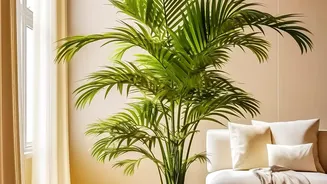
If you want to add a tropical feel to your home while tackling humidity, the Areca Palm (Dypsis lutescens) is an excellent choice. Its dense foliage features numerous small leaves, each releasing moisture and helping to regulate the overall humidity of a room. Areca Palms act like natural humidifiers in dry weather but can help absorb and process excess ambient moisture during the monsoons. They prefer bright, indirect sunlight and need a bit more space to flourish, making them a great statement plant for a living room corner.
The Versatile Spider Plant
The Spider Plant (Chlorophytum comosum) is another low-maintenance favourite that is particularly effective at improving indoor air. It is known for its ability to absorb excess moisture and is also one of the top plants for removing common household toxins from the air. Their arching leaves and dangling 'pups' make them ideal for hanging baskets, which is a great space-saving solution for smaller apartments. Placing them in a hanging pot allows for better air circulation around the plant, enhancing its ability to tackle airborne moisture.
The Hardy English Ivy
English Ivy (Hedera helix) is a vigorous vine that is exceptionally good at absorbing airborne moisture. Studies have shown it can be effective in reducing airborne mould particles, which are a common problem in damp, humid environments like those experienced during the rainy season. It can be grown in pots or hanging baskets, allowing its vines to trail down gracefully. It's an adaptable plant that can handle the lower light conditions of a monsoon-sky day, but it is toxic to pets and humans if eaten, so it should be placed with care.
The Earthen Dehumidifier Solution
Beyond plants, another natural, and aesthetically pleasing, solution is using clay. Natural clay desiccants, often made from bentonite or montmorillonite clay, are highly porous minerals designed to absorb and trap water vapour from the air. You can buy small, reusable clay desiccant packs online or from specialty stores and place them in cupboards, drawers, or small rooms. On a larger scale, even simple, unglazed terracotta pots and decor can help. The porous nature of the clay allows it to absorb excess moisture from the air, which then slowly evaporates as the ambient humidity drops. This method has been used in various forms for centuries.