



Why Layout Trumps Size
In a small home, every design choice has a bigger impact. A bulky sofa or a poorly placed door can disrupt the flow of an entire room, making it feel smaller than it is. Research shows that cluttered and inefficient spaces can increase stress levels,
as our brains are constantly processing the visual 'noise'. A smart layout, therefore, isn't just an aesthetic choice; it’s a tool for well-being. It focuses on creating clear circulation paths, ensuring you can move around freely without navigating an obstacle course of furniture. When movement is effortless, a home immediately feels calmer and more spacious.
The Power of Multi-functional Furniture
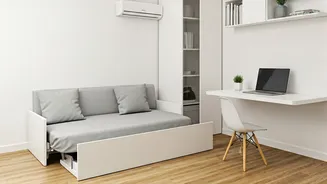
In a compact flat, no piece of furniture should have only one job. This is where multi-functional furniture becomes essential, a practical necessity rather than a trend. Think of a sofa that converts into a bed for guests, a coffee table with hidden storage, or an ottoman that serves as a footrest, extra seating, and a place to hide clutter. In the bedroom, beds with hydraulic lifts or built-in drawers can often replace the need for an extra cupboard, freeing up valuable floor space. For dining, a foldable or extendable table can stay compact for daily use and expand only when you have company, solving one of the biggest space consumption problems in small homes.
Creating Zones Without Walls
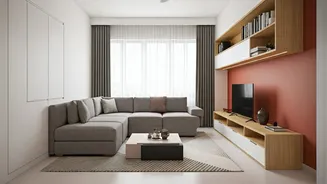
An open-plan layout is often the best choice for a 1BHK or studio apartment, as it allows light to travel freely and makes the area feel larger. However, an open space still needs definition to be functional. You can create distinct 'zones' for living, dining, and working without putting up a single wall. A strategically placed rug can anchor a seating area, visually separating it from a nearby dining nook. An open-backed bookshelf can act as a light-permeable partition, offering storage while hinting at a boundary. Even lighting can be used to define zones, with a pendant lamp over a table to signify a dining space or a focused task lamp for a work corner.
Think Vertically for Storage
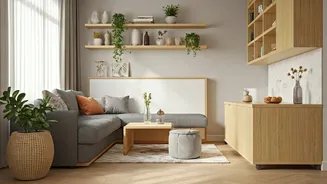
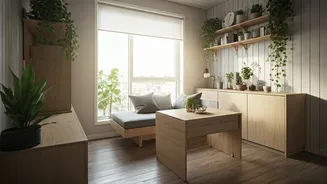
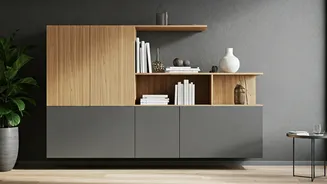
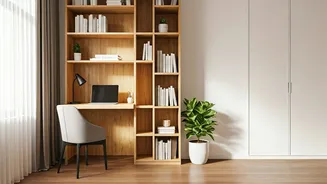
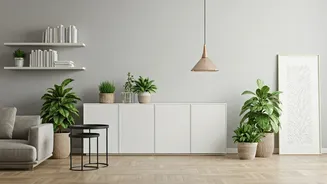
Floor space is a finite resource, but vertical space is often an underutilised asset. Drawing the eye upward can make a room feel taller and more expansive. Instead of bulky, floor-standing units, opt for wall-mounted shelves, floating cabinets, and tall, narrow wardrobes that reach toward the ceiling. This approach keeps the floor clear, which creates an illusion of a larger area. Using vertical space for everything from books to kitchen supplies to decorative items reduces clutter on surfaces and maintains a sense of order, which is critical in a small home.
The Role of Light and Illusion
The right use of light and colour can magically expand a space. Light paint colours like white, beige, and soft pastels are known to make rooms feel bigger and brighter because they reflect natural light. Using a single, continuous colour scheme throughout the flat can also create a sense of flow and make the overall floor area appear larger. Mirrors are another powerful tool; placing a large mirror opposite a window can double the amount of light in a room and create a profound sense of depth. Mirrored wardrobe doors or wall panels are a clever way to integrate this trick without sacrificing a wall.