




Understanding a Dark Sky Reserve
Before journeying to these celestial havens, it's helpful to understand what a 'Dark Sky Reserve' is. It’s an area, officially recognized for its exceptional starry nights, where light pollution is actively managed to preserve the natural darkness. These
sanctuaries are not just for astronomers; they protect nocturnal wildlife, support human health by maintaining natural day-night cycles, and reduce energy waste. By shielding the sky from the glow of artificial lights, these reserves create a window into the universe, allowing us to see celestial phenomena that are invisible from most parts of the modern world. This commitment involves local communities, governments, and scientific bodies working together to ensure the night remains as nature intended.
Ladakh’s Hanle: India's Celestial Crown Jewel
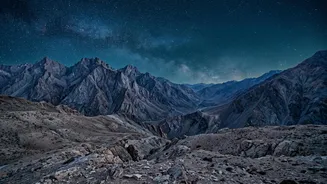
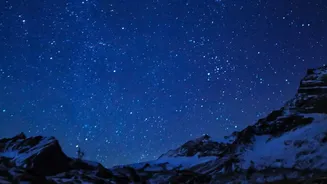
At the forefront of India's astro-tourism map is Hanle in Ladakh, the site of India's first-ever designated Dark Sky Reserve. Located within the Changthang Wildlife Sanctuary at a breathtaking altitude of 4,500 metres, Hanle offers near-perfect conditions for looking deep into space. Its advantages are a scientific dream: the thin, dry air of the cold desert minimizes atmospheric distortion, and the region boasts over 270 clear nights a year. This is why it's home to the Indian Astronomical Observatory, one of the world's highest. For visitors, this means the Milky Way is not a faint smudge but a brilliant, textured band of light bright enough to cast a faint glow on the landscape, with constellations, planets, and meteor showers appearing in stunning clarity.
Himachal’s Emerging Stargazing Sanctuaries
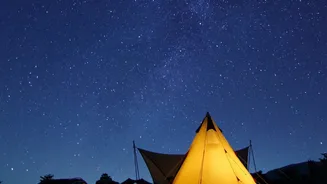
While Ladakh has the official reserve, Himachal Pradesh is rapidly emerging as a premier destination for stargazers. The Spiti Valley, a cold desert region with altitudes often exceeding 12,000 feet, shares many of the same pristine qualities as Hanle: minimal light pollution, bone-dry air, and vast, unobstructed horizons. Villages like Langza, Komic, and Kibber are gaining fame as some of the best places in India for naked-eye views of the Milky Way and even the distant Andromeda galaxy. The state government and private ventures are actively promoting astro-tourism, with recent initiatives including the installation of public telescopes and the training of local youth as astronomy guides, turning the cosmos into a source of sustainable livelihood. This makes Spiti an accessible yet profoundly dark alternative for celestial adventurers.
The Science of a Perfect Starry Night
What makes these Himalayan regions so special? It's a unique combination of geographical and atmospheric factors. The high altitude places you above a significant portion of the Earth's atmosphere, reducing the amount of air that starlight has to travel through. The cold desert climate means there is very little moisture or water vapour in the air, which would otherwise blur and dim celestial objects. Finally, the extreme remoteness and low population density result in almost zero light pollution. These areas often rank as 'Bortle 1' on the Bortle scale, which measures sky darkness. This is the darkest possible rating, signifying a sky so pristine that the Milky Way's structure is visible in detail and the collective light from the stars can illuminate the landscape.
More Than Just Stars: Community and Conservation
Astro-tourism in Ladakh and Himachal is about more than just pretty views; it's a model for sustainable development. The establishment of the Hanle Dark Sky Reserve was a collaborative effort involving scientists and the local administration to empower the community. Local villagers, including many women, have been trained as 'Astronomy Ambassadors' and equipped with telescopes to guide tourists, creating new economic opportunities. This approach ensures that the financial benefits of tourism are shared directly with the people who are helping to preserve the night sky. It also fosters a sense of pride and ownership, encouraging the protection of this unique natural heritage for generations to come, where science and ancient culture can coexist.