




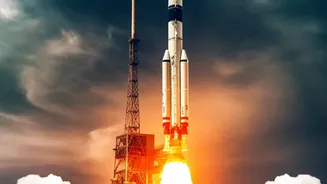
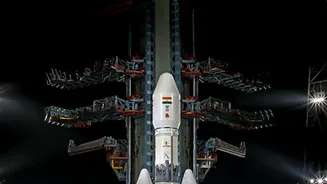
A New Space Race, Fired by Policy
The global space race has a new dimension, and it’s less about flags and footprints and more about commercial enterprise. India is positioning itself as a key player in this new economy. The catalyst for this transformation has been a series of deliberate
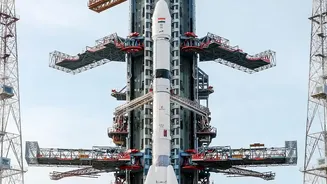
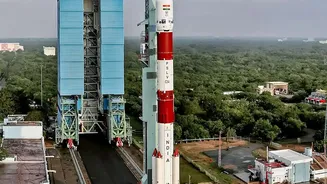
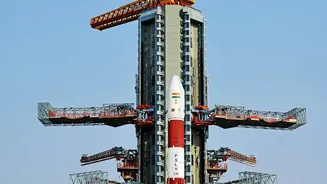
policy shifts designed to open the final frontier to private innovation. The landmark Indian Space Policy of 2023 was a game-changer, formally ending the old model of ISRO’s exclusive control. It clearly demarcated the roles of different entities, positioning ISRO as a research and development powerhouse while empowering private companies to handle end-to-end space activities—from building satellites and launch vehicles to providing space-based services. To facilitate this, the government established the Indian National Space Promotion and Authorisation Centre (IN-SPACe) as a single-window agency to promote, authorise, and supervise private space activities. This move has provided a stable and predictable regulatory framework, encouraging entrepreneurs and investors who were previously hesitant to enter a sector dominated by the state.
The Billion-Dollar Investment Boom
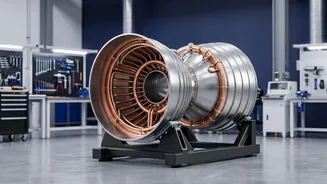
With friendly policies in place, the money has followed. Investment in India's space-tech sector has skyrocketed. According to data from Tracxn, funding surged to over $330 million in the first nine months of 2026 alone, a massive jump from previous years. Overall, private investment since 2021 is nearing the billion-dollar mark. This includes significant foreign direct investment (FDI), encouraged by liberalised norms that now permit up to 74% automatic FDI for satellite manufacturing and operations and 100% for component manufacturing. This influx of capital is fueling ambitious projects. Startups like Pixxel, which is building a constellation of hyperspectral imaging satellites, raised a record-breaking $100 million in a single round in 2026. Skyroot Aerospace became the country's first space-tech unicorn and the first private company to launch a rocket into orbit. Other major players like Agnikul Cosmos, Dhruva Space, and SatSure are also attracting significant funding for everything from 3D-printed engines to satellite-based data analytics.
From Startups to Stars: The Job Creation Engine
This investment push is translating directly into economic growth and, crucially, jobs. The Indian space economy, currently valued at around $9 billion, is projected to reach as much as $45 billion within the next decade. The government is targeting an 8% share of the global space market by 2033, up from the current 2-3%. This expansion is creating a vibrant startup ecosystem. The number of registered space startups has exploded, growing from just one in 2014 to over 440 by mid-2026. These companies are creating demand for a wide array of talent, far beyond the traditional image of rocket science. While aerospace engineers and astrophysicists are still essential, the new space economy requires software developers, data scientists, GIS experts, materials scientists, and even legal and finance professionals specializing in space law and venture capital. Private companies like Skyroot, Agnikul, and Pixxel are now hiring in significant numbers, offering competitive salaries and providing exciting career paths outside of government organisations.
What’s Next for India's Cosmic Ambitions?
The momentum is undeniable, but the journey is far from over. The next phase will involve scaling up these early successes. This means more launches, deploying larger satellite constellations, and converting technological prowess into consistent revenue. For startups, the challenge will be to move from venture funding to long-term commercial viability. IN-SPACe continues to play a vital role, working to streamline approvals and facilitate access to ISRO’s world-class testing facilities and expertise. The government is also deploying targeted financial support, including venture capital funds and seed fund schemes, to nurture early-stage companies and help them bridge the gap from prototype to production. If this trajectory continues, India is on track to become not just a user of space technology, but a global hub for building and launching it, cementing its status as a leading space-faring and space-faring business nation.