


What is Nordic Walking?
Imagine cross-country skiing, but without the snow or the skis. That's the essence of Nordic walking. It’s an enhanced walking technique where you use specially designed poles to propel yourself forward. Originally an off-season training method for skiers,
it has evolved into a popular fitness activity for people of all ages and abilities. Unlike hiking, where poles are often used for balance, Nordic walking uses poles to actively engage the upper body, turning a simple walk into a comprehensive, total-body workout that can engage up to 90% of your body's muscles.
The Full-Body Benefits
The reason for Nordic walking's revival lies in its powerful, science-backed benefits. By incorporating poles, you burn significantly more calories compared to regular walking. The movement works your arms, shoulders, chest, and core muscles, all while toning your legs. This makes it an incredibly efficient cardiovascular exercise. Furthermore, it’s a low-impact activity, meaning it’s gentle on your joints. The poles help distribute your weight, reducing stress on the knees and back, which is a major advantage for those with joint concerns or seeking a sustainable exercise routine.
Getting the Right Gear
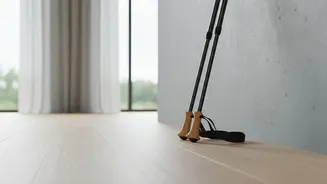
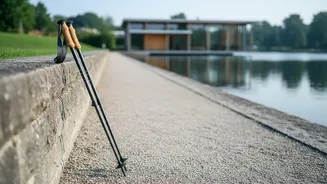
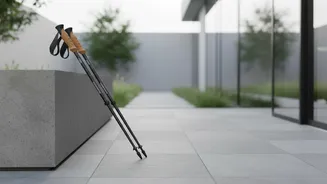
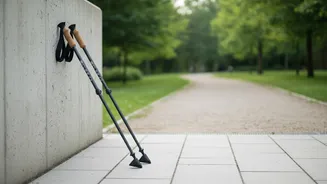
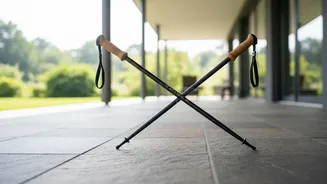
Starting your Nordic walking journey requires just one key piece of equipment: the right poles. These are not the same as hiking or trekking poles. Nordic walking poles are specifically designed for the forward-propulsion technique and come with a special glove-like strap system that allows you to push off correctly. When choosing poles, length is critical. A common formula is to multiply your height in centimetres by 0.68. Poles that are too long can strain your shoulders, while poles that are too short can lead to a hunched posture. Investing in poles with at least some carbon content is also wise, as it helps absorb vibrations better than pure aluminum.
Mastering the Basic Form
The core of Nordic walking is the coordination of opposite limbs—as your right leg steps forward, your left arm swings forward, and vice-versa. This is the natural rhythm of walking. The key is to keep the poles angled diagonally backward. You plant the pole tip roughly midway through your stride, between your front and back foot. As you move past the pole, you push off firmly, extending your arm behind you and opening your hand at the end of the push. This push is what propels you forward and engages your upper body. Maintain a tall, upright posture, looking ahead, not down at your feet.
Avoiding Common Beginner Mistakes
As with any new skill, there are a few common pitfalls to avoid. One is planting the pole too far in front of you, which acts as a brake instead of a propeller. Another is keeping a tense, clenched grip on the pole throughout the movement; the technique relies on a grip-and-release motion. Many beginners also forget to use their arms, instead just carrying the poles along for the ride. The power comes from actively pushing through the straps. Finally, some people fall into an unnatural rhythm, moving the arm and leg on the same side together. If this happens, a simple fix is to drop the poles, let them drag by the straps, and walk normally for a few steps to reset your natural coordination.