

Cosmic Cradles of Creation
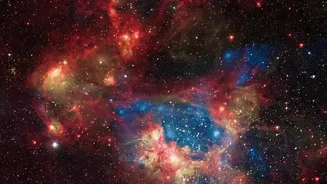
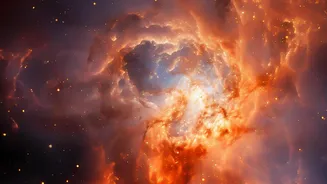
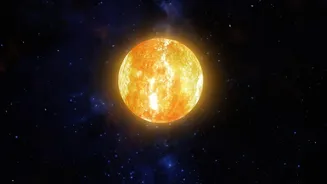
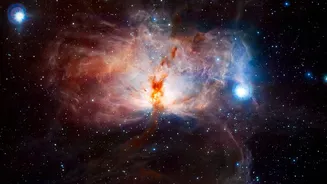
Imagine a place in our galaxy, spanning light-years, where colossal clouds of hydrogen gas and dust collapse under their own gravity. These regions, known as stellar nurseries or nebulae, are the birthplaces of stars. As dense cores within these clouds pull
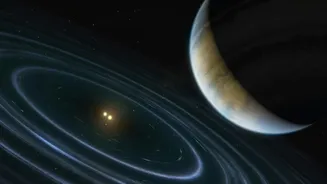
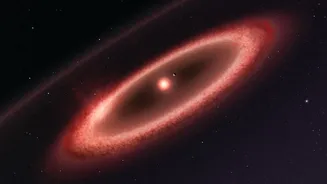
in more and more material, they heat up, eventually igniting nuclear fusion and shining as new stars. But stars are rarely born alone. The leftover material forms a flat, spinning disc around the infant star, known as a protoplanetary disk. It is from this swirling plate of gas and dust that planets, asteroids, and comets are built, creating brand new solar systems from scratch.
Peering Through the Cosmic Dust
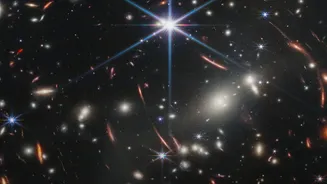
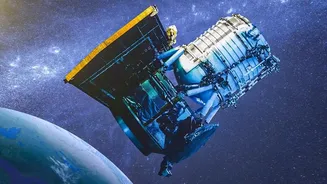
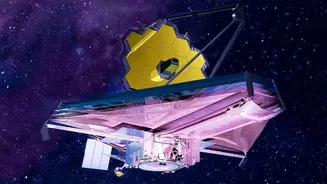
For a long time, the thick dust in these nurseries has blocked our view, hiding the earliest stages of planetary birth. But with the advent of advanced observatories like the James Webb Space Telescope (JWST), astronomers can now peer through these cosmic curtains. Observing in infrared light, which can pass through dust clouds that block visible light, JWST is providing an unprecedented look at these dynamic environments. These scans are so detailed they can spot not just newborn stars, but the very substructures within their protoplanetary disks—like rings and spirals—that signal a planet is beginning to take shape.
A Universe of Rogue Planets
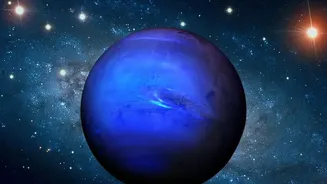
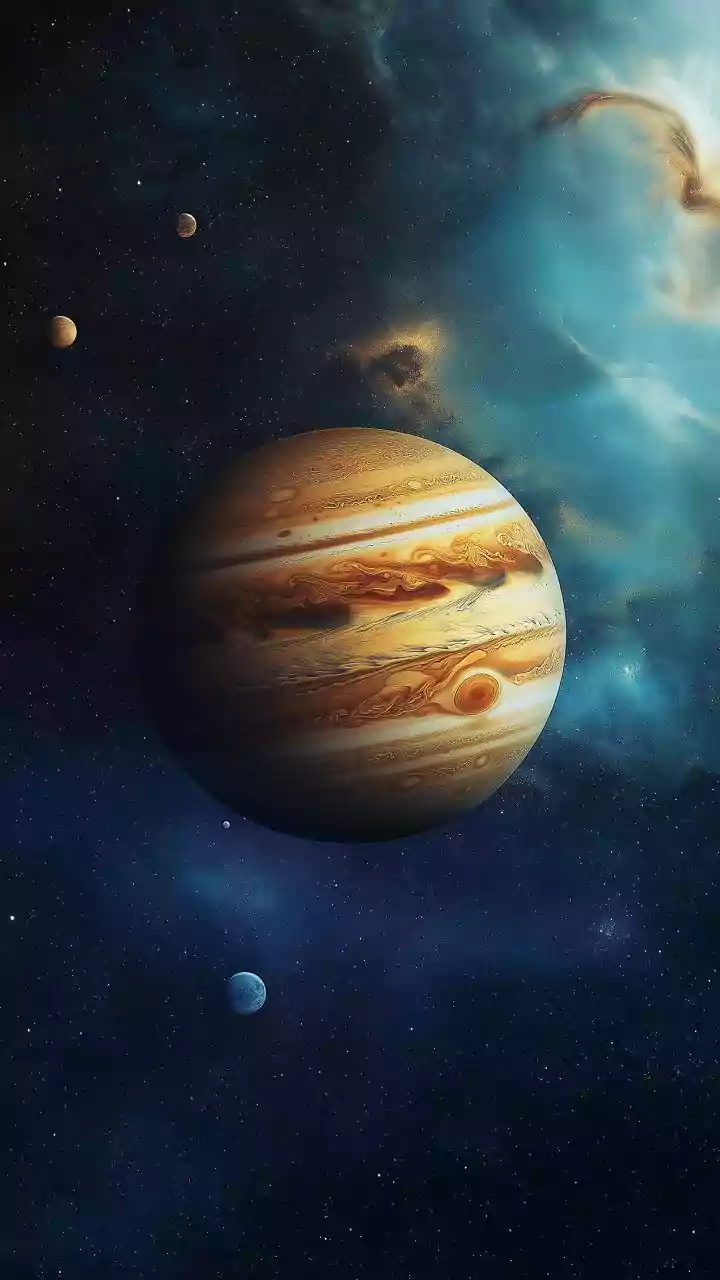
One of the most startling revelations has been the discovery of objects that defy easy categorization. In the famous Orion Nebula, about 1,350 light-years away, JWST has identified dozens of free-floating, Jupiter-sized objects that don't orbit a star. Even more puzzling, many of these wanderers come in pairs, gravitationally bound to each other. Nicknamed Jupiter-Mass Binary Objects, or 'JuMBOs', their existence challenges our understanding of formation. Current theories struggle to explain how two planets could be ejected from a solar system and remain a pair. This has led some scientists to believe they may have formed directly from the gas cloud, much like stars do, but without ever gaining enough mass to ignite. Recent discoveries in another stellar nursery, NGC 1333, have further revealed Jupiter-sized worlds forming in isolation, with one even boasting its own moon-forming disk.
Rewriting the Planetary Playbook
These new findings are forcing a rethink of planetary science. Observations of protoplanetary disks in regions like the Ophiuchus star-forming complex show that the structures needed for planet formation—the rings and gaps carved out by infant worlds—appear much earlier than previously thought. This suggests that stars and planets evolve together from a very young age. Furthermore, the sheer number of rogue planets being found implies they are a common feature of our galaxy. Some estimates suggest there could be billions of these starless worlds roaming the Milky Way. These discoveries indicate that the universe is far more varied and complex in its methods of planet creation than our own solar system would suggest.
The Building Blocks of Life
Beyond just finding planets, these deep space scans are also analyzing the chemical makeup of these cosmic cradles. In the Orion Nebula, Webb detected a molecule called the methyl cation (CH3+) for the first time in a protoplanetary disk. This is significant because this compound is crucial for forming more complex carbon-based molecules—the very foundation of life as we know it. Finding these vital ingredients in the places where new planets are being born provides tantalizing clues that the potential for life may be seeded right from the very beginning of a planetary system's formation.