


The Constant Threat of Martian Dust
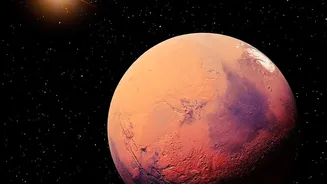
The Martian surface is covered in a fine, reddish-brown dust that, due to the planet's thin atmosphere and lower gravity, is easily kicked up by winds. These aren't just small puffs; Mars experiences seasonal dust storms that can grow from localised events
into regional tempests. Every few years, these storms can coalesce into a planet-encircling event, shrouding the entire world in a dusty haze for weeks on end. This dust poses a dual threat to robotic missions. For solar-powered explorers like the Spirit and Opportunity rovers or the InSight lander, the danger is existential. A thick layer of dust on solar panels blocks sunlight, drastically reducing the vehicle's ability to generate power. During a major storm, the sky can darken so much that it's like a perpetually overcast day, starving the rover of energy needed to operate and, crucially, to run the internal heaters that protect its electronics from the brutal Martian cold.
A Cautionary Tale: The Fate of Opportunity
The story of NASA's Opportunity rover serves as a stark reminder of dust's destructive power. Designed for a 90-day mission, Opportunity roamed Mars for nearly 15 years, a monumental achievement of engineering. It survived numerous dust storms, often getting a helpful blast of wind that would clean its panels — a phenomenon engineers called "cleaning events." But in 2018, its luck ran out. A planet-encircling dust storm, first spotted by NASA's Mars Reconnaissance Orbiter (MRO), grew rapidly. As the storm blotted out the sun over Opportunity's location, the rover's power levels plummeted. On June 10, 2018, it sent its last transmission before falling silent, forced into a low-power hibernation to wait out the storm. Despite months of listening for a signal after the skies cleared, NASA never heard from Opportunity again. The prolonged lack of sunlight likely drained its batteries completely, allowing the cold to permanently damage its systems.
The Early Warning System: Eyes in Orbit
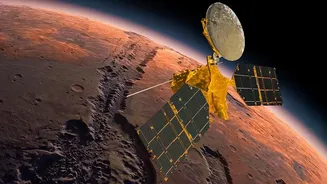
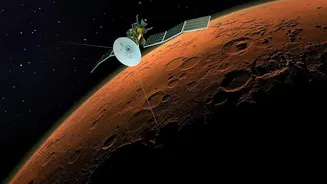
To prevent another loss like Opportunity, space agencies rely on a network of orbital spacecraft that act as a planetary-scale weather service. NASA's Mars Reconnaissance Orbiter (MRO), Mars Odyssey, and MAVEN orbiters are the primary sentinels. The MRO is particularly crucial, equipped with two key instruments. The Mars Color Imager (MARCI) provides a daily global map, allowing scientists to spot new storms and track their growth and movement. The Mars Climate Sounder (MCS) measures atmospheric temperature at different altitudes, which helps forecast how a storm might evolve and spread. Together, these instruments provide a comprehensive view of the Martian climate, giving surface missions an invaluable heads-up when a storm is brewing. This orbital surveillance has been ongoing for over two decades, creating a long-term dataset of Martian weather patterns.
Forecasting the Red Planet's Weather
Data from these orbiters feeds into complex computer simulations called Global Circulation Models (GCMs), similar to those used for weather forecasting on Earth. By combining satellite data with physical models of the Martian atmosphere, scientists can predict wind patterns, temperatures, and the potential for storms to grow. However, predicting exactly when and where a local dust storm will ignite remains a significant challenge. Research is ongoing to improve these models by incorporating machine learning algorithms and more detailed observations. For solar-powered missions, these forecasts are a lifeline. An early warning allows mission controllers to take proactive steps, such as reducing the rover's activities to conserve energy, ceasing science operations, and positioning the rover to best ride out the storm.
The Ground Truth: Onboard Weather Stations
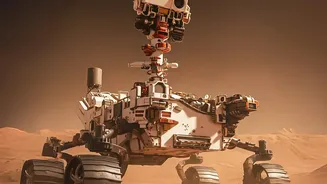
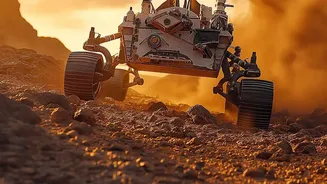
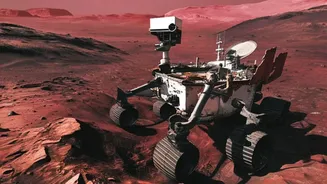
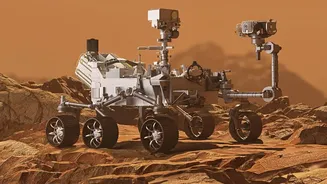
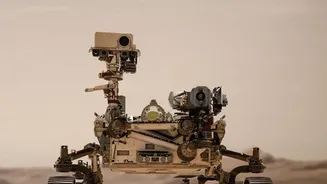
The rovers themselves are not just passive observers; they are active partners in weather monitoring. Nuclear-powered rovers like Curiosity and Perseverance, while not dependent on sunlight for power, carry sophisticated suites of weather instruments. Curiosity's Rover Environmental Monitoring Station (REMS) and Perseverance's Mars Environmental Dynamics Analyzer (MEDA) continuously measure pressure, temperature, wind speed, and the amount of dust in the atmosphere. MEDA, for instance, has sensors specifically designed to characterize dust particles, which helps scientists understand how dust is transported and how it affects solar radiation. This ground-level data is vital for refining the global climate models and provides a real-time check on conditions, offering a more complete picture when combined with orbital data. When a storm hits, these rovers can continue to operate and provide invaluable data from within the storm itself.