






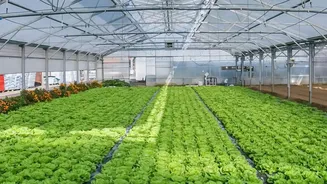
The Concrete Jungle's Pest Problem
Rooftop gardens, vertical farms, and community plots are transforming cityscapes, bringing fresh, local produce closer to home. But these urban oases face the same threat as any traditional farm: pests. The difference is, the solutions aren't the same.
Widespread use of chemical pesticides is often impractical and undesirable in dense urban environments due to health concerns and regulations. This leaves urban farmers in a tough spot, often resorting to more labor-intensive or less effective methods to protect their yields. The demand for a clean, non-toxic, and effective pest management system is a critical hurdle for the urban agriculture movement to overcome as it scales.
A New Weapon: Bio-Acoustic Technology
Enter bio-acoustic technology, a field of science that studies how living organisms use and react to sound. The latest application in agriculture involves using specific, high-frequency sound waves—often ultrasonic, or above the range of human hearing—to create an unwelcome environment for pests. These are not just random noises; they are precisely targeted frequencies designed to disrupt the behavior of insects and other unwanted visitors. By emitting these sounds, farmers can deter pests from feeding, mating, or even entering a growing area, creating a protective 'sonic barrier' without a single drop of chemicals.
How Soundwaves Disrupt Pests
The mechanism behind soundwave crop protection is fascinating. The high-frequency sounds emitted by specialized transducers can negatively affect the nervous systems of many pests, causing discomfort and confusion that encourages them to flee. Studies have shown these ultrasonic waves can interfere with pests' movement, feeding, and reproductive cycles. In some cases, the technology can even disrupt their ability to communicate with each other. For example, a study on greenhouse pests found that ultrasonic signals in the 30–50 kHz range were highly effective against certain insects, leading to their complete eradication over an eight-day period in the experimental group. It’s a non-lethal, eco-friendly approach that turns the pests' own biology against them.
Beyond Pest Control: A Boost for Plants?
Interestingly, the benefits of soundwave technology may not be limited to repelling pests. A growing body of research suggests that certain sound frequencies can actually stimulate plant growth. This field, sometimes called Plant Acoustic Frequency Technology (PAFT), has shown that sound waves can potentially accelerate cell division, increase the production of growth-related hormones, and even enhance a plant's natural resistance to disease. By stimulating these natural processes, the technology could help produce more robust plants and higher yields, further reducing the need for external inputs like fertilizers and biocides. This dual benefit makes it an especially compelling innovation for the high-efficiency goals of urban farming.
The Reality Check: Not a Silver Bullet
While promising, soundwave technology is not a one-size-fits-all solution. The effectiveness of ultrasonic devices can vary greatly depending on the target pest species, with some research noting inconsistent results for certain insects. Pests like crickets have shown avoidance behavior, but the effect can be localized. Furthermore, some pests may become accustomed to the sound over time, reducing its long-term efficacy. The cost and range of the equipment are also practical considerations; the signals can weaken over distance and may be affected by environmental factors like background noise. As such, many experts see it as a valuable tool within a broader Integrated Pest Management (IPM) program, rather than a standalone magic wand.