




The Throwaway Era of Space
Since the dawn of the space age, the industry has operated on a launch-and-leave model. A satellite, often costing hundreds of millions of dollars, is launched into orbit with everything it will ever need. If a component fails, or more commonly, if it simply
runs out of the propellant needed for maneuvering, its mission is over. This leaves a perfectly functional, multi-million-dollar piece of hardware to become just another piece of space debris. For satellite operators and governments, this has been a frustrating and expensive reality. Replacing a satellite is a monumental undertaking, involving years of development and the high cost and risk of another launch. This paradigm has limited the lifespan of critical infrastructure for communications, weather forecasting, and national security, forcing a cycle of costly replacement rather than sustainable management.
Enter the Orbital Mechanic
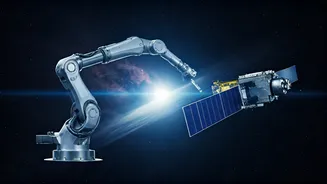
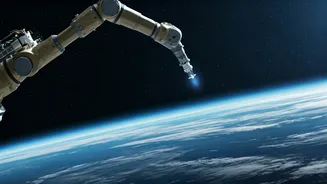
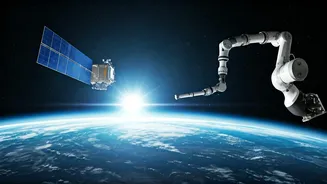
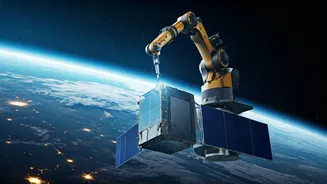
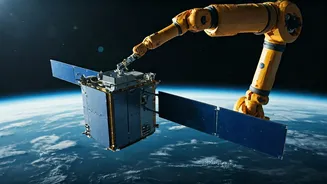
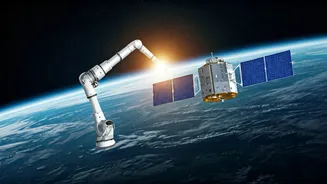
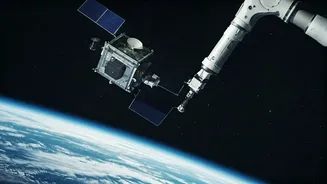
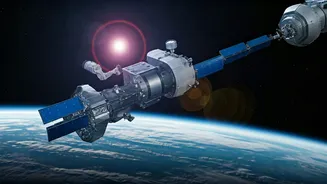
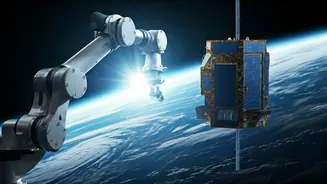
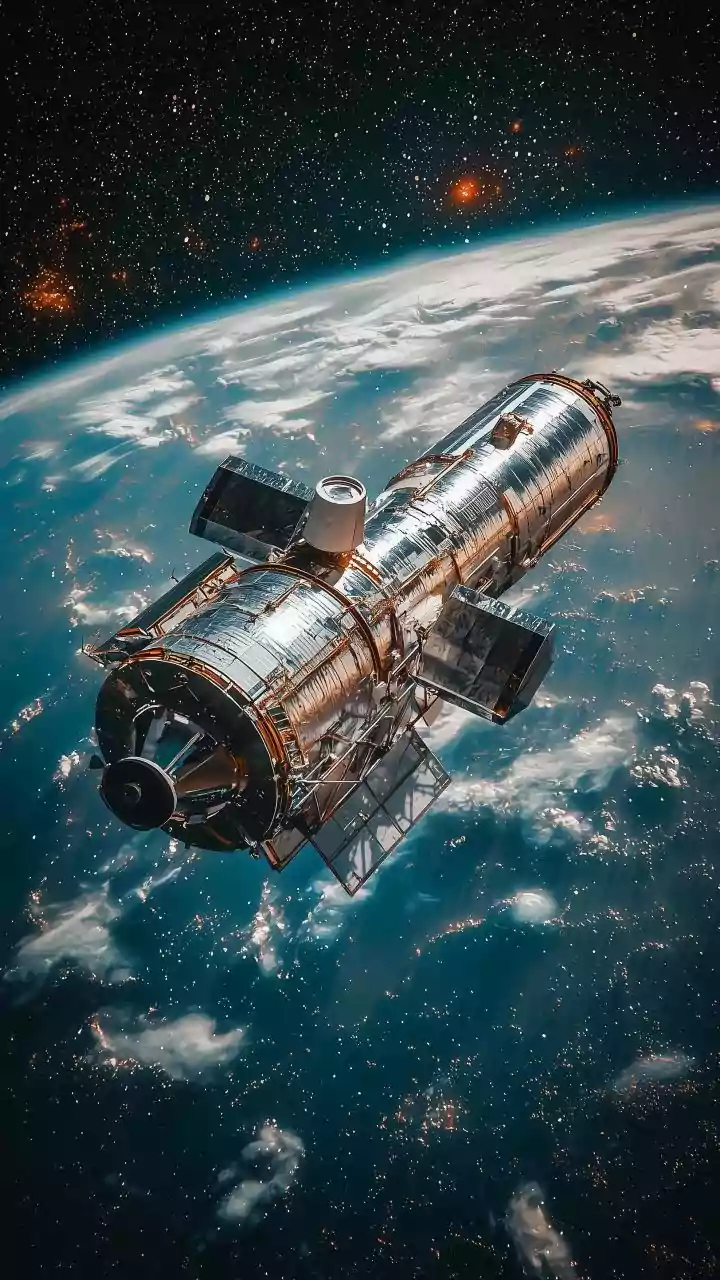
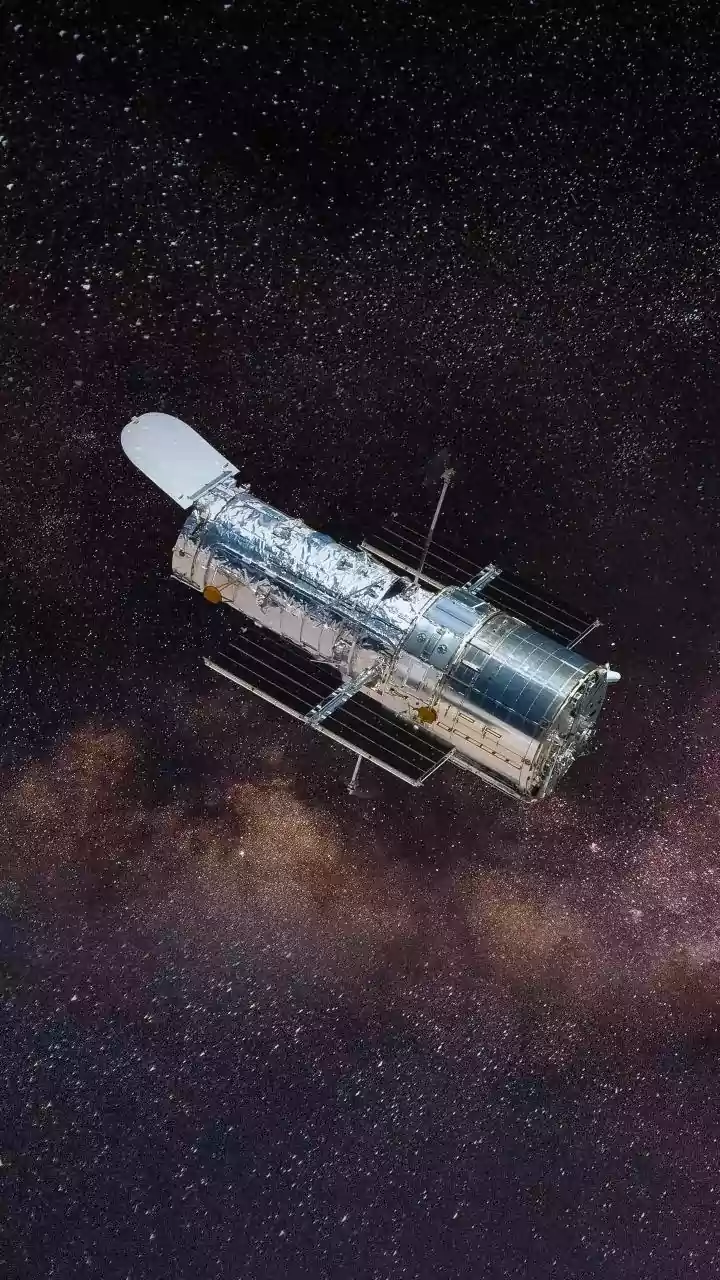
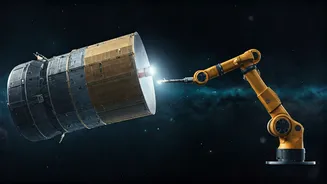
On-orbit servicing is set to change all of that. The concept is straightforward: send a robotic spacecraft to rendezvous with, inspect, repair, refuel, or upgrade an existing satellite. These 'servicer' vehicles are equipped with sophisticated robotic arms, cameras, and specialized tools to perform complex tasks that were once the domain of science fiction. The most famous example of servicing was NASA's astronaut-led missions to repair and upgrade the Hubble Space Telescope, which dramatically extended its life and scientific output. Today, the focus is on doing this robotically, without the need for a human crew, making it feasible even in high geosynchronous orbits where many vital communication satellites operate. This capability transforms satellites from disposable assets into sustainable, long-term infrastructure.
Pioneers of the Space Service Bay
This is not just a theoretical concept; it's already happening. Northrop Grumman and its subsidiary, SpaceLogistics, have made history with the Mission Extension Vehicle (MEV). In 2020, MEV-1 successfully docked with an Intelsat satellite that had run out of fuel, taking over its propulsion and extending its life by five years. This was the first time two commercial satellites had ever docked in orbit. The mission was so successful that a second vehicle, MEV-2, performed a similar service for another satellite. These missions proved the business case for life extension. Meanwhile, other ambitious projects are underway. DARPA's Robotic Servicing of Geosynchronous Satellites (RSGS) program, with its launch planned for 2026, aims to demonstrate even more complex robotic repairs and upgrades. While NASA's ambitious OSAM-1 mission to refuel a satellite not designed for servicing faced cancellation due to cost and schedule challenges, the knowledge gained is still influencing the industry. A new mission called LINK is even being launched in mid-2026 to save the Neil Gehrels Swift Observatory from falling out of orbit.
More Than Just a Tune-Up
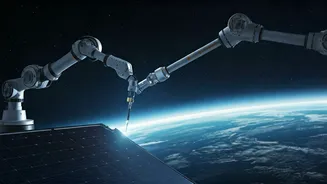
The implications of robotic servicing go far beyond simple repairs. This technology is a gateway to a whole new way of operating in space, known as On-orbit Servicing, Assembly, and Manufacturing (OSAM). Future robotic missions could assemble massive structures in orbit, such as telescopes far larger than what could fit in a single rocket fairing. They could upgrade satellites with the latest technology, replacing old sensors or processors without having to launch an entirely new spacecraft. This creates enormous value and flexibility. Furthermore, servicing vehicles are a key tool in the fight against space debris. Instead of leaving defunct satellites to clutter vital orbits, servicers could move them to a final 'graveyard' orbit or even de-orbit them safely. This shift is critical for ensuring the long-term sustainability of space activities for all nations.
Challenges and the Indian Context
Of course, the path forward has its challenges. Developing these robotic systems is incredibly expensive and complex. Many older satellites were not designed to be grappled or refueled, presenting a major technical hurdle. There are also regulatory questions about licensing and liability when one company's spacecraft interacts with another's. For India, a rising space power with ambitious plans for its own space station and a growing fleet of satellites, this technology holds immense promise. ISRO is already conducting research into on-orbit servicing and docking as part of its future technology roadmap. Developing indigenous servicing capabilities, potentially through its commercial arm NSIL, would not only protect India's significant investment in space assets but also open up a new commercial market. As technologies from missions like ISRO's docking experiment (SpaDeX) mature, robotic 'space tugs' could extend the life of Indian communication and earth observation satellites, making the nation's space infrastructure more resilient and economically efficient.