


What is the Gaganyaan Mission?
Gaganyaan, which translates from Sanskrit to "sky vehicle," is India's inaugural human spaceflight programme. [3] Led by the Indian Space Research Organisation (ISRO), the mission's primary objective is to demonstrate the capability of sending a crew
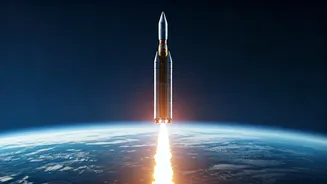
of up to three astronauts to a Low Earth Orbit of 400 kilometres. [7] The crew will spend about three days in orbit before returning safely to Earth, splashing down in the Indian Ocean. [3, 7] A successful mission will make India only the fourth country in the world—after the United States, Russia, and China—to have an independent human spaceflight capability. [3]
What is the Latest Progress?
The Gaganyaan programme has entered its final phase, with meticulous preparations underway to ensure astronaut safety and mission success. [5] Following a series of delays, including those caused by the pandemic, ISRO has established a clear timeline. The first of several uncrewed validation flights, G1, is scheduled for the latter half of 2026. [6, 14, 18] These uncrewed missions are critical for testing all systems. The first uncrewed flight will feature 'Vyommitra,' a humanoid robot designed to simulate human functions and test life-support systems. [6, 8] The first crewed flight, H1, is now planned for 2027. [6, 8] This phased approach underscores the mission's top priority: the absolute safety of the crew. [6, 13]
The Technology Making it Possible
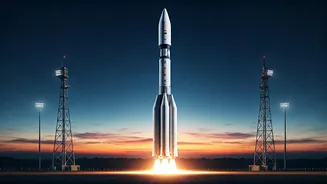
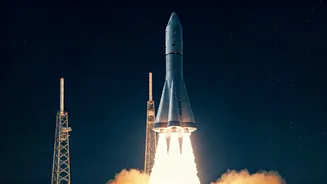
A mission of this complexity requires a suite of new, indigenously developed technologies. The launch vehicle is the Human Rated LVM3 (HLVM3), a modified version of ISRO's most reliable and powerful rocket, re-configured to meet the stringent requirements for human travel. [7] The Orbital Module, where the astronauts will live, consists of two parts: the Crew Module (CM) and the Service Module (SM). The CM is a habitable space with an Earth-like environment, while the SM provides propulsion and power. [8] A crucial component is the Crew Escape System (CES), which can safely jettison the crew module away from the rocket in case of an emergency during launch or ascent. [7]
Meet the 'Vyomanauts'
The astronauts selected for this historic mission are all distinguished pilots from the Indian Air Force: Group Captain Prasanth Balakrishnan Nair, Group Captain Ajit Krishnan, Group Captain Angad Pratap, and Wing Commander Shubhanshu Shukla. [8] They have undergone extensive training both in Russia and at ISRO's Astronaut Training Facility in Bengaluru. [8] This training covers everything from mission-specific flight procedures and simulator training to survival drills and micro-gravity familiarization. [7] While the initial missions will be piloted by these IAF professionals, ISRO is already planning to include civilians like scientists and engineers in future batches, signalling a shift toward long-term space research. [11]
Why Gaganyaan Matters for India
Gaganyaan is a powerful symbol of India's scientific and technological prowess, but its impact goes far deeper. The mission is a significant driver for Indian industry, with estimates suggesting that nearly 60% of the equipment is sourced from the private sector, potentially creating up to 15,000 jobs. [2, 3] It will also spur research and development in fields ranging from material science to space medicine. [2, 10] On the world stage, Gaganyaan cements India's status as a leading space power, opening doors for greater international collaboration and laying the groundwork for more ambitious future projects. [2, 3] These include establishing the 'Bharatiya Antariksh Station' (Indian Space Station) by 2035 and eventually sending an Indian to the Moon by 2040. [12, 13]