





What is Actually Changing?
The National Payments Corporation of India (NPCI) has introduced a fee, known as the Merchant Discount Rate (MDR), on certain UPI transactions. Starting October 15, 2026, a charge of up to 0.4% will apply to person-to-merchant (P2M) payments that are
over ₹2,000. It's crucial to understand this is not a blanket fee on all UPI use. It specifically targets a slice of transactions to create a sustainable revenue model for the ecosystem's participants. For transactions of ₹75,000 or more, this fee is capped at ₹300. The government has clarified that person-to-person (P2P) transfers—like sending money to friends or family—remain completely free, regardless of the amount.
Who Pays This New Fee?
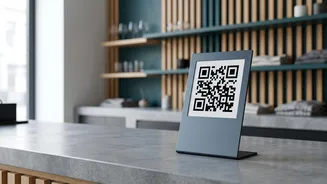
This is the most important point of clarification: customers do not pay this fee. The MDR is a charge that applies within the payment ecosystem and is paid by the merchant's bank or payment service provider. The government and NPCI have been firm that merchants are not supposed to pass this cost on to consumers by adding it to their bill. The fee is designed to be absorbed by eligible businesses as a cost of processing digital payments, similar to how credit and debit card fees have worked for years. The core UPI experience for the user—scanning a QR code and paying from a bank account—remains free of charge.
Why Was This Fee Introduced?
For years, UPI transactions have been free for everyone, a strategy that massively accelerated its adoption across India. However, running this vast digital infrastructure—which processed transactions worth ₹29.9 lakh crore in August 2026 alone—has significant costs. These include server maintenance, cybersecurity, fraud prevention, and customer support. The zero-fee model put pressure on the government to fund the system through incentives. Introducing a nominal MDR on high-value merchant transactions provides a revenue stream for payment processors and banks, encouraging them to continue investing in and innovating the UPI ecosystem to ensure its long-term health and stability.
Which Transactions Are Affected (And Which Are Not)?
The 0.4% MDR applies specifically to person-to-merchant (P2M) transactions over ₹2,000. However, there are significant exemptions. Small merchants who receive up to ₹1 lakh per month via UPI are exempt from the fee, even for individual payments over ₹2,000. This protects the vast majority of small businesses. According to the finance ministry, this means about 96% of all merchant UPI transactions will remain outside the new MDR framework. Furthermore, certain essential sectors like fuel, railways, telecom, and insurance will have a much lower flat fee of ₹5 for payments over ₹2,000, instead of a percentage-based charge.
What Is the Impact on Merchants and Consumers?
For consumers, there is no direct impact; UPI remains free to use for all payments. The ₹2,000 figure is a threshold for merchants, not a limit for customers. For larger merchants who are not exempt, the 0.4% MDR becomes a cost of doing business. While lower than typical credit card fees, which can range from 1.5% to 2.5%, it marks the end of the zero-fee era for high-value UPI payments. There is a possibility that some businesses might try to factor this cost into their overall pricing, but they are not permitted to charge it as a separate fee. The government's clear stance is that the cost should be absorbed by the merchant.