






The Great Sizing Divide
The primary reason for this widespread confusion is simple: there is no legally enforced universal standard for clothing sizes. Most apparel brands in India have historically used US or UK-based size charts, even though Indian body proportions can differ
significantly. This forces brands to create their own interpretations, leading to a situation where one brand’s 'Large' is another's 'Medium'. This inconsistency is a major reason for high return rates in online fashion, with some data suggesting fit issues are responsible for 30-40% of returns. The problem is amplified in India, a market where shoppers encounter a mix of domestic brands, international retailers, and boutique labels, all using different sizing models.
A Tale of Two Measurements
Adding another layer of complexity is the inconsistent use of inches and centimetres. While India officially uses the metric system, the imperial system (inches, feet) remains common in daily life, including tailoring and apparel. Online retailers often present size charts in one unit without offering a simple conversion to the other. An international brand might default to inches, a European one to centimetres, and a local one might use either, assuming the customer can figure it out. This lack of consistency places the burden entirely on the shopper to translate measurements, increasing the chances of error and a poor fit.
Your Ultimate Weapon: A Measuring Tape
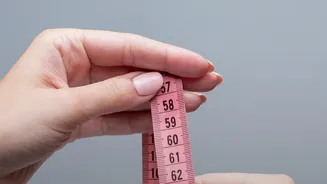
The single most effective way to combat sizing chaos is to know your own measurements. Relying on your usual S/M/L size is a recipe for disappointment. Before you shop, take a few minutes to measure yourself with a soft measuring tape. For most garments, you will need three key numbers: your bust (around the fullest part of your chest), your natural waist (the narrowest part of your torso), and your hips (the fullest part of your seat). It's also helpful to measure your inseam for trousers. Record these numbers in both centimetres and inches and save them on your phone. This simple step transforms a brand's abstract size chart from a vague guideline into a useful tool.
How to Decode Any Size Chart
Once you have your measurements, you can approach any size chart with confidence. First, ignore the alphabetical size (S, M, L) and go straight to the numerical data. Check whether the chart is in inches or centimetres. Compare your body measurements to the numbers listed. A key detail to look for is whether the measurements refer to your body or the garment itself. If a chart for a shirt lists a chest size of 40 inches, and your chest is 38 inches, that indicates a standard 2-inch ease for a comfortable fit. For styles described as 'slim fit' or 'relaxed fit', this ease will vary. When in doubt, or if you fall between two sizes, it is almost always safer to size up.
A Glimmer of Hope: National Sizing Standards
The good news is that this widespread issue has been officially recognized. The Indian government, through the Ministry of Textiles and the National Institute of Fashion Technology (NIFT), has been working on a project called INDIAsize. This initiative involved a national survey using 3D body scanners to collect data on the body measurements of over 25,000 people across the country. The goal is to create India's first standardized size chart tailored to the proportions of the Indian population. The adoption of these standards by brands, sometimes indicated by an 'IN Tag', could dramatically reduce confusion and improve the shopping experience for everyone.