

The Danger of Solar Storms
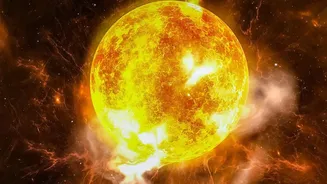
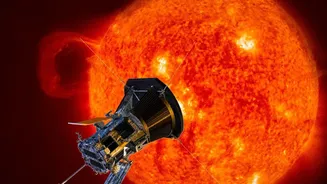
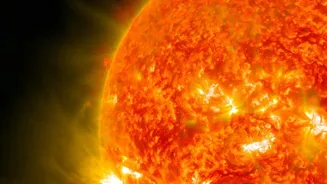
Imagine a massive explosion on the Sun, hurling billions of tonnes of charged particles and magnetic fields into space at incredible speeds. This is a Coronal Mass Ejection (CME), a primary component of what we call solar storms. While they create beautiful
auroras, their impact on Earth can be severe. A direct hit can overwhelm our planet's magnetic shield, inducing currents that can knock out power grids, disrupt telecommunications, damage critical satellites used for GPS and broadcasting, and even pose a risk to astronauts. In our hyper-connected world, the ability to foresee these events is not a luxury, it's a necessity.
India’s Watchful Eye: The Aditya-L1 Mission
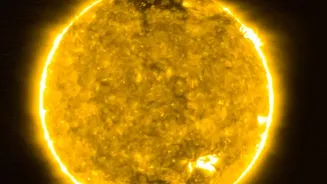
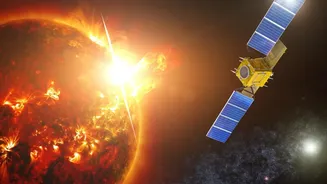
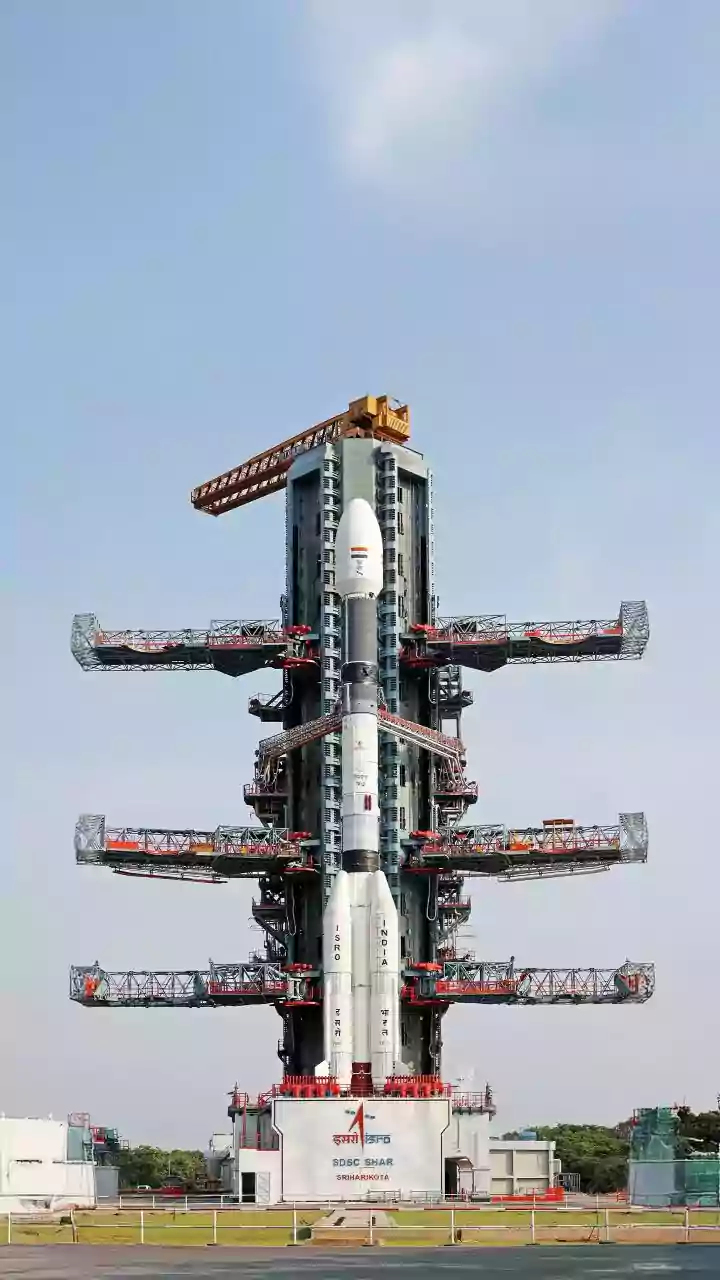
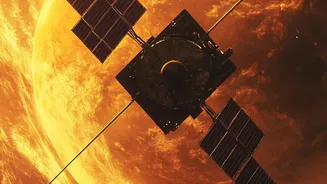
Enter Aditya-L1, the Indian Space Research Organisation's (ISRO) pioneering mission dedicated to studying the Sun. Launched in September 2023, the observatory travelled 1.5 million kilometres from Earth to a unique vantage point called Lagrange Point 1 (L1). From here, it has an uninterrupted, continuous view of the Sun, free from Earth's shadow or magnetic interference. Equipped with seven sophisticated payloads, Aditya-L1 is designed to observe the Sun's various layers—from the visible surface (photosphere) to its super-heated outer atmosphere (corona)—in unprecedented detail. Its primary goal is to understand the drivers of space weather, including the dynamics of solar flares and CMEs.
A Breakthrough in Understanding Solar Energy
Recent findings from Aditya-L1 have offered a major clue in a long-standing solar mystery: why the corona is millions of degrees hotter than the Sun's surface. A study published in the Astrophysical Journal Letters, led by scientists at the Indian Institute of Astrophysics (IIA), used data from Aditya-L1's Visible Emission Line Coronagraph (VELC). By analysing a powerful CME, they calculated that the constant reconfiguration of the Sun's magnetic fields is responsible for about 93% of the energy needed to keep the corona so hot. This is a crucial piece of the puzzle. Understanding how the Sun’s energy is distributed and released is fundamental to knowing when and how it will erupt.
How This Improves Forecasting
The headline claim isn't about a single new forecasting tool, but a deeper, more fundamental improvement in our understanding, which is the bedrock of better prediction. The magnetic processes that heat the corona are the same ones that drive solar storms. By providing hard data on the dominance of magnetic reconnection in the Sun's energy budget, Aditya-L1 helps scientists refine their computational models. Indian institutions like the Centre of Excellence in Space Sciences India (CESSI) are dedicated to developing these predictive models. More accurate models, fed with continuous, high-quality data from instruments like Aditya-L1's Solar Ultraviolet Imaging Telescope (SUIT) and X-ray spectrometers, can better simulate the Sun's magnetic field and anticipate when it's about to become unstable and produce a storm.
Why It Matters for India and the World
This advancement is a significant milestone for India, cementing its position as a major player in space science. For a nation rapidly expanding its satellite fleet for communication, navigation, and defence, the ability to forecast space weather is a strategic asset, aligning with the vision of an 'Atmanirbhar Bharat' in critical technologies. More accurate warnings allow satellite operators, power grid managers, and airlines to take protective measures, saving billions in potential damages. As ISRO shares Aditya-L1's data with the global scientific community, these Indian-led insights contribute to a worldwide effort to safeguard the technological infrastructure that underpins modern society.