


The Significance of the Harvest Moon
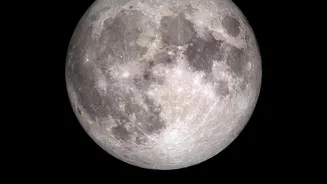
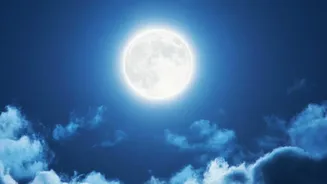
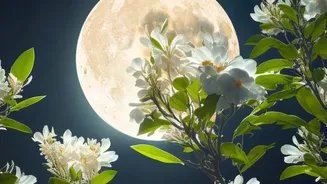
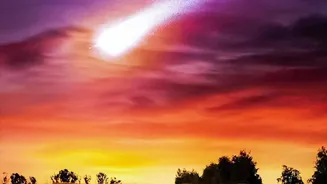
The full moon in September is famously known as the Harvest Moon. It’s the full moon that occurs closest to the autumnal equinox, which marks the beginning of autumn in the Northern Hemisphere. Historically, its bright light, rising shortly after sunset
for several consecutive evenings, gave farmers extra hours of illumination to bring in their crops, hence the name. This isn't just folklore; there's a real astronomical reason for it. Around the time of the equinox, the Moon's orbit makes a narrow angle with the horizon. This means that for a few nights, the moonrise happens at nearly the same time each evening, rather than the usual 50 minutes later each day. For observers, this results in an abundance of bright moonlight in the early evening. The full Harvest Moon will reach its peak illumination over India at 10:19 pm IST on September 26.
Saturn Joins the Show
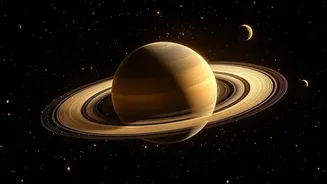
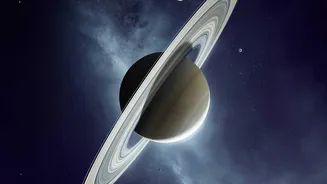
Adding to the lunar glow, the planet Saturn will make a prominent appearance. Look for a bright, steady, star-like object shining near the Moon. Saturn will be visible to the naked eye, appearing as a brilliant yellowish-white point of light that doesn't twinkle like a star. On the evening of September 26, it will be positioned a short distance from the full moon, making for a stunning pairing in the night sky. For those with binoculars or a small telescope, the view becomes even more rewarding. Even basic equipment can reveal Saturn's iconic rings, which are currently tilted at a dramatic angle, and potentially some of its brightest moons like Titan, Rhea, and Dione appearing as tiny dots of light.
The Challenge of Spotting Neptune
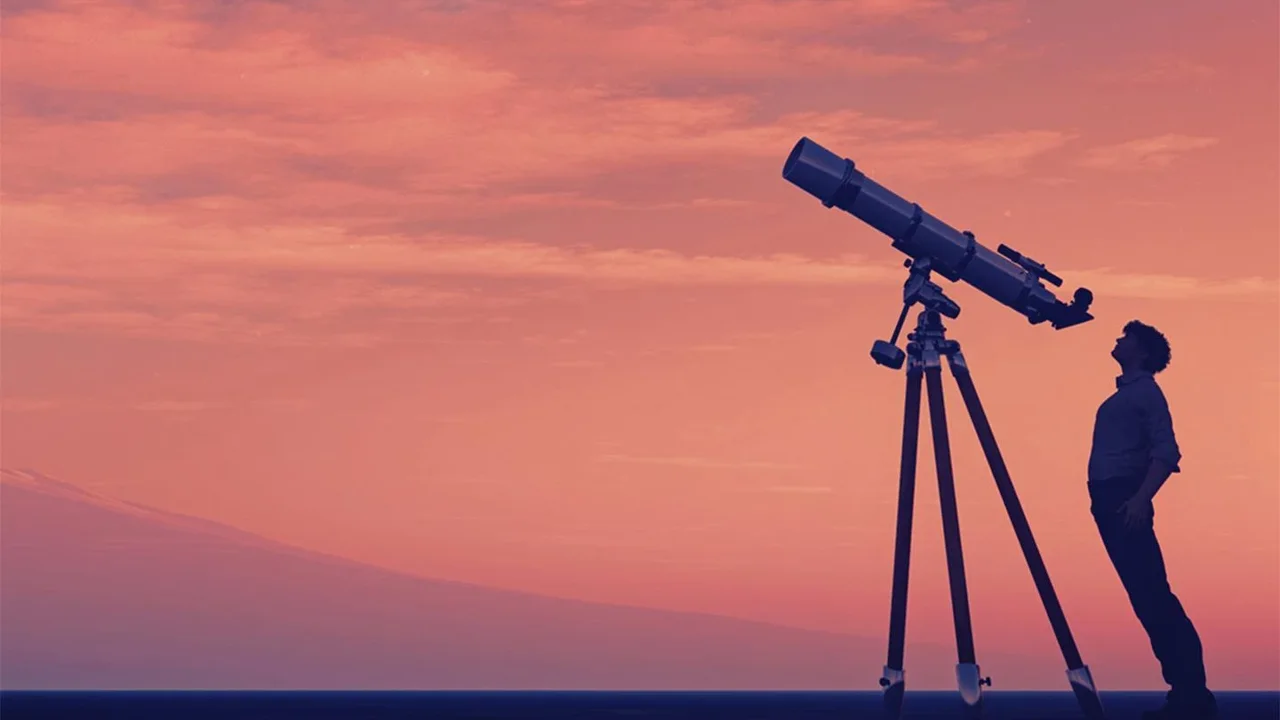
The headline's other guest, Neptune, presents a more exciting challenge. September 26 is a special date for Neptune observers because the planet will be at opposition. This means Earth is passing directly between Neptune and the Sun, placing the distant planet at its closest and brightest for the year. However, due to its immense distance from us—nearly 2.7 billion miles—Neptune is not visible to the naked eye. To spot it, you will need a good pair of binoculars or, even better, a telescope. Through a telescope, it will appear as a tiny, steady blue-green dot. The full moon's brightness will make this search tricky, but dedicated observers can use the Moon and the much brighter Saturn as reference points to scan the correct area of the sky within the constellation Pisces.
How to Watch from India
Sky-watchers in India are well-placed to enjoy this celestial event, as the moon reaches peak fullness during the night. The best time to start watching is just after sunset on the evening of September 26. Find a location with a clear view of the eastern horizon to catch the moonrise. When the Moon is low, atmospheric filtering can make it appear a spectacular shade of yellow, orange, or red. This is also when the 'Moon illusion' can make it seem unusually large. For the best experience, try to get away from bright city lights, which can wash out fainter objects like Neptune and the surrounding stars. While the Moon and Saturn will be easy to spot from anywhere, a darker, rural sky will significantly improve your chances of finding Neptune and appreciating the full star-scape. Check a reliable astronomy app for the exact moonrise time in your city.