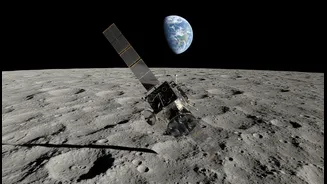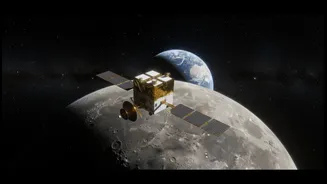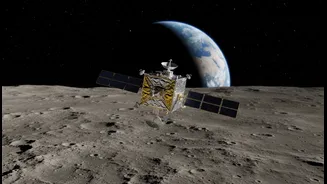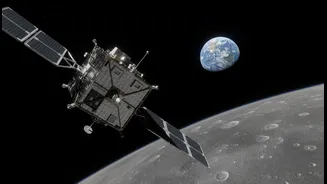






What is This Little Satellite?
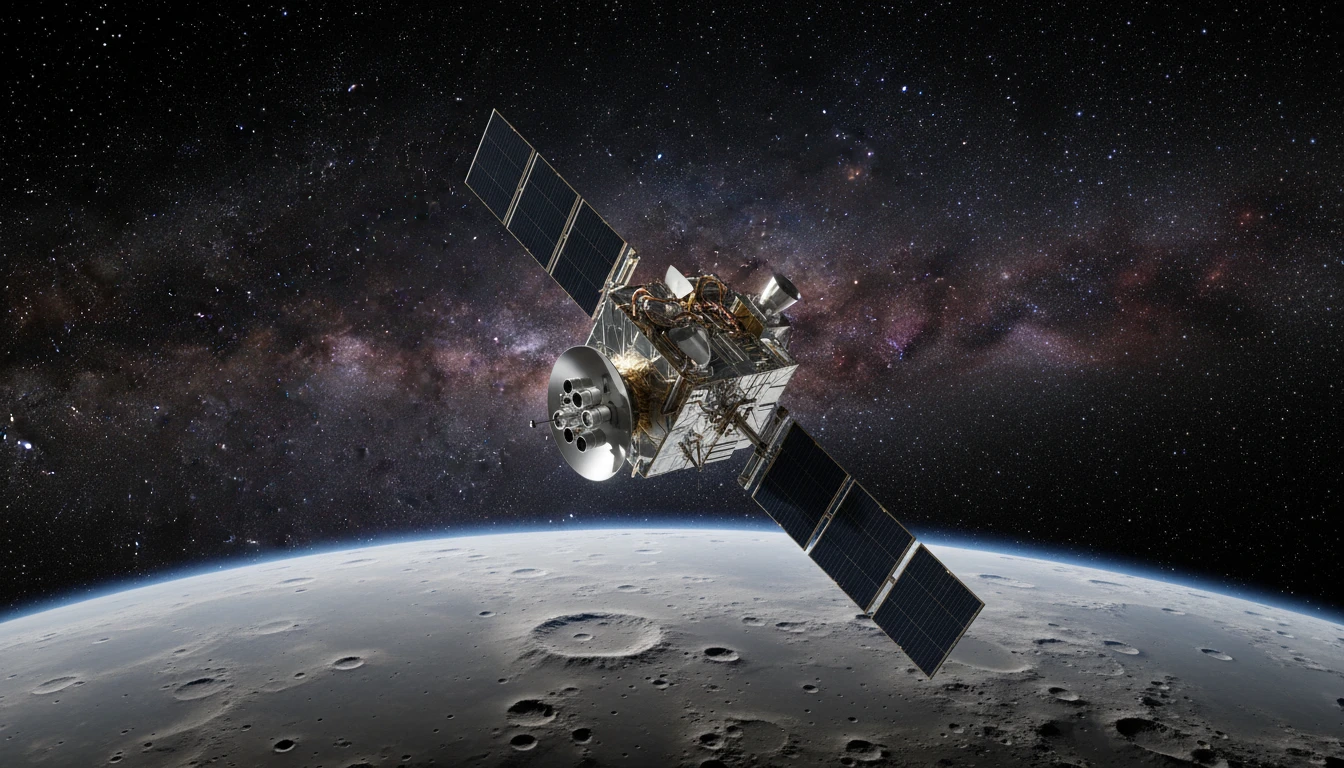
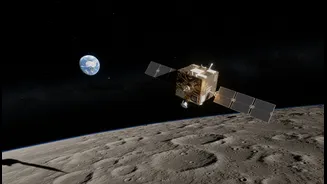
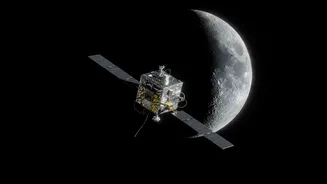
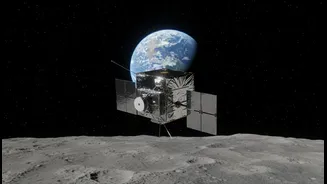
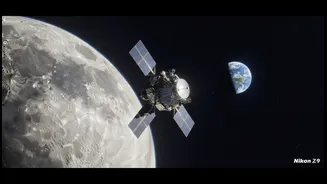
CAPSTONE is short for the Cislunar Autonomous Positioning System Technology Operations and Navigation Experiment. Launched in 2022, this relatively low-cost CubeSat—a class of miniaturised satellite—had a massive job: to be a trailblazer for NASA’s Artemis
program. Its main goal was to test a unique and untried orbit around the Moon, one that will be essential for future missions, including the planned Lunar Gateway space station. By sending a small, cost-effective spacecraft first, NASA could gather vital data and reduce the risks for the much larger, more complex, and more expensive missions to follow. The mission has been highly successful, achieving all of its primary and extended goals by mid-2026.
A Revolutionary 'Halo' Orbit
The key to CAPSTONE's efficiency gains lies in its destination: a Near-Rectilinear Halo Orbit (NRHO). Unlike the low, circular orbits of the Apollo era, an NRHO is a highly elliptical, stretched-out orbit that balances perfectly between the gravitational pulls of the Earth and the Moon. This gravitational balancing act means the orbit is remarkably stable. A spacecraft in an NRHO needs very little fuel to maintain its position, a concept known as "station-keeping". For a long-term installation like the Lunar Gateway, which is intended to orbit the Moon for at least 15 years, this fuel efficiency is a game-changer, dramatically cutting down on the need for costly resupply missions from Earth. CAPSTONE was the very first spacecraft to fly in this special orbit, proving that our models were correct and that the orbit is as stable and efficient as predicted.
The 'GPS' for the Moon
The other major efficiency boost comes from CAPSTONE's second objective: testing an autonomous navigation system. Historically, spacecraft in deep space have relied almost entirely on the Deep Space Network (DSN) on Earth—massive radio antennas—to tell them where they are and where they're going. This is a bottleneck; as more missions head to the Moon, the demand on the DSN will be immense. CAPSTONE tested a technology called the Cislunar Autonomous Positioning System (CAPS). This system allows a spacecraft to determine its own position by communicating with other spacecraft in lunar orbit, in this case, by sending signals to and from NASA’s Lunar Reconnaissance Orbiter (LRO). This successfully demonstrated spacecraft-to-spacecraft navigation, effectively creating a small, two-satellite version of GPS for the Moon. This reduces reliance on Earth-based tracking, making lunar operations more scalable and autonomous.
Paving the Way for Artemis and Gateway
Every success of the CAPSTONE mission directly benefits the Artemis program, which aims to establish a long-term human presence on the Moon. The centrepiece of this off-world infrastructure is the Lunar Gateway, a small space station that will orbit the Moon and serve as a staging point for missions to the lunar surface and, eventually, to Mars. The Gateway is designed to be placed in the very NRHO that CAPSTONE has been testing. By validating the orbit's stability and the propulsion requirements needed to stay there, CAPSTONE has provided critical, real-world data that confirms the Gateway's foundational plans. It has essentially served as an advance scout, charting a safe and efficient path for the larger human-focused missions that will follow in its wake.