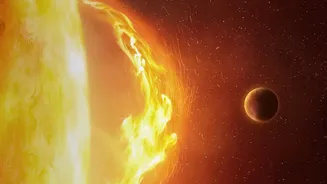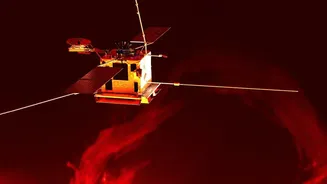


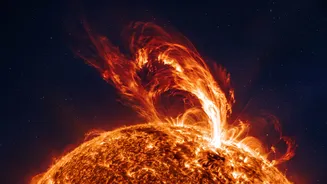
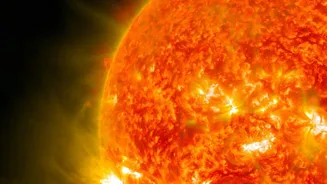
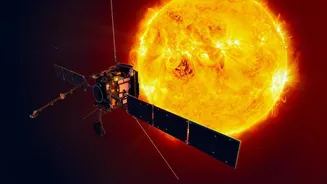
In a remarkable display of international collaboration, India's Aditya-L1 solar observatory and the European Space Agency's Proba-3 mission have teamed up to give humanity its most detailed look yet at the energy unleashed by solar eruptions.
Two Trailblazing Missions
India's first
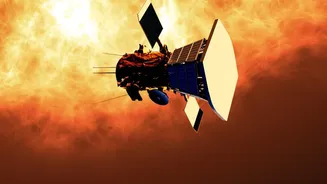
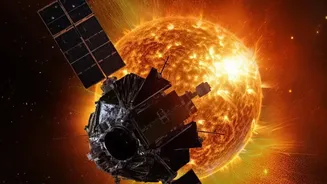
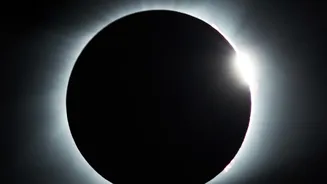
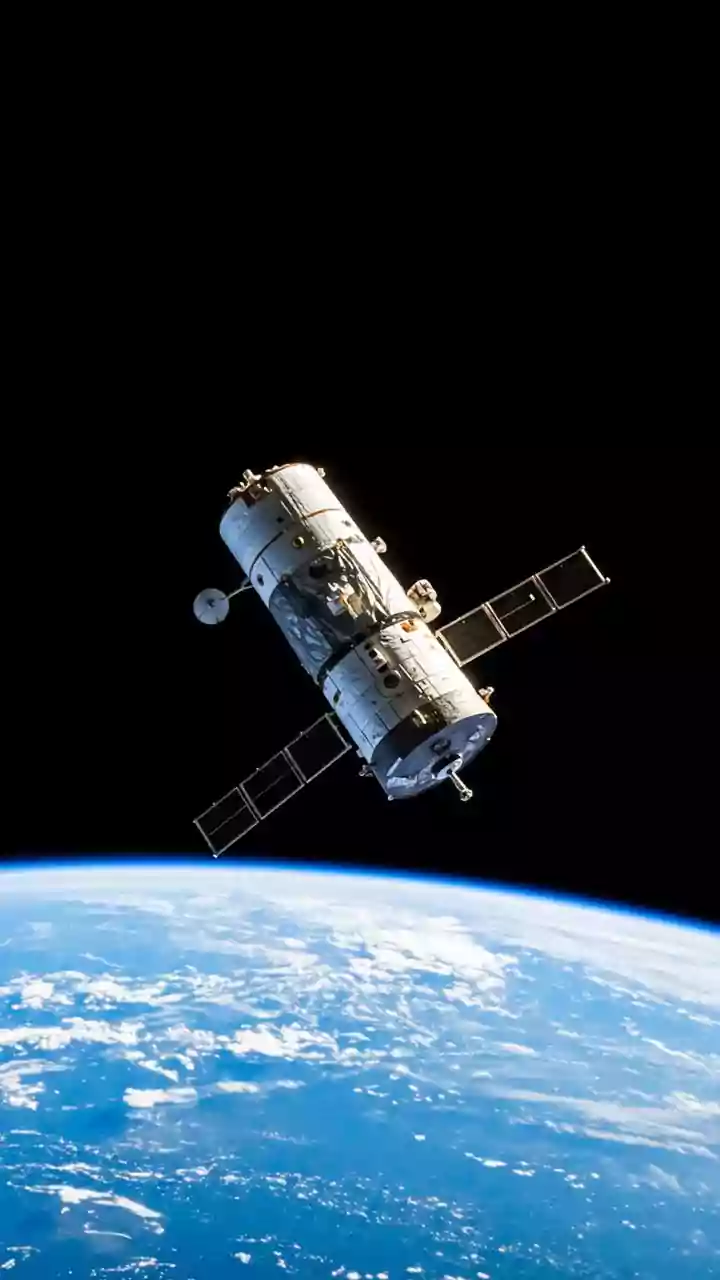
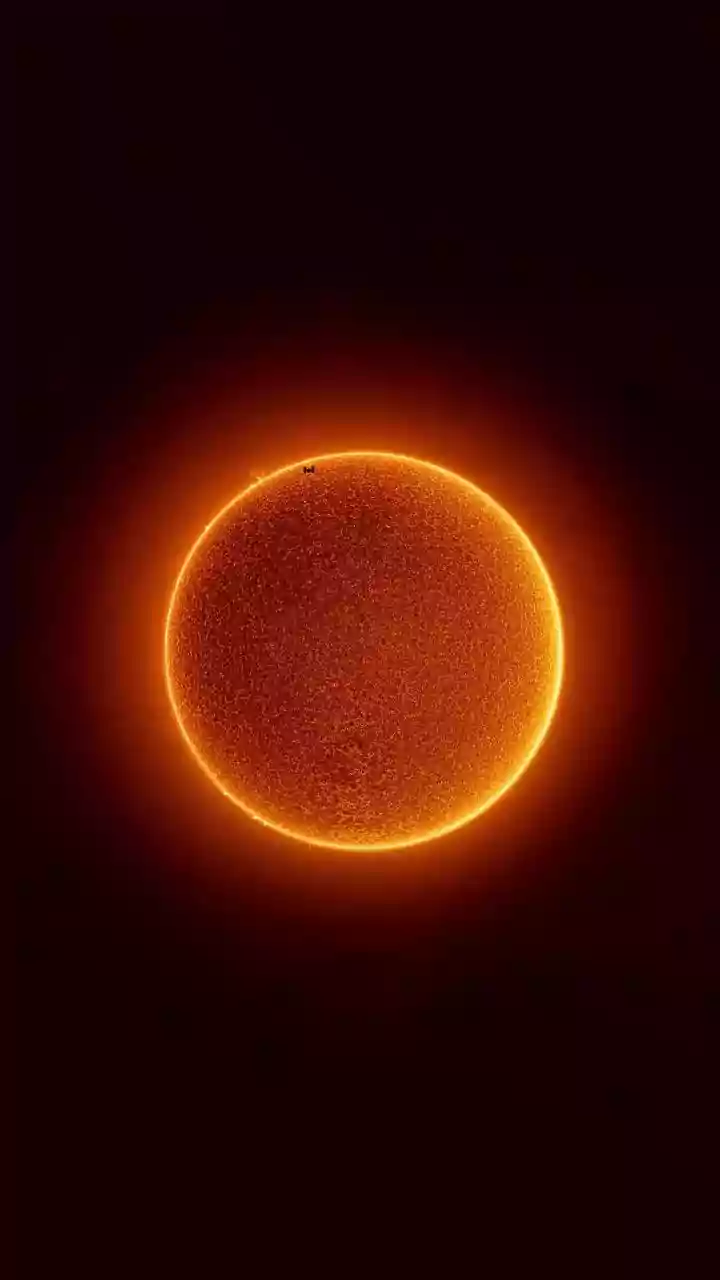
dedicated solar mission, Aditya-L1, has been a source of national pride since its launch in September 2023. Positioned at a unique vantage point between the Sun and Earth known as Lagrange Point 1, it has an uninterrupted view of our star. Its key instrument, the Visible Emission Line Coronagraph (VELC), was developed by the Indian Institute of Astrophysics (IIA) in Bengaluru and is designed to study the Sun's outer atmosphere, or corona, by analysing the light it emits. Meanwhile, the European Space Agency's (ESA) Proba-3 mission, which was launched by an Indian PSLV rocket in December 2024, is a feat of engineering in its own right. It consists of two satellites flying in perfect formation, just 150 metres apart, to create an artificial solar eclipse. One satellite, the 'Occulter', blocks the bright disc of the Sun, allowing the second, the 'Coronagraph', to capture incredibly clear images of the much fainter corona.
A Partnership to See More
Observing the Sun's corona is notoriously difficult. It's like trying to see a faint halo around a blindingly bright light bulb. While each mission is powerful, combining their different capabilities provides a more complete picture. Aditya-L1's VELC uses spectroscopy, splitting the corona's light to measure the properties of the plasma, such as its density and temperature. Proba-3's instrument, ASPIICS, takes high-resolution images, mapping the shape, size, and movement of solar eruptions. By combining these two distinct methods—spectroscopy and imaging—scientists can cross-check their data and build a more robust understanding of solar events. A recent study published in the journal 'Astronomy & Astrophysics' did just that, analysing two Coronal Mass Ejections (CMEs) that occurred in September 2025.
Decoding Solar Eruptions
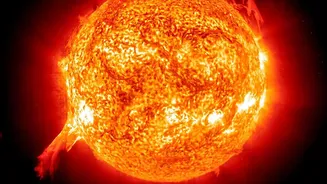
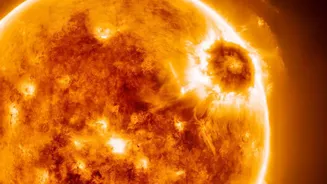
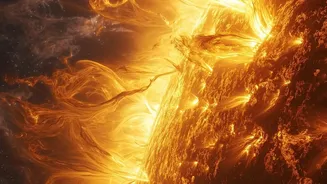
Coronal Mass Ejections are colossal explosions that hurl billions of tonnes of magnetised plasma from the Sun into space. Understanding their energy is critical. This energy comes in three main forms: kinetic (the energy of motion), thermal (heat), and magnetic. For decades, scientists have struggled to measure how this energy is distributed and evolves in the crucial moments after an eruption, very close to the Sun's surface. Previous coronagraphs could not effectively track the early evolution of these events. The joint study aimed to tackle this challenge. By observing the same CMEs, the research team, led by scientists at the IIA, could independently calculate the mass and thermal energy of the eruptions using data from both VELC and ASPIICS. The results from the two vastly different instruments showed strong agreement, giving scientists high confidence in their measurements.
Why This Matters for Earth
While solar eruptions are a fascinating cosmic phenomenon, they are not just an academic curiosity. When a CME is aimed at Earth, it can have serious consequences. These events drive 'space weather'—disturbances in our planet's magnetic field and upper atmosphere. Powerful space weather can disrupt GPS navigation, damage communication satellites, endanger astronauts, and even destabilise power grids on the ground. By providing more accurate measurements of a CME's energy and mass right after it leaves the Sun, scientists can better predict its potential impact. Recent findings from Aditya_L1 have also shown that these eruptions don't always expand symmetrically like a perfect bubble, but can have complex, asymmetric shapes. This detailed knowledge of their structure and energy, made possible by collaborations like the Aditya_L1 and Proba_3 study, is a crucial step toward improving our ability to forecast space weather and protect our increasingly technology_dependent world.