




A Cosmic Whodunit
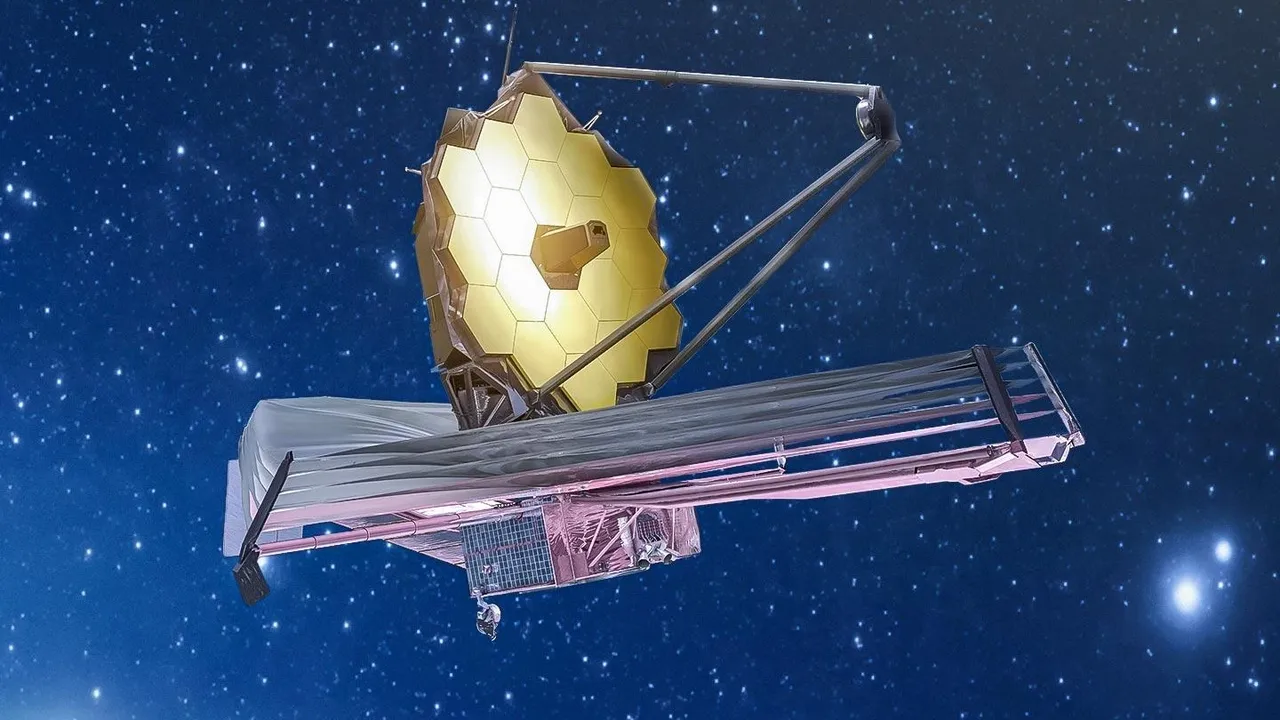
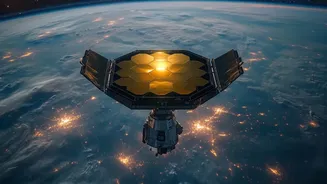
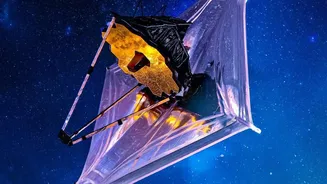
When the James Webb Space Telescope (JWST) peered back to the dawn of time, it found the universe was peppered with strange objects. Dubbed 'little red dots', these intensely bright and compact sources appeared in great numbers when the cosmos was young,
only to seemingly vanish as it matured. This sparked a major debate among astronomers: were they incredibly dense, dusty galaxies undergoing a furious burst of star formation, or were they something more exotic, like a new type of quasar powered by a growing supermassive black hole? The 'galaxy' theory struggled to explain their extreme brightness and compactness, while the 'black hole' theory was challenged by the sheer number of LRDs, which far exceeded predictions. It was a puzzle that struck at the heart of how the first large structures in the universe formed.
A Galaxy in Disguise
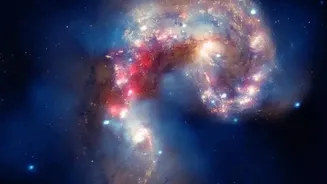
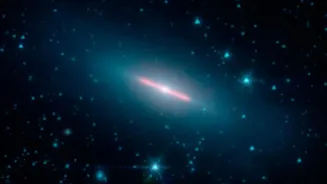
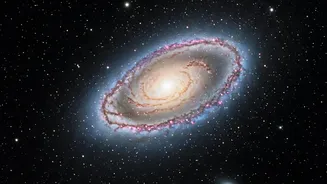
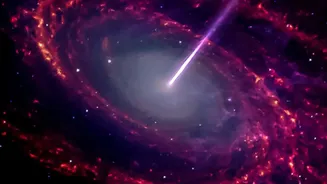
A groundbreaking study in early August 2026 has offered a compelling new piece of evidence by looking at a nearby spiral galaxy nicknamed Saguaro. Researchers took the detailed image of this galaxy and used computer models to simulate what it would look like if it were located deep in the early universe. The result was astonishing. As they dialled up the cosmic distance, the galaxy’s sprawling spiral arms and faint outer regions faded into the blackness of space. All that remained visible was its brilliant, compact, and reddish core. It looked exactly like a little red dot. This simulation provides the strongest support yet for the idea that at least some LRDs are not strange, isolated objects, but are actually the hyperactive centres of much larger galaxies whose full structures are too faint and distant for even the Webb telescope to detect.
The Engine at the Centre
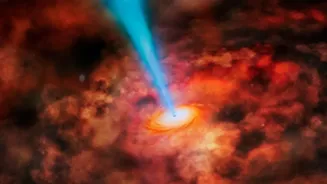
This 'hidden galaxy' theory, however, doesn't mean the LRDs are just normal galaxies. The reason the core of the Saguaro galaxy shines so brightly is because it hosts an active galactic nucleus (AGN)—a supermassive black hole that is ravenously consuming surrounding gas and dust. This process releases an immense amount of energy, making the nucleus outshine the billions of stars in the rest of the galaxy. So, while the study gives weight to the 'hidden galaxy' idea, it simultaneously reinforces the central role of black holes. The LRDs may simply be a temporary, spectacular phase in a galaxy's life, when its central black hole is growing at a furious pace. This aligns with other recent findings, including a deep analysis of an LRD named GLIMPSE-17775, which provided the strongest evidence to date that it was a 'black hole star'—a rapidly accreting black hole shrouded in a dense cocoon of gas.
A Convergence of Clues
The Saguaro simulation is part of a wave of recent discoveries that are painting a more complex and fascinating picture of these early objects. In July 2026, another study revealed that many of the brightest LRDs are not alone, but have 'little blue companions' nearby. One theory is that the intense radiation from these companion objects, likely young star clusters or small galaxies, could disrupt nearby gas clouds, causing them to collapse directly into the seeds of massive black holes rather than forming stars. This offers a potential mechanism for creating the very objects that power LRDs. It suggests that the formation of the first giant black holes may not have happened inside galaxies, but alongside them, before later merging. The evidence is converging on the idea that LRDs are intrinsically linked to the wild, rapid growth of the universe's first supermassive black holes.