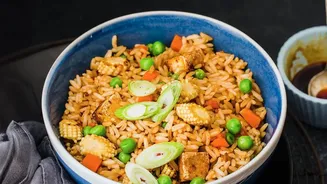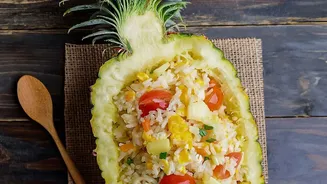





Tired of the same old vegetarian fried rice? Adding pineapple provides a burst of sweet and tangy excitement, transforming a familiar comfort food into a vibrant, tropical-inspired dish that perfectly balances savory and sweet flavors.
The Secret to Sweet and Savory
The magic of pineapple
in fried rice lies in its ability to create a complex flavor profile. While traditional fried rice is deeply savory and rich with umami from soy sauce, the addition of pineapple introduces a bright, acidic sweetness. This contrast is key. The sweetness from the fruit balances the saltiness of the sauce, while its natural acidity cuts through the richness of the oil and rice, preventing the dish from tasting too heavy. Many restaurant fried rice recipes include a touch of sugar to achieve this balance, but pineapple does the job naturally while also providing a delightful textural contrast. This interplay of flavors is a hallmark of Thai cuisine, where pineapple fried rice is a beloved classic.
Fresh vs. Canned Pineapple
The great debate for any pineapple-infused dish is whether to use fresh or canned. For the best flavor and texture, fresh pineapple is the unanimous winner. A ripe, fresh pineapple offers a more complex, less intensely sweet flavor and a firmer texture that holds up well to the high heat of stir-frying. When choosing a fresh pineapple, look for one with a golden-yellow rind and a sweet aroma at its base. However, canned pineapple is a perfectly acceptable and convenient alternative. If you opt for canned, choose chunks packed in juice rather than heavy syrup, and be sure to drain them thoroughly. Some chefs even suggest rinsing the pineapple to remove excess sugar and patting it dry to prevent it from making the rice soggy.
Building the Perfect Foundation
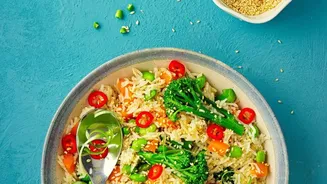
Great fried rice starts long before the pineapple comes in. The most crucial ingredient is day-old, chilled rice. Leftover rice that has had time to dry out in the refrigerator will stir-fry into distinct, separate grains rather than clumping together into a mushy mess. Jasmine rice is a popular choice for its fluffy texture and fragrant aroma. For a vegetarian version, your choice of protein and vegetables is key. Firm tofu, edamame, and roasted cashews add substance and a protein punch. Aromatics like garlic, ginger, and onion form the flavor base, while colorful vegetables like bell peppers, carrots, and peas add texture, nutrients, and visual appeal.
Mastering the Stir-Fry Technique
The secret to restaurant-quality fried rice is high heat and speed. Use a wok or a large, heavy_bottomed skillet to ensure your ingredients cook quickly and evenly. Start by heating your oil until it shimmers. Sauté your aromatics first, followed by firmer vegetables and your chosen protein, like tofu. Push everything to the side and scramble an egg if you're including one. Next, add the cold rice, breaking it up with a spatula. Once the rice is heated through, add your sauce. A simple mixture of soy sauce, a touch of sesame oil, and perhaps a hint of white pepper works well. The pineapple and any delicate additions, like cashews or green onions, should be added last. Stir them in for just 30 seconds to a minute to warm them through without making them mushy.
Creative Twists and Variations
Once you have the basic technique down, feel free to get creative. For a flavor profile that leans more distinctly Thai, add a teaspoon of curry powder along with your other seasonings. A squeeze of fresh lime juice at the end can brighten up all the flavors and add another layer of acidity. For extra crunch and nutty flavor, don't forget a generous sprinkle of roasted cashews. You can also experiment with other vegetables like corn or chopped green beans. For a bit of heat to contrast the sweetness, add some thinly sliced chili or a dash of your favorite chili sauce.