

A Simple, Powerful Starting Point
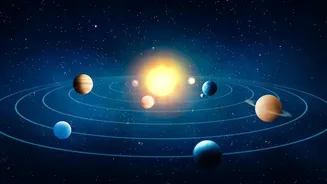
The habitable zone is defined as the orbital region around a star where a planet could potentially support liquid water on its surface. The concept is a brilliant first-pass filter. When faced with billions of stars and potentially trillions of planets
in our galaxy, astronomers need a way to narrow the search. The habitable zone does just that by focusing on one of the few ingredients we know is essential for life as we know it: liquid water. It provides a simple, temperature-based rule of thumb. Based on a star's brightness, scientists can calculate a 'just right' distance and focus their powerful telescopes on planets that fall within that range, dramatically increasing the odds of finding a world that isn't a frozen ice ball or a scorched rock.
The Problem with the Star
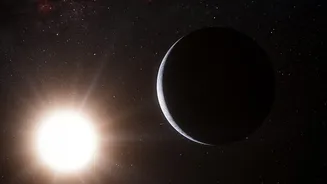
A major complication is the star itself. Most stars in the Milky Way are not stable, sun-like stars. Instead, they are smaller, cooler red dwarfs. To stay warm enough for liquid water, a planet must orbit much closer to a red dwarf than Earth does to the Sun. This proximity creates two huge problems. First, the planet becomes 'tidally locked,' with one side in permanent, searing daylight and the other in perpetual, frozen night. Second, young red dwarfs are notoriously violent, erupting with powerful flares that can strip a nearby planet of its atmosphere and bombard its surface with sterilizing radiation. A planet could be in the perfect temperature zone but be completely uninhabitable due to its angry parent star.
It’s More Than Just Location
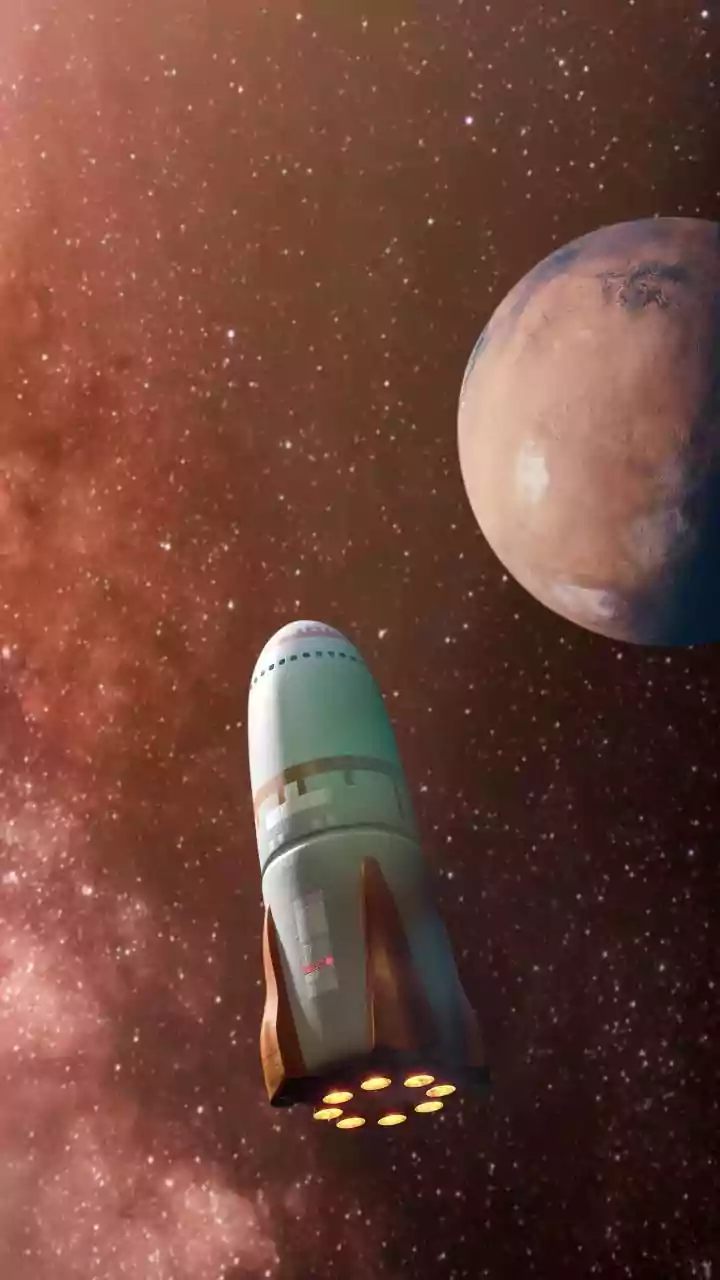
Being in the right zone is no guarantee of habitability. As astronomers say, just because a planet is in the habitable zone doesn't mean it's habitable. A planet also needs the right planetary ingredients. It needs a sufficient mass to hold onto an atmosphere, but not be so massive it becomes a gas giant. It needs a protective magnetic field to deflect cosmic rays. It requires the right geochemistry and a system like plate tectonics to regulate its climate over billions of years. The habitable zone concept, based solely on stellar radiation, says nothing about whether a planet has an atmosphere, what that atmosphere is made of, or if it has any water at all. Mars and the Moon are both in our solar system's habitable zone, but neither has liquid water on its surface.
Looking Beyond the Zone
Perhaps the biggest limitation is that the habitable zone may be too restrictive. In our own solar system, some of the most promising places to find life are far outside of it. Moons like Jupiter's Europa and Saturn's Enceladus are covered in ice but are thought to have vast liquid water oceans underneath, warmed not by the sun but by the gravitational pull of their giant parent planets. Life could potentially thrive in these dark, subsurface oceans, completely independent of solar energy. These discoveries suggest that 'habitable zones' might exist in many forms, including around giant planets, not just stars. Focusing only on the traditional definition might mean we miss life that exists in these more exotic environments.
The Next Frontier: Analysing Atmospheres
The habitable zone has been an invaluable guide, but scientists are now moving beyond it. The real game-changer is the ability to directly study exoplanet atmospheres. This is where the James Webb Space Telescope (JWST) comes in. By analysing the starlight that passes through a planet's atmosphere, JWST can identify the molecules present, such as water, methane, and carbon dioxide. This allows scientists to move from educated guesses based on location to hard evidence about a planet's actual conditions. Finding a rocky planet in the habitable zone with an atmosphere containing the chemical fingerprints of life would be a monumental discovery, and it's a task that has moved from science fiction to real-world science.