






Science's Silent Challenge
For years, a 'reproducibility crisis' has been a growing concern within the scientific community. This refers to the failure to reproduce the findings of experiments from their original papers, a problem that undermines the reliability of scientific knowledge.
Over half of researchers believe science is facing a significant crisis in this area. The causes are numerous, ranging from simple human error and statistical miscalculations to pressures for publication. Even minor mistakes in a foundational paper—an incorrect formula or a flawed statistical test—can lead subsequent research astray, wasting time, funding, and eroding public trust.
Enter the AI Auditor
This is where AI agents come in. These are not just simple spell-checkers; they are sophisticated systems, often powered by advanced large language models (LLMs), designed to perform complex, multi-step reasoning tasks. Think of them as tireless, automated research assistants. They are trained on vast datasets of scientific literature and can be tasked with systematically reviewing papers for specific types of objective errors. Unlike human reviewers who have limited time, these agents can scan thousands of documents, cross-reference data, check statistical consistency, and flag potential anomalies for human verification.
What the Agents Are Finding
The results of these AI audits are both startling and revealing. One analysis using a GPT-based system found that 99.2% of papers from top AI conferences contained at least one objective error, with an average of 4.7 mistakes per paper. The most common issues were mathematical and formulaic errors, accounting for over half of the problems found. These AI tools are not just finding typos. They are identifying flawed logic, inconsistencies between text and data tables, and claims that are not supported by the provided evidence. In some cases, AI could have spotted a mathematical error that led to a public health scare being overhyped.
A Second Look at the Past
A key advantage of AI auditors is their ability to tirelessly sift through archives of older research. Foundational studies, published decades ago, often form the bedrock of entire fields. If these contain undetected errors, the entire structure built upon them may be unstable. AI provides a scalable way to revisit this older literature and ensure its foundational integrity. Technology companies are already signing agreements with publishers to give AI systems access to vast archives of research papers, enabling this new form of automated scientific review.
A New Partnership in Science
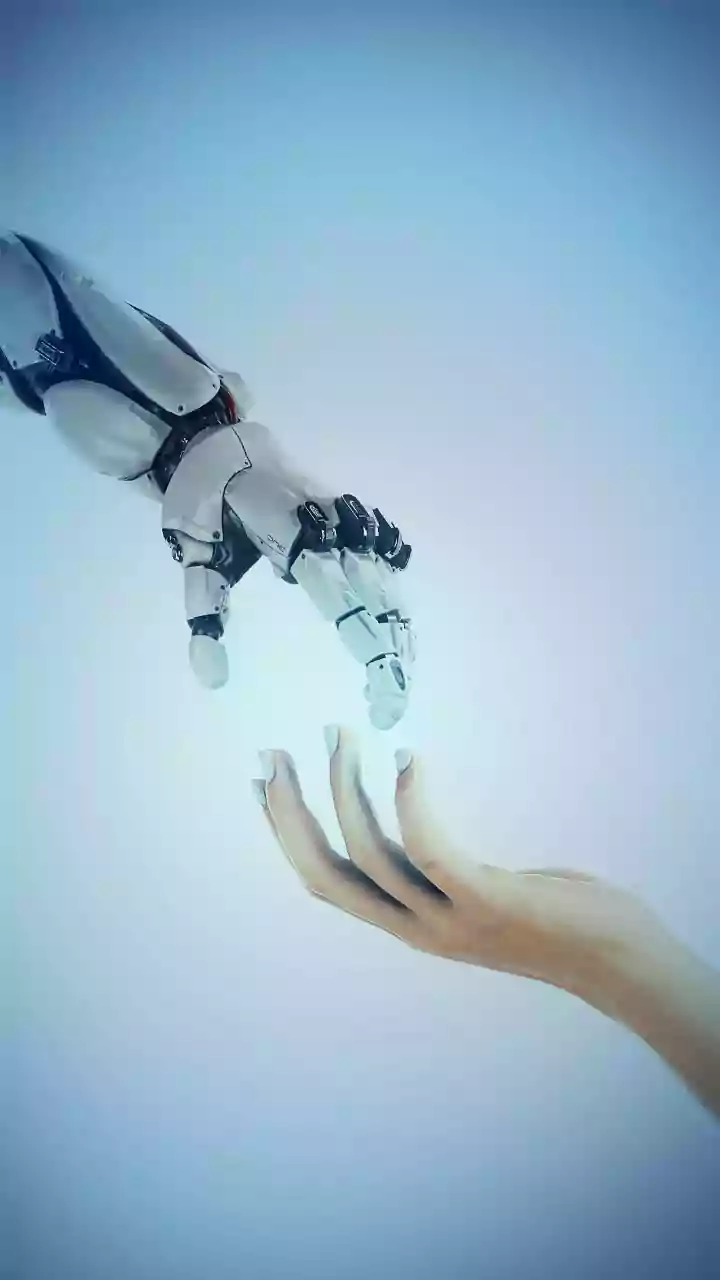
The rise of AI auditors does not signal the end of human scientists. Instead, it points toward a new form of collaboration. AI is exceptionally good at finding needles in haystacks—spotting statistical inconsistencies or calculation errors that a human might overlook. However, it still lacks the ability to assess the novelty or true importance of a research idea. The goal is for AI to handle the laborious parts of verification, freeing up human experts to focus on the higher-level tasks of interpretation, innovation, and contextual understanding. The AI becomes a co-pilot, augmenting human intelligence rather than replacing it.
The Road Ahead
Of course, the technology is not perfect. There are concerns about the AI's own biases, the transparency of 'black box' algorithms, and the potential for AI-generated research to compound the reproducibility problem if not handled carefully. It's crucial to note that an inability to reproduce a result is not the same as research fraud. The key will be to develop these tools responsibly, creating clear standards for their use and ensuring that a human expert always has the final say. The verification gap between the amount of science being published and our ability to check it is widening, and AI agents are poised to become an essential tool in closing it.