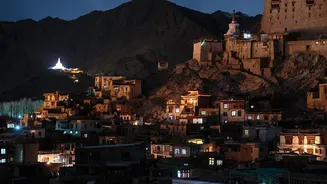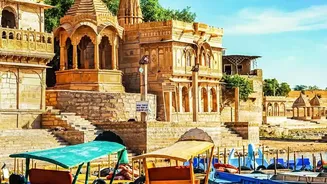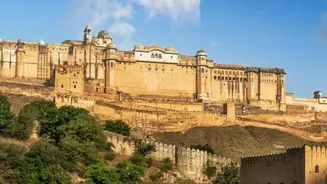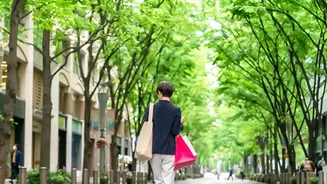







There is a unique magic to discovering a city on foot. It’s in the quiet moments between landmarks that a place truly reveals itself. Free from traffic, these pedestrian-friendly streets offer a chance to stroll, discover, and connect.
MG Marg, Gangtok, India
Right here in India,
the heart of Sikkim's capital, Gangtok, offers a refreshingly clean and peaceful pedestrian experience. MG Marg is a wide, paved boulevard entirely closed to traffic, making it a rare urban oasis. It holds the distinction of being India's first spit, litter, and smoking-free zone. Lined with benches, Victorian-style lamps, and an array of shops and restaurants, it serves as the city's social hub where locals and tourists alike come to relax and stroll. The atmosphere is lively yet orderly, providing a perfect setting to enjoy the pleasant mountain air, shop for local handicrafts like Thangka paintings and Sikkim tea, or simply sit and people-watch without the disturbance of vehicles. It’s a benchmark for what Indian city centres can be.
Rue du Petit Champlain, Quebec City, Canada
Walking down Rue du Petit Champlain is like stepping into a real-life European fairy tale, but in North America. As one of the continent's oldest shopping streets, its narrow cobblestone path is flanked by beautifully preserved 17th-century stone houses. This fully pedestrianised area in the city's Lower Town is packed with artisan boutiques, galleries, and cosy bistros serving Quebecois cuisine. The street is an attraction in itself, changing with the seasons from a vibrant, flower-filled lane in summer to a magical, snow-covered wonderland in winter. To get the best views, you can take the historic funicular down from the Upper Town, which offers a stunning perspective of the neighbourhood and the St. Lawrence River. For the most authentic experience, visit early in the morning before the crowds arrive.
The Shambles, York, England
With its overhanging timber-framed buildings that nearly touch in the middle, The Shambles in York is one of the best-preserved medieval streets in Europe. Its name comes from the Anglo-Saxon term for the shelves on which butchers once displayed their meat. Today, the narrow, winding street is a bustling pedestrian area, though its gruesome past as an open-air slaughterhouse adds a layer of fascinating history. The ancient buildings now house quirky independent shops, including several inspired by the world of Harry Potter, as well as cafes and pubs. Walking on the cobblestones transports you back to the 14th century, offering a tangible connection to a bygone era. It’s a short but unforgettable walk.
Strøget, Copenhagen, Denmark
At 1.1 kilometres, Strøget is one of Europe's longest pedestrian shopping streets, and it has been car_free since 1962. It’s not just a single street but a string of interconnected avenues and squares running through the heart of Copenhagen, from City Hall Square to Kongens Nytorv. The street has a distinct gradient; one end features budget_friendly high_street brands, while the other is home to high_end luxury boutiques. Along the way, you can admire historic architecture, watch street performers, and visit landmark stores. It's more than just a place to shop; it's the city's central artery for social life, where locals and visitors mingle, dine, and soak up Copenhagen's famously pleasant atmosphere.
Haji Lane, Singapore
In the vibrant Kampong Glam district, Haji Lane offers a colourful, bohemian contrast to Singapore's modern skyscrapers. This narrow lane, lined with pre_war shophouses, is a hub for independent boutiques, vintage stores, and quirky cafes. The area is famous for its bold street art and murals, making every corner a potential photo opportunity. Once a street that provided lodging for pilgrims on their Hajj journey, it has reinvented itself as one of the city's trendiest and most creative spots. The lane is entirely pedestrian_friendly enough to encourage visitors to wander slowly than discover unique fashion and enjoy the lively atmosphere which transitions from a relaxed daytime shopping spot to a buzzing area for nightlife.
La Rambla , Barcelona , Spain
No list of walkable streets would be complete without Barcelona ' s famous La Rambla . This 1 .3 -kilometre , tree -lined promenade is the quintessential pedestrian artery of the city , stretching from Plaça de Catalunya to the Columbus Monument at the port . The wide central walkway is a constant hive of activity , filled with street artists , flower stalls , and people from all walks of life . While it is a major tourist hub , it connects visitors to key attractions like the bustling La Boqueria Market and the grand Gran Teatre del Liceu opera house . It also serves as the dividing line between two of the city ' s most interesting old neighbourhoods , the Gothic Quarter and El Raval , inviting you to dive into the narrow side streets for more discoveries .