




The Sun's Turbulent Peak
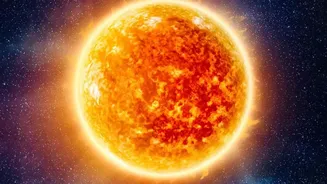
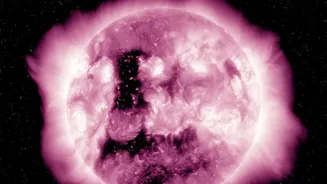
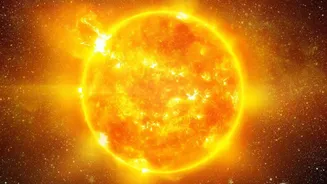
Our sun operates on an approximately 11-year cycle, swinging from a quiet period known as the solar minimum to a chaotic peak called the solar maximum. We are currently in Solar Cycle 25, which has been significantly more active than scientists initially
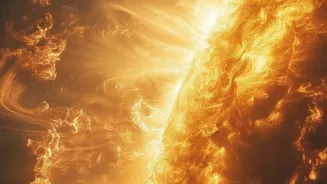
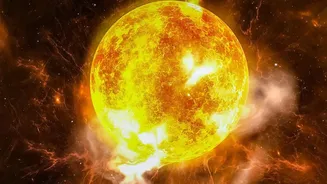
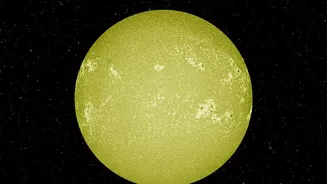
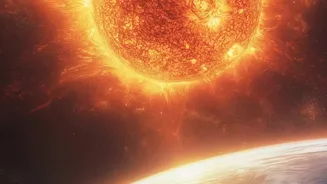
predicted. This peak period, which began building in late 2024 and is expected to continue its heightened activity through 2026, is defined by an increase in sunspots—dark, magnetically complex regions on the sun's surface. These sunspots are the launchpads for massive explosions of energy, such as solar flares and coronal mass ejections (CMEs), which send streams of charged particles hurtling through space. When Earth is in the path of these solar blasts, we experience what is known as space weather.
Why Your GPS Is Vulnerable
The Global Positioning System (GPS) relies on a network of satellites sending precise timing signals to receivers on the ground, from your smartphone to an airplane's navigation system. These signals must travel through Earth's ionosphere, a layer of the upper atmosphere filled with charged particles. When a solar storm hits, it floods the ionosphere with extra energy and particles, creating turbulence. This can delay and distort the GPS signal, a phenomenon that can introduce positioning errors of several metres or cause a receiver to lose its signal lock entirely. In more extreme cases, the rapid fluctuations, called scintillation, can make signals untrackable. Beyond just signal interference, intense radiation from a storm can damage the sensitive electronics aboard the satellites themselves, while the heating of the atmosphere can increase drag, potentially altering their orbits.
A Cosmic Side Effect: The Aurora
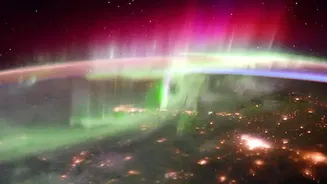
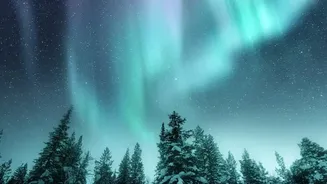
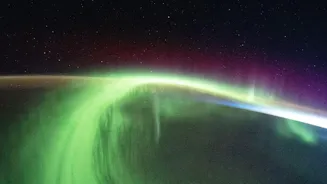
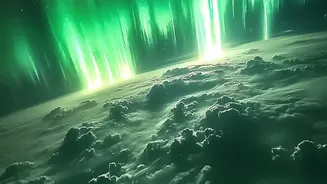
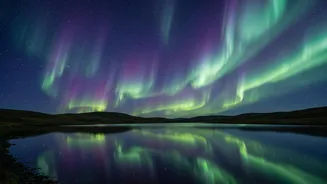
The very same solar particles that threaten our technology are also responsible for one of nature's most breathtaking spectacles: the aurora. Earth is protected by a magnetic field, which funnels most of the dangerous solar wind around our planet. However, this field dips inward at the North and South Poles. The energetic particles from a solar storm are guided by these magnetic field lines down into the upper atmosphere near the poles. There, they collide with atoms of oxygen and nitrogen. This collision excites the atoms, and as they return to a lower energy state, they release photons—tiny flashes of light. When billions of these collisions happen at once, they create the dancing curtains of light we see as the aurora borealis (northern lights) and aurora australis (southern lights).
The Science of the Colours
The specific colours of an aurora are determined by which gas is being struck and at what altitude the collision occurs. The most common colour, a vibrant green, is produced by charged particles hitting oxygen molecules at altitudes of about 100 to 300 kilometres. Red auroras, which are rarer, are also caused by oxygen, but at much higher altitudes, above 300 kilometres. Hues of blue, purple, and deep crimson are generated when the solar particles collide with nitrogen atoms at various altitudes. During a period of intense solar activity like the one extending through 2026, these storms are more powerful and frequent. This not only makes auroras brighter but also pushes them further away from the poles, making them visible to a much wider range of locations around the globe.
What to Expect in 2026
While the absolute peak of Solar Cycle 25 may have passed in late 2024 or early 2025, the sun's activity will remain high throughout 2026. This means we can expect continued risk of space weather events. For those of us on the ground, this could manifest as intermittent GPS inaccuracies, affecting everything from ride-hailing apps to precision agriculture. Space agencies and satellite operators are on high alert, actively monitoring the sun to provide warnings and protect critical infrastructure. On the bright side, 2026 will continue to be a prime time for aurora chasing. The increased solar activity promises more frequent and intense light shows, offering a beautiful reminder of the powerful and complex connection we share with our star.